Tesla Inc. Expands Semiconductor Capabilities While Capitalising on European EV Growth
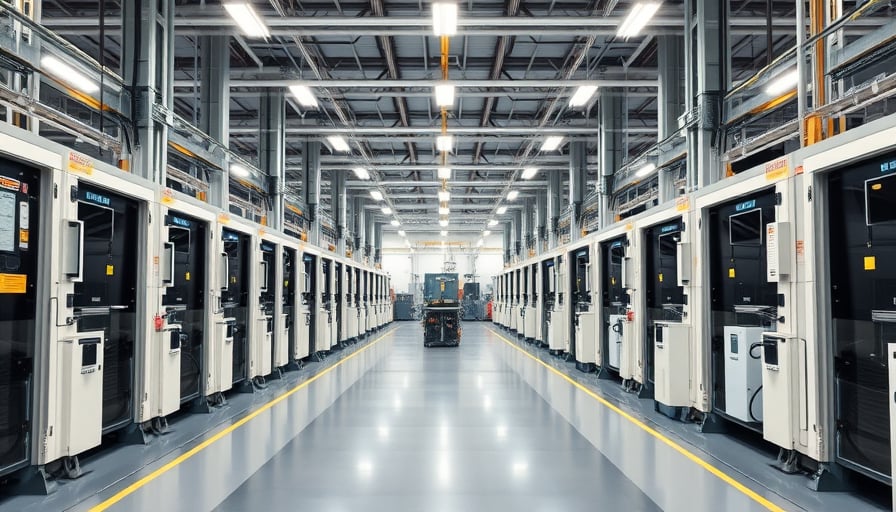
Tesla Inc. has announced plans to construct a new semiconductor fabrication facility, designated Terafab, in collaboration with SpaceX and xAI. The venture is positioned to manufacture advanced chips using a 2‑nanometer process, with the capacity to deliver up to one terawatt of computing power annually—figures that rival those of the world’s leading foundries.
Strategic Rationale
The initiative is widely interpreted by investors and analysts as a strategic hedge against perceived shortages in high‑performance chips from external suppliers. By internalising semiconductor production, Tesla aims to secure a reliable supply chain for its self‑driving vehicles, robotics, and space‑based artificial‑intelligence systems. This vertical integration mirrors broader industry trends where hardware‑centric firms pursue in‑house manufacturing to reduce dependency on third‑party foundries and to safeguard competitive advantages in data‑intensive applications.
The move also aligns with Tesla’s long‑term vision of a unified technology stack that spans from vehicle firmware to satellite‑grade computing. Control over chip design and fabrication can accelerate innovation cycles, reduce lead times, and potentially lower unit costs for high‑volume applications, thereby enhancing margin resilience in a market increasingly driven by scale.
Market Reaction
Tesla’s stock price experienced a modest uptick following the announcement, reflecting market enthusiasm for the company’s expanded manufacturing footprint. The price movement underscores investor confidence in Tesla’s ability to navigate supply chain constraints and to maintain its technological edge.
European Auto Sales Context
Simultaneously, February vehicle registration data in Europe reveal a modest rebound in total sales, with electric models contributing a significant portion of the uptick. Tesla’s own registrations in the region have grown for the first time since late 2024, narrowing the gap with Chinese competitor BYD.
Policy incentives—such as tax credits, emission‑based levies, and subsidies for charging infrastructure—combined with the expansion of affordable EV models, are creating a favourable macroenvironment for electric vehicle adoption. This trend supports sustained demand for Tesla’s product lineup, reinforcing the company’s revenue prospects in key markets.
Implications for Financial Reporting and Investor Discourse
The dual focus on in‑house semiconductor production and robust market demand positions Tesla to potentially showcase significant capital expenditure and operational gains in forthcoming financial statements. Investors and analysts will likely scrutinise the balance sheet impact of Terafab’s development, the projected cost synergies from reduced external procurement, and the scalability of the 2‑nanometer process.
Moreover, the convergence of supply‑chain fortification and favourable macro‑driven market growth may become a central narrative in investor briefings, with emphasis on how these strategic initiatives can translate into sustainable revenue and profitability trajectories.
Cross‑Sector Reflections
Tesla’s approach illustrates a broader industry pattern where technology firms extend into adjacent manufacturing domains to mitigate supply chain volatility. Similar movements are observable in sectors such as consumer electronics, where companies are establishing private fabrication capacities, and in aerospace, where firms like SpaceX are pursuing on‑site component production. These cross‑sector dynamics reflect a growing recognition that control over critical manufacturing processes is essential for maintaining competitive positioning in data‑centric, high‑technology markets.
In summary, Tesla’s Terafab project represents a decisive step toward consolidating its technology supply chain, while the European EV market’s positive trajectory provides a robust external environment for product uptake. Together, these factors are likely to shape Tesla’s strategic priorities and investor narratives in the near term.