Corporate News
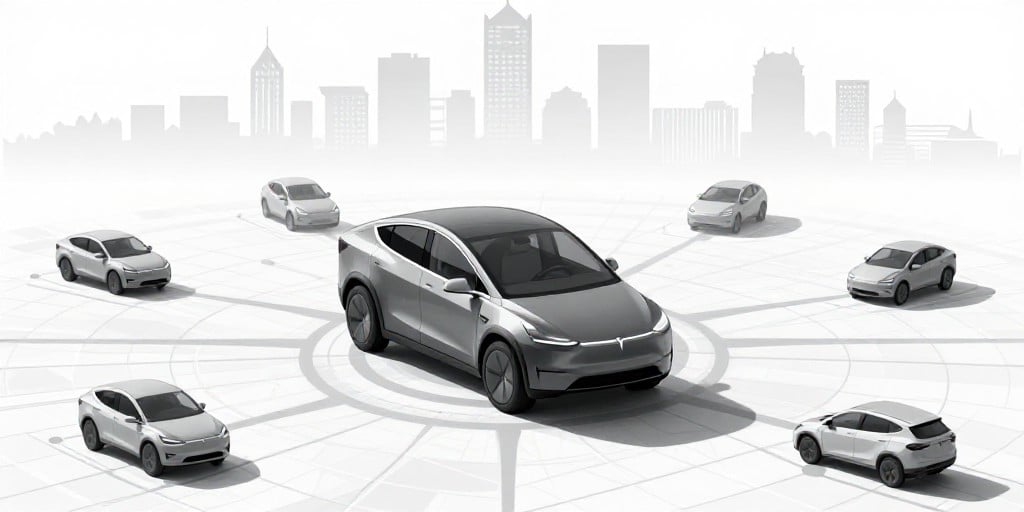
Tesla Inc. has announced that its Cybercab autonomous electric vehicle has begun service in Austin, Texas, following a month of rigorous testing. The vehicle is deployed by a dedicated Tesla service center, and early data indicate a rapid increase in utilization, with the fleet size expanding eight‑fold within the first 30 days.
Tesla’s Chief Executive Officer emphasized the company’s commitment to scaling Cybercab operations across the United States. The strategy involves establishing a network of autonomous taxi services in major urban centers, with Dallas slated for expansion shortly after the Austin launch. No additional information regarding pricing, demand forecasts, or profitability has been released at this time.
Strategic Context
The autonomous ride‑hailing market is emerging as a critical component of the broader mobility ecosystem. Competitors such as Waymo, Uber ATG, and Cruise have already established pilot programs in select cities, yet Tesla’s integrated hardware‑software architecture offers a distinctive competitive edge. The Cybercab’s rapid fleet growth in Austin suggests a strong initial demand for autonomous transportation solutions and highlights the viability of Tesla’s approach to vehicle deployment and fleet management.
Market Dynamics
- Technology Advantage: Tesla’s proprietary neural network and sensor fusion capabilities enable higher reliability in complex urban environments compared to many incumbents.
- Regulatory Environment: Texas has historically been receptive to autonomous vehicle testing, providing a favorable regulatory backdrop for early deployment.
- Consumer Adoption: Early adopters in Austin appear receptive to autonomous taxi services, driven by a tech‑savvy demographic and a growing preference for on‑demand mobility options.
Economic Implications
The autonomous ride‑hailing sector is poised to reshape urban transportation, with potential implications for labor markets, urban planning, and energy consumption. Tesla’s expansion into autonomous taxis may accelerate the transition to electric mobility, supporting broader climate goals while creating new revenue streams. However, the lack of pricing and profitability data introduces uncertainty regarding the financial sustainability of such operations, especially in the context of high capital expenditures for autonomous fleet deployment and ongoing service center costs.
Cross‑Sector Connections
Tesla’s autonomous taxi initiative intersects with several key industry trends:
| Sector | Connection to Cybercab | Broader Trend |
|---|---|---|
| Energy | Transition to electric fleets | Decarbonization of transportation |
| Technology | Advanced AI and sensor systems | AI-driven automation across industries |
| Finance | Potential new ride‑hailing revenue model | Growth of fintech solutions for mobility |
| Urban Planning | Impact on city congestion and parking | Smart city initiatives |
Understanding how these sectors converge will be essential for investors, policymakers, and industry stakeholders as autonomous mobility evolves.
Outlook
While Tesla has not yet disclosed pricing or profitability metrics for Cybercab, the rapid adoption observed in Austin indicates a strong market response. Continued roll‑out in Dallas and other metropolitan areas will test the scalability of Tesla’s autonomous taxi model. Stakeholders will closely monitor subsequent data releases to assess the financial viability and broader economic impact of this emerging mobility paradigm.