
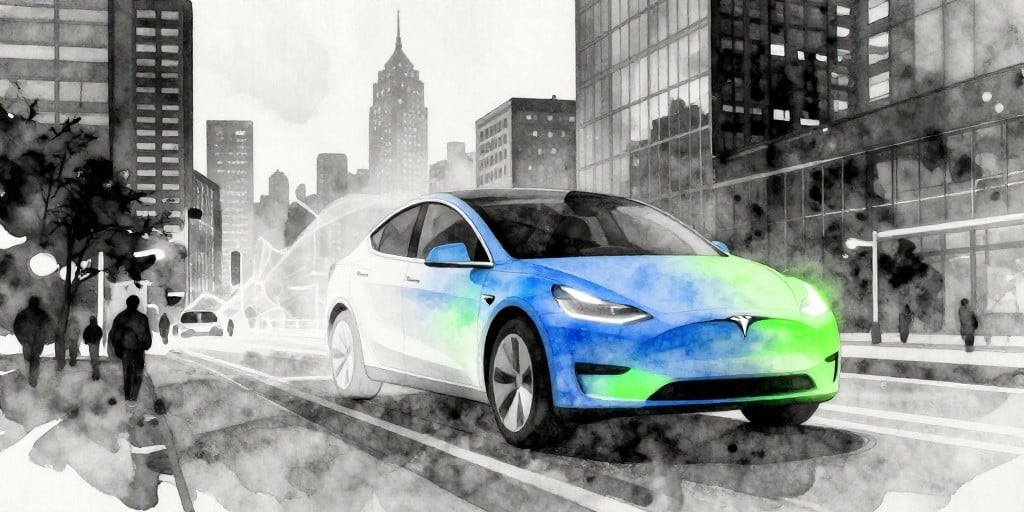
Tesla Inc. Maintains Steady Valuation Amid Gradual Expansion of Autonomous Driverless Fleet
Tesla Inc. (NASDAQ: TSLA) has experienced a largely unchanged share price across recent trading sessions, with the broader equity market exhibiting minimal volatility. The electric‑vehicle manufacturer’s market capitalization has remained within its existing valuation range, indicating sustained investor confidence in the firm’s autonomous driving and robotaxi programs.
Autonomous Technology as a Strategic Pivot
Under the leadership of Chief Executive Officer Elon Musk, Tesla’s corporate focus has progressively migrated from conventional automotive assembly toward robotics and artificial intelligence. This strategic shift is evident in the company’s public statements and capital allocation decisions that prioritize the development of its Full Self‑Driving (FSD) software suite and the deployment of a driverless robotaxi fleet.
In Austin, Texas, Tesla’s robotaxi operation now includes approximately fifty vehicles. The fleet size has increased steadily, and the company is actively extending service coverage to neighboring metropolitan areas such as Dallas and Houston. This geographic expansion is designed to broaden Tesla’s market reach and generate recurring revenue streams that complement its core vehicle sales.
Market Dynamics and Competitive Landscape
Tesla’s autonomous initiatives position it at the intersection of the electric‑vehicle (EV) and autonomous‑driving sectors—both of which are undergoing rapid transformation. The EV industry is characterized by high capital intensity, aggressive product cycles, and significant regulatory pressure for zero‑emission vehicles. In contrast, the autonomous‑driving market is driven by technological innovation, data‑driven decision making, and partnerships with logistics and ride‑sharing platforms.
Key competitors in the autonomous arena include Waymo, Cruise, and traditional automakers such as Ford and General Motors, which have invested heavily in self‑driving technologies. Tesla’s advantage lies in its integrated data ecosystem: millions of miles logged by its production vehicles provide a rich dataset for refining perception algorithms and refining FSD performance. However, the company faces challenges related to regulatory compliance, public safety perception, and the need for extensive testing before widespread commercial deployment.
Economic Forces Shaping Tesla’s Trajectory
Macroeconomic indicators suggest that consumer demand for EVs is likely to remain robust in the near term, fueled by tightening emissions regulations and decreasing battery costs. Simultaneously, the autonomous‑driving ecosystem is expected to mature as sensor technology becomes cheaper and computational capabilities expand. These factors should lower entry barriers for robotaxi operators and accelerate the adoption of Tesla’s FSD platform.
Nevertheless, the capital structure of Tesla’s autonomous ventures carries inherent risks. Significant research and development expenditures, coupled with the need for regulatory approvals, could exert pressure on cash flow. Moreover, the broader economic environment—characterized by fluctuating commodity prices and potential tightening of monetary policy—could affect the company’s cost of capital and operational flexibility.
Implications for Investors and Market Positioning
From a fundamental standpoint, Tesla’s sustained valuation reflects a market that recognizes the long‑term potential of its autonomous strategy. The incremental growth of the robotaxi fleet and the expansion into additional markets are tangible milestones that can drive future earnings diversification.
Investors should monitor several key performance indicators: the rate of FSD feature adoption among active users, the cost per kilometer for operating the driverless fleet, and regulatory developments that may either facilitate or impede the scaling of autonomous services. Additionally, cross‑sector collaborations—such as partnerships with logistics firms or public transportation agencies—could amplify Tesla’s market presence beyond the traditional automotive domain.
In conclusion, Tesla Inc. is navigating a complex yet promising intersection of electric mobility and autonomous technology. The company’s current flat share price, coupled with incremental operational gains, underscores a period of consolidation as Tesla prepares for a broader deployment of its autonomous offerings in the coming months.