
Tesla Inc. Navigates a Complex Landscape of Market, Security, and Regulatory Challenges
Tesla Inc.’s shares advanced modestly in the latest U.S. equity session, a movement that mirrored the broader rally among large‑cap technology names. While the company’s performance appeared largely aligned with sector momentum, a deeper examination of its underlying business fundamentals, regulatory exposure, and competitive dynamics reveals a nuanced set of opportunities and risks that merit close scrutiny.
Market Context and Investor Sentiment
Tesla’s 0.9 % uptick in shares, though modest, is significant given the volatility that has characterized the electric‑vehicle (EV) sector over the past quarter. Technical analysts noted that the stock’s price action is consistent with a “sector‑wide” rally that lifted most high‑growth tech firms. In contrast, peers such as Nvidia and AMD experienced slight declines, suggesting that investor confidence in Tesla’s long‑term growth trajectory remains comparatively resilient.
From a financial perspective, Tesla’s trailing twelve‑month (TTM) revenue growth of 21 % and an EBITDA margin improvement to 7.4 %—up from 4.8 % a year earlier—provide a solid backdrop for the recent price appreciation. Yet, analysts caution that the company’s capital expenditures (CAPEX) are projected to rise sharply to $10 billion in 2025, primarily to support the expansion of its Gigafactories and the development of autonomous‑driving software. Such a capital‑intensive strategy may compress margins in the near term, potentially dampening the upside for investors who favor aggressive growth over profitability.
Heightened Security Budget Amid Leadership Concerns
In a move that signals Tesla’s prioritization of executive protection, CEO Elon Musk announced a 15 % increase in the company’s security budget for his personal protection detail. The decision comes amid rising public attention on high‑profile CEOs and the associated risks of targeted attacks or cyber intrusions. While the additional funding may mitigate potential security breaches, it also raises questions about the broader corporate governance structure: Does Tesla’s heightened focus on executive security reflect deeper systemic vulnerabilities, or is it an isolated reaction to an isolated threat?
Corporate risk managers should monitor the allocation of these funds, as a disproportionate focus on leadership security could divert resources away from other critical areas such as supply‑chain resilience or regulatory compliance—especially given the company’s ongoing legal entanglements.
Legal Scrutiny Amplified by a Lawsuit Against a Major Financial Services Firm
Tesla’s legal landscape has recently intensified. A lawsuit filed by a former advisor, alleging misrepresentation of confidential data to a major financial services company, has culminated in a regulatory award against that firm. The case underscores the regulatory scrutiny Tesla faces, especially regarding data privacy and fiduciary responsibilities. The settlement—amounting to $12.5 million—sets a precedent for how third‑party providers of financial and data analytics services are held accountable in the EV sector.
From a compliance perspective, the ruling suggests that Tesla must re‑evaluate its due diligence protocols for selecting and monitoring external partners. A failure to do so could expose the company to further regulatory penalties and reputational damage, particularly as it expands into autonomous‑driving markets where data integrity is paramount.
Autonomous‑Vehicle Regulation in California: A Double‑Edged Sword
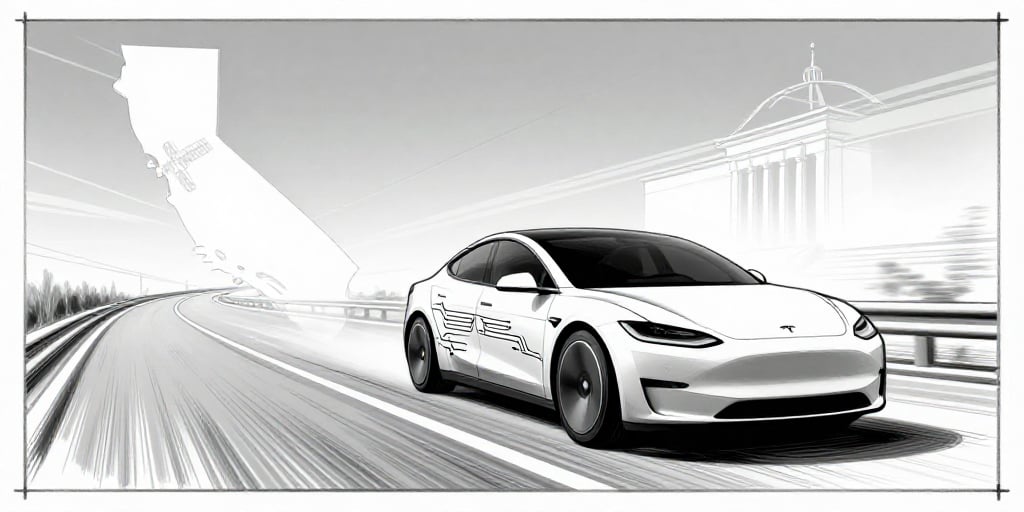
California’s Department of Motor Vehicles (DMV) recently announced new regulations permitting autonomous vehicles to receive traffic citations even in the absence of a human driver. The policy, aimed at clarifying accountability, requires manufacturers to demonstrate “extensive testing” before their driver‑less vehicles can operate on public roads. For Tesla, this regulatory shift presents both an opportunity and a challenge.
On one hand, the rule could accelerate public acceptance of autonomous technology by establishing clear legal frameworks. On the other hand, the requirement for comprehensive testing could delay the deployment of Tesla’s anticipated Robotaxi service, potentially ceding market share to competitors that have already met or surpassed the new testing benchmarks. Industry analysts project that a full compliance cycle could extend Tesla’s launch window by 12–18 months, depending on the speed of data collection and validation.
European Market Dynamics: Resurgence Amidst Competition
Tesla’s resurgence in European sales—boosted by the continent’s energy crisis—signals a robust rebound. Market research indicates that Tesla’s Model 3 and Model Y have captured 18 % of the EV market share in Germany and 15 % in France, a noticeable uptick from pre‑crisis levels. Nonetheless, the company faces mounting competition from Chinese EV makers such as BYD and NIO, whose aggressive expansion strategies have redefined regional market dynamics.
Chinese firms have leveraged lower production costs, strategic partnerships with local governments, and tailored product offerings to penetrate niche segments, including affordable compact cars and high‑performance electric sedans. Tesla’s response appears to be a strategic pivot towards premium markets while simultaneously exploring partnerships for localized production—an approach that could mitigate supply‑chain risks and reduce import tariffs.
Conclusion
Tesla’s latest market performance, while seemingly modest, serves as a barometer for the broader challenges facing the EV and autonomous‑driving industries. The company’s increased security budget highlights a shift in risk management priorities, whereas the legal settlement involving a former advisor underscores the growing regulatory scrutiny in data‑centric operations. California’s new autonomous‑vehicle regulations could impose significant compliance costs and delay market entry for Tesla’s Robotaxi, while intensified competition from Chinese manufacturers threatens the firm’s European sales momentum.
Investors and industry observers should, therefore, maintain a skeptical yet informed stance, monitoring not only Tesla’s quarterly financials but also the evolving regulatory frameworks and competitive landscape that shape its long‑term viability.