Tesla Inc. Begins Deliveries of Its Long‑Delayed Semi‑Electric Truck
Tesla Inc. has commenced deliveries of the Semi, its first commercial electric truck since its 2017 unveiling. The vehicle, manufactured at the company’s Nevada‑based Gigafactory, represents a significant milestone for Tesla’s commercial vehicle strategy and for the broader shift toward electrified freight transportation.
Technical Highlights and Performance Metrics
Range and Powertrain The new Semi delivers a projected range of more than 500 miles on a single charge. This performance is enabled by a redesigned battery architecture that balances energy density with thermal management, allowing the truck to maintain efficiency under high-load conditions typical of long-haul freight.
Weight Reduction and Axle Improvements Tesla reports a notable reduction in curb weight, achieved through the use of advanced composite materials and a lighter chassis frame. Coupled with a newly engineered axle system, these changes reduce rolling resistance and improve payload capacity, directly translating into lower operating costs for fleet operators.
Cab Configuration Responding to driver feedback, Tesla has replaced the original pop‑out windows with standard roll‑down windows. The modification enhances cabin ergonomics and safety while maintaining the aerodynamic profile that contributes to the truck’s overall efficiency.
Pricing and Incentive Structure
The Semi is priced at just under $300,000 before federal and state incentives. While this represents a premium over conventional diesel trucks, the lower lifetime fuel and maintenance expenses, combined with available tax credits, are expected to improve total cost of ownership for fleet operators. Tesla’s pricing strategy aligns with its broader approach of leveraging economies of scale from its battery production and software integration capabilities.
Charging Infrastructure and Operational Support
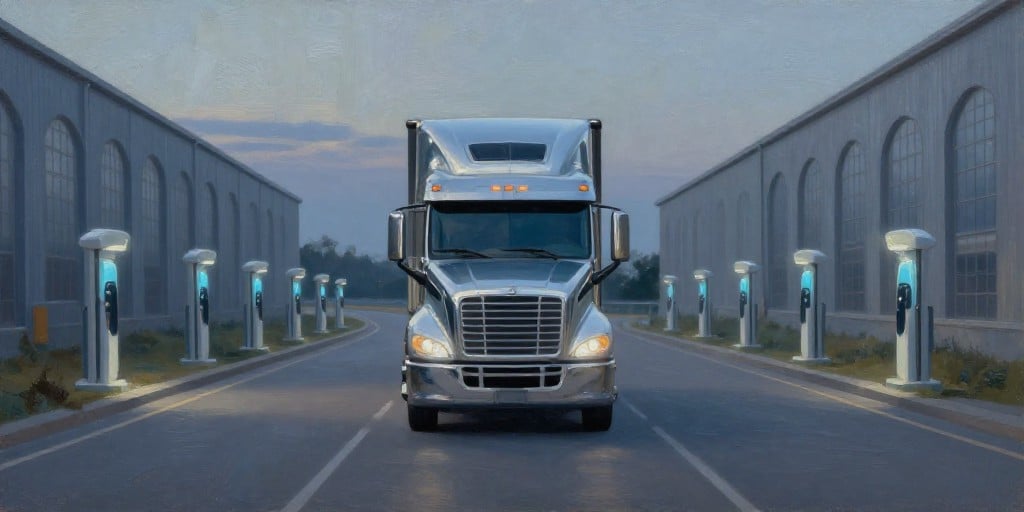
Recognizing that charging infrastructure remains a critical barrier to adoption, Tesla has introduced megawatt‑class charging stations tailored to the Semi’s needs. These stations provide rapid recharge capabilities, reducing downtime for commercial fleets and enhancing route flexibility. The integration of Tesla’s proprietary Supercharger network with these new stations underscores the company’s commitment to creating a closed‑loop ecosystem that supports both vehicle performance and logistical efficiency.
Market Context and Competitive Positioning
The commercial electric vehicle (EV) market is poised for accelerated growth, driven by tightening emissions regulations, rising fuel costs, and advances in battery technology. Tesla’s Semi places it in direct competition with established heavy‑vehicle manufacturers such as Daimler, Volvo, and PACCAR, who are also investing heavily in electrification. Tesla’s advantage lies in its vertical integration, software expertise, and the brand recognition that has helped it capture a significant share of the consumer EV market.
Moreover, the Semi’s launch dovetails with Tesla’s energy division, reinforcing its ambition to become a leading provider of integrated energy solutions. By combining vehicle electrification with grid-scale battery storage and renewable generation, Tesla positions itself as a comprehensive partner for transportation and infrastructure modernization.
Economic Implications
The Semi’s entry into the market is expected to influence several macroeconomic factors:
Supply Chain Dynamics Tesla’s reliance on high‑capacity battery production may accelerate demand for critical minerals such as lithium and cobalt, affecting global commodity markets and prompting a reevaluation of mining and recycling strategies.
Energy Consumption Patterns As heavy‑haul fleets transition to electric powertrains, the national electricity demand profile will shift, potentially increasing peak load in regions with high trucking activity and encouraging investment in distributed generation and smart grid technologies.
Workforce Impact The manufacturing and maintenance of electric commercial vehicles require a different skill set compared to diesel trucks, potentially driving demand for retraining programs and influencing labor market dynamics within the automotive and logistics sectors.
Strategic Outlook
Tesla’s Semi launch exemplifies its broader strategy to expand its commercial vehicle lineup while supporting its overarching energy and infrastructure ambitions. By delivering a high‑performance electric truck, Tesla not only addresses a critical segment of the transportation industry but also reinforces its position as a catalyst for the transition to sustainable mobility.
As the company continues to refine its product and scale its production, analysts will closely monitor market adoption rates, charging network expansion, and the overall impact on fleet economics. The Semi’s success—or lack thereof—will likely serve as a bellwether for the viability of electrified freight solutions in an era of rapid environmental and technological change.