
Teradyne Inc.: Sustained Momentum in Semiconductor Testing and Strategic Expansion into Robotics
Market Performance Highlights Resilience in a Volatile Tech Landscape
Over the past six months, Teradyne’s equity has outperformed the broader Nasdaq composite, registering gains that surpass the average trajectory of comparable technology firms. This divergence is a clear signal that market participants view the company’s earnings potential as robust, even as the semiconductor supply chain continues to grapple with cyclical demand fluctuations.
Analysts point to several drivers underpinning the stock’s upward trajectory. First, Teradyne’s revenue growth has remained steady, buoyed by a steady increase in unit shipments across its flagship test system lines. Second, the firm’s cost‑management initiatives—particularly its focus on high‑margin services such as post‑production test and advanced diagnostics—have translated into improved operating leverage. Finally, the broader optimism surrounding the semiconductor testing sector, catalyzed by a resurgence in automotive and industrial electronics, has amplified investor confidence in Teradyne’s market share retention strategies.
Robotics Expansion: A Strategic Pivot Beyond Test Systems
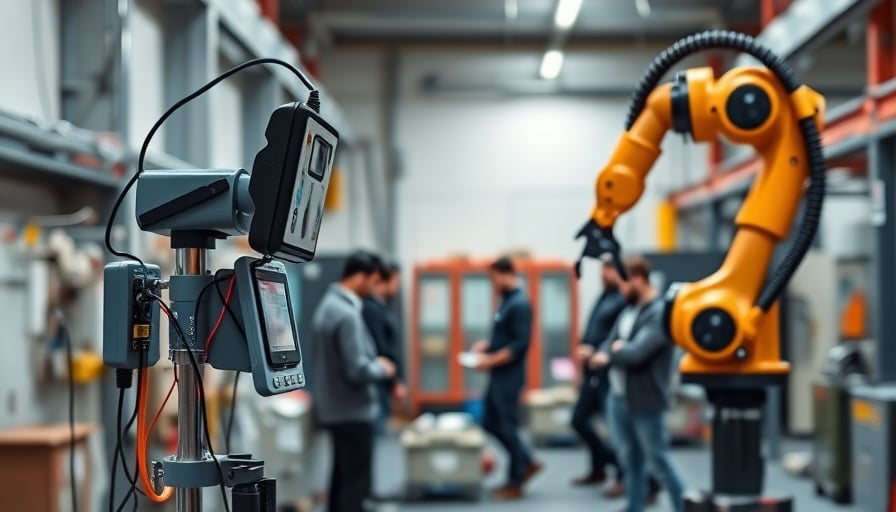
In a bid to diversify revenue streams and capitalize on emerging automation demands, Teradyne announced the launch of a new robotics hub in Michigan, slated for completion in 2026. This move represents a calculated effort to position the company as a key player in the burgeoning robotics ecosystem, particularly in sectors where precision testing and manufacturing convergence are critical—automotive, aerospace, military, and industrial automation.
The Michigan facility will house state‑of‑the‑art assembly lines and R&D laboratories aimed at developing collaborative robots (cobots) that integrate seamlessly with Teradyne’s existing testing platforms. By embedding robotics capabilities directly into its product portfolio, the company seeks to create closed‑loop value chains that reduce time‑to‑market for new test systems and enhance service offerings for clients operating in high‑precision environments.
Industry observers note that this initiative aligns with a broader trend in the semiconductor equipment sector, where firms are increasingly investing in robotics and AI to augment manufacturing throughput and reduce human error. Teradyne’s proactive stance may also serve to differentiate it from competitors that have remained focused solely on testing hardware.
Separating Coincidental Tokens from Core Strategy
Amid the corporate news cycle, a gold‑backed digital token named “TER” issued by a Bhutanese authority has captured attention within the blockchain community. It is crucial to underscore that this initiative bears no operational or financial linkage to Teradyne Inc. The token, part of a sovereign digital asset platform, operates independently of the semiconductor testing company’s balance sheet or strategic roadmap.
While the emergence of such tokens reflects the wider adoption of blockchain technology in sovereign contexts, analysts caution against conflating these developments with Teradyne’s performance metrics or strategic trajectory. Investors should thus maintain a clear delineation between the company’s tangible assets—test systems, robotics facilities, intellectual property—and unrelated digital token projects that may generate superficial media interest.
Forward‑Looking Analysis: Consolidating Dominance While Navigating Disruption
Looking ahead, Teradyne’s dual focus on sustaining leadership in semiconductor test equipment and expanding into robotics presents both opportunities and risks.
| Opportunity | Risk |
|---|---|
| Integrated Robotics‑Testing Platforms – Offering end‑to‑end solutions could lock in new long‑term service contracts. | Capital Allocation – Significant investment in the Michigan hub may strain liquidity in the short term. |
| Diversification of Revenue Sources – Robotics can mitigate exposure to cyclical semiconductor demand. | Execution Complexity – Managing two distinct product lines requires robust organizational alignment. |
| Enhanced Market Positioning – Positioning as a holistic automation solutions provider may attract cross‑industry clients. | Competitive Response – Established robotics OEMs may accelerate their own testing integrations. |
| Strategic Partnerships – Opportunities to partner with automotive OEMs for joint testing‑robotics initiatives. | Regulatory Hurdles – Robotics deployment in defense and aerospace may face stringent certification processes. |
In an era where automation and precision manufacturing are increasingly interlinked, Teradyne’s strategic pivot appears well‑timed. The company’s ability to weave robotics into its core competency of test systems could serve as a catalyst for sustained growth, provided that execution remains disciplined and capital remains available for both R&D and market expansion.