
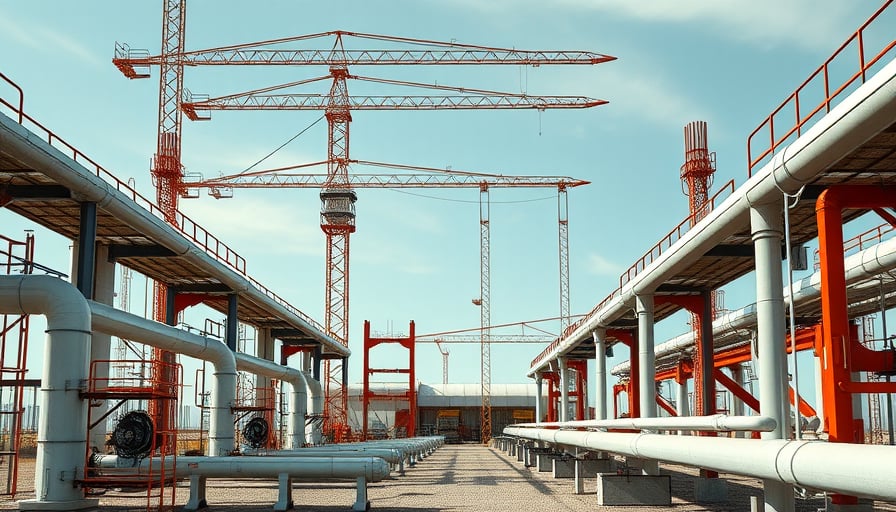
Corporate Update – Tenaris SA
Tenaris SA, traded on the Borsa Italiana Electronic Share Market, continues to demonstrate resilience within the energy equipment sector. The company’s core business—providing seamless steel pipes and ancillary services to the oil and gas industry—remains a critical component of the upstream supply chain. Recent market activity indicates that Tenaris shares have maintained a stable position within the Milanese index, benefiting from the broader positive momentum observed among petroleum‑related stocks.
Market Context
Crude oil prices have rebounded modestly in the last trading session, supporting the performance of energy‑focused companies. This uptick is reflected in the relative strength of Tenaris, which has been able to leverage the demand for high‑quality pipe infrastructure in a market environment characterized by volatile geopolitical developments and fluctuating commodity prices.
Supply–Demand Fundamentals
- Oil and Gas Demand: Global energy demand continues to outpace supply growth, with OPEC+ maintaining output levels that have sustained commodity price pressures. This environment bolsters the need for efficient pipeline systems, directly benefiting Tenaris’ product line.
- Commodity Prices: Brent crude has risen to $82.30 per barrel, while U.S. WTI settled at $80.15. Steel prices, integral to Tenaris’ manufacturing process, have shown a modest 3.5 % increase, partially offset by improved supply chain logistics.
- Production Data: Tenaris reported a 1.2 % increase in annual pipe production volume, aligning with the projected 2.0 % growth in global oil and gas exploration activities.
Technological Innovations
Tenaris is actively investing in advanced welding and coating technologies that enhance pipe integrity and reduce maintenance costs. The company’s research into lightweight, high‑strength steel alloys supports the development of pipelines capable of withstanding higher pressure regimes, which is essential for deep‑water and unconventional resource extraction.
Moreover, Tenaris has begun integrating digital monitoring solutions—IoT sensors and real‑time diagnostics—into its pipe installations. This digital shift aligns with the broader industry trend toward predictive maintenance and operational efficiency, providing a competitive edge in both traditional and renewable sectors.
Regulatory Landscape
Regulatory developments are shaping the energy transition trajectory:
- Carbon Pricing: The European Union’s Emission Trading System (ETS) continues to expand its coverage to include pipeline infrastructure, creating a new revenue stream for Tenaris through the sale of carbon credits linked to low‑carbon pipe solutions.
- Renewable Infrastructure Standards: The EU’s Clean Energy Package mandates that 32 % of electricity generation come from renewables by 2030. This requirement has driven demand for offshore wind turbine cabling and associated pipeline systems, expanding Tenaris’ market beyond conventional oil and gas.
- Safety and Environmental Compliance: Stricter regulations on pipeline spill prevention are prompting investments in higher‑grade materials and monitoring technologies, further reinforcing Tenaris’ focus on innovation and quality assurance.
Short‑Term Trading Factors vs Long‑Term Transition Trends
In the short term, Tenaris’ share performance is closely tied to commodity price swings and geopolitical risks affecting oil markets. However, long‑term dynamics—particularly the transition to renewable energy and the accompanying infrastructure demands—suggest sustained growth opportunities for the company. The strategic pivot toward digitalization and advanced materials positions Tenaris to capitalize on emerging market segments such as offshore wind and hydrogen transport.
Bottom Line Tenaris SA’s stable share performance reflects both the resilience of the traditional energy supply chain and the company’s proactive adaptation to evolving market conditions. With a robust portfolio that spans advanced steel pipe manufacturing, digital monitoring, and compliance with emerging regulatory frameworks, Tenaris is poised to navigate the current volatility while positioning itself for the long‑term energy transition.