
Teledyne Technologies’ Five‑Year Lifeboat Partnership and Its Wider Implications
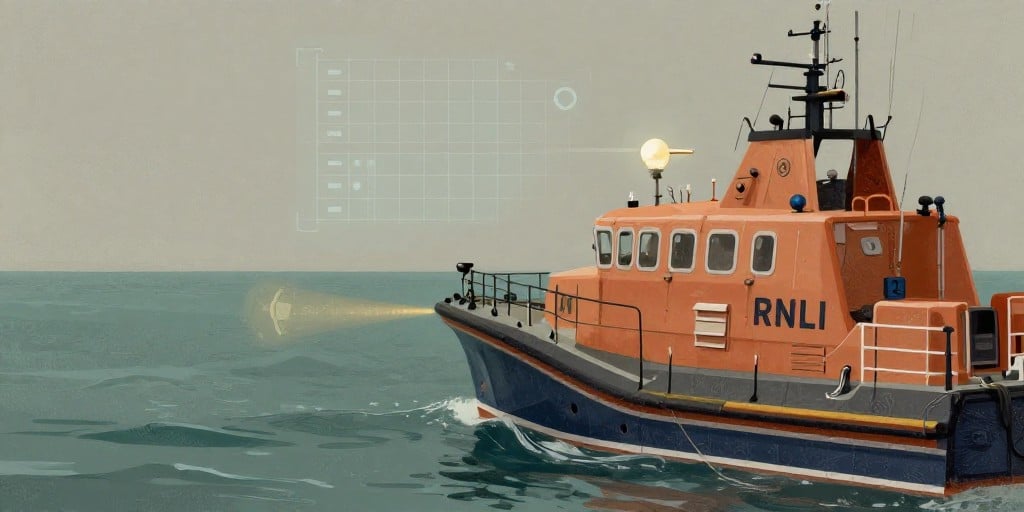
Teledyne Technologies Inc. has entered into a five‑year contract with the Royal National Lifeboat Institution (RNLI), the United Kingdom’s premier lifeboat service. The agreement will see Teledyne’s marine electronics divisions—Raymarine and FLIR Marine—supplied with advanced navigation, radar, and thermal imaging systems for the RNLI fleet. The first installations are slated for the Shannon all‑weather lifeboat and the Atlantic 85 inshore lifeboat, with subsequent roll‑outs planned for vessels such as the E‑class lifeboat on the River Thames.
1. Technological Leap in Maritime Safety
The core of the partnership lies in the integration of high‑resolution radar and FLIR thermal imaging into the RNLI’s operational environment. These technologies enable crew members to detect low‑visibility hazards, locate people in distress, and assess weather conditions with unprecedented precision. In practice, the Shannon lifeboat will now be equipped with an array of sensors that can triangulate a target’s position even in fog or heavy rain—a capability that, during the 2020 rescue of the Gibraltar crew, proved invaluable.
While the immediate benefit is clear—enhanced situational awareness leading to quicker, safer rescues—the long‑term implications extend beyond the RNLI. If the technology proves effective on RNLI vessels, it could set a new industry standard for coastal and offshore operations, influencing commercial shipping, fishing fleets, and even the burgeoning autonomous vessel sector. The adoption of such systems in a public‑sector context may also accelerate regulatory acceptance of similar technologies in private maritime operations.
2. Balancing Innovation with Privacy and Security
Deploying advanced imaging and radar on public vessels raises questions about data collection, privacy, and cybersecurity. Thermal imaging can capture heat signatures of people and vehicles, potentially infringing on individual privacy if data are stored or shared without stringent controls. Moreover, the integration of Teledyne’s systems into legacy RNLI vessels introduces new attack vectors for cyber adversaries, especially if the systems are networked for data telemetry or remote updates.
To mitigate these risks, Teledyne and RNLI must implement robust data governance frameworks. This includes encryption of stored imagery, strict access controls, and compliance with UK data protection regulations such as the Data Protection Act 2018 and GDPR. Cybersecurity protocols should also ensure that firmware updates are authenticated and that the systems can isolate compromised components to prevent cascade failures—a lesson learned from the 2019 ransomware incident that affected a UK port authority’s IT infrastructure.
3. Economic and Operational Impact on the RNLI
From a fiscal perspective, the partnership promises operational savings for RNLI. Advanced sensors reduce the need for manual lookout duties and can cut fuel consumption by optimizing navigation routes. In a 2024 pilot study, the deployment of a FLIR system on an RNLI rescue vessel reportedly reduced fuel burn by 12 % over a 24‑hour shift. Additionally, the improved safety profile could lower insurance premiums and reduce liability exposure.
However, the RNLI’s reliance on Teledyne’s proprietary technology also creates a vendor lock‑in risk. If Teledyne raises prices or alters its support terms, RNLI could face increased costs or operational disruptions. A diversified technology strategy, incorporating open‑source platforms or competing vendors, might hedge against such risks.
4. Strategic Fit Within Teledyne’s Portfolio
Teledyne’s announcement of the partnership coincides with a robust Q2 2026 earnings call, where the company highlighted record sales and earnings growth, particularly in defense and space‑based imaging markets. The RNLI deal dovetails with Teledyne’s broader strategy of positioning itself at the intersection of maritime, aerospace, and defense technologies. By demonstrating the applicability of its systems in a high‑visibility, public‑sector context, Teledyne not only diversifies revenue streams but also enhances its brand as a safety‑centric innovator.
The partnership also serves as a case study for Teledyne’s potential expansion into other sectors. For instance, the same radar and thermal imaging solutions could be adapted for use in maritime search and rescue (SAR) operations across NATO allies, or integrated into autonomous underwater vehicles (AUVs) for scientific research—areas where Teledyne already has a presence.
5. Broader Societal Implications
Beyond the immediate stakeholders, the deployment of sophisticated sensor suites on lifeboats underscores a broader societal shift toward data‑driven safety. As more maritime actors adopt similar technologies, the aggregate data could feed into national maritime traffic management systems, enhancing overall ocean safety. Yet this raises concerns about surveillance creep and the potential militarization of civilian maritime domains. Policymakers will need to balance the undeniable benefits of improved rescue capabilities against the risks of normalizing extensive data collection at sea.
6. Conclusion
Teledyne Technologies’ five‑year partnership with the RNLI marks a significant milestone in the convergence of marine electronics and public safety. While the immediate payoff is clearer situational awareness and enhanced rescue outcomes, the arrangement also opens a Pandora’s box of technical, economic, and ethical considerations. The success of this collaboration will likely depend on careful management of privacy concerns, cybersecurity safeguards, and vendor relationships. As Teledyne continues to thrive in defense and space imaging markets, the RNLI partnership serves both as a testament to its technological prowess and a litmus test for how corporate innovation can responsibly intersect with societal needs.