
Teledyne FLIR Defense Expands Its Autonomous and Imaging Footprint at Eurosatory
Integrated Imaging Platforms Target the Convergence of Manned and Unmanned Warfare
At the 2026 Eurosatory defence exhibition, Teledyne Technologies’ subsidiary Teledyne FLIR Defense unveiled a suite of products that exemplify the growing trend of modular, sensor‑centric warfare. The first set of releases—ThermoVision Situational Awareness HD, ThermoVision Driver Vision HD, and MilSight LIRC III—offers a unified imaging stack that extends a 360‑degree view while maintaining high‑resolution thermal and visible imagery even in degraded conditions. By focusing on compactness and ease of integration, FLIR addresses a persistent industry pain point: the difficulty of retrofitting advanced sensors onto legacy platforms without significant redesign or weight penalties.
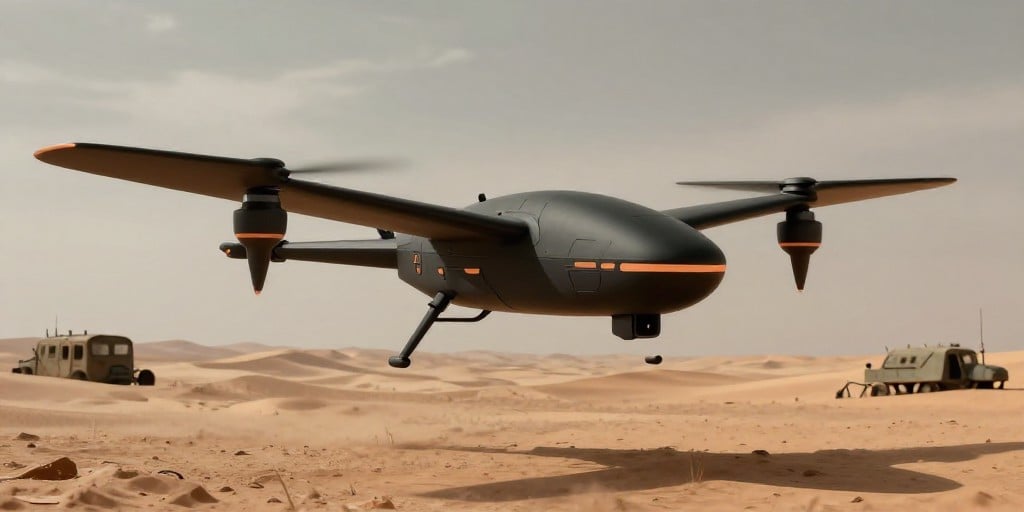
The second launch, the Black Recon autonomous micro‑drone platform, represents a decisive step toward fully autonomous, continuous‑presence sensor networks. Designed to deploy and recover unmanned aerial vehicles (UAVs) from ground vehicles or fixed installations, the system eliminates the need for personnel to exit protected zones for aerial reconnaissance. Its autonomous navigation, capable of operating in GPS‑denied environments, and dual‑payload compatibility with thermal and visible sensors position Black Recon as a versatile asset in both conventional and asymmetric threat scenarios.
A Shift Toward Scalable, Low‑Weight Solutions
Both product families underscore a strategic pivot that has emerged across the defence sector: the need for scalable, low‑weight, and rugged systems that can be rapidly fielded across a spectrum of platforms. Traditional imaging suites often weigh dozens of kilograms and require extensive cabling or structural modifications. In contrast, FLIR’s Vision HD and MilSight LIRC III modules weigh less than 2 kg each and are engineered for plug‑and‑play installation. This design ethos aligns with broader procurement trends that favour modularity over bespoke, platform‑specific solutions.
Moreover, the modularity of Black Recon opens the door to future sensor additions—ranging from lethal weapons to CBRN detection—without necessitating a complete platform overhaul. This forward‑compatibility addresses a key industry challenge: the rapid obsolescence of dedicated UAV systems in the face of evolving mission requirements.
Challenging Conventional Wisdom on Sensor Integration
Historically, defence acquisition programmes have treated sensor and autonomous capabilities as separate domains—one focused on hardware integration, the other on software and mission planning. FLIR’s integrated approach challenges this siloed thinking. By bundling high‑resolution imaging with autonomous flight and modular sensor payloads, the company delivers a holistic solution that reduces the cognitive load on operators and streamlines decision‑making processes.
This paradigm shift has implications beyond FLIR’s immediate product line. It signals a broader industry movement toward co‑design, where sensors, platforms, and software are co‑engineered from inception to ensure seamless interoperability. Companies that adopt this approach may find themselves better positioned to respond to the rapid pace of technological change and to meet the stringent demands of modern, network‑centric battlespaces.
Strategic Context and Future Outlook
The launch of these platforms at Eurosatory is timely, coinciding with heightened global security concerns and an increased emphasis on autonomous operations. NATO’s recent doctrine update, which prioritises rapid sensor deployment and autonomous decision‑support tools, provides a fertile environment for FLIR’s products. Additionally, the rising prevalence of small‑scale, irregular warfare forces—where rapid situational awareness can tip the balance—underscores the commercial viability of compact, autonomous systems.
Looking ahead, FLIR’s focus on modularity and low‑weight design suggests several potential trajectories:
| Trend | Implications | Strategic Response |
|---|---|---|
| Multi‑Domain Operations | Need for seamless data fusion across air, land, sea, and cyber | Develop integrated data‑fusion platforms that leverage FLIR’s imaging and autonomous capabilities |
| Cyber‑Resilient Autonomy | Threats to GPS and communications necessitate onboard autonomy | Expand Black Recon’s GPS‑denied navigation with advanced AI and secure communication protocols |
| CBRN & Chemical Threats | Rising risk of chemical or biological attacks in contested areas | Accelerate integration of CBRN payloads into Black Recon and Vision HD systems |
By aligning its product strategy with these trends, Teledyne FLIR Defense positions itself not merely as a supplier of imaging hardware but as a strategic enabler of modern, autonomous warfare. The company’s ability to deliver scalable, low‑weight solutions that can be rapidly integrated across a range of platforms will likely become a key differentiator in the increasingly competitive defence market.