
Analysis of Technology Infrastructure and Content Delivery in Telecommunications and Media Sectors
Intersection of Infrastructure and Content Delivery
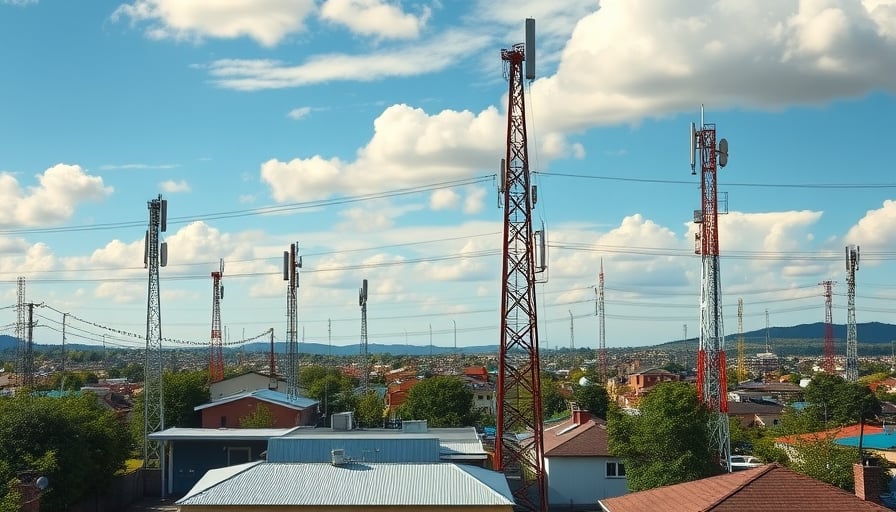
The telecommunications and media industries are increasingly interdependent, with broadband and mobile network operators serving as the critical enablers of content distribution for streaming services, social media platforms, and digital advertising ecosystems. As data consumption accelerates, operators are investing heavily in next‑generation fiber, 5G radio access, and edge computing nodes to meet the latency and bandwidth demands of high‑definition video, virtual reality, and artificial‑intelligence (AI) training workloads. The deployment of network function virtualization (NFV) and software‑defined networking (SDN) allows carriers to dynamically allocate capacity for short‑term spikes associated with live events or viral content.
Subscriber Metrics and Network Capacity Requirements
Subscriber growth remains a key performance indicator for telecom operators, but the metric is evolving beyond mere headcount to include average revenue per user (ARPU) and average data consumption per subscriber (ADCS). Recent data from the International Telecommunication Union (ITU) show that global mobile data traffic is projected to reach 7.9 exabytes per month by 2027, a 13‑fold increase from 2020 levels. To support this volume, operators must expand core network capacity by 30 % annually, while ensuring that edge infrastructure can handle peak traffic loads without compromising quality of service (QoS).
In the media sector, subscription‑based streaming services report a compound annual growth rate (CAGR) of 15 % in paid subscribers, yet subscriber churn remains a persistent challenge. Content acquisition strategies now prioritize data‑driven insights: platforms analyze viewing patterns, demographic segmentation, and geographic demand to negotiate licensing terms that align with localized consumption habits. The cost of acquiring high‑profile sports and exclusive entertainment content continues to rise, compelling platforms to diversify their portfolios with original programming and user‑generated content.
Competitive Dynamics in Streaming Markets
The streaming market is characterized by intense competition among global incumbents (Netflix, Disney+, Amazon Prime Video), regional players (Hotstar, iQIYI, Tencent Video), and emerging entrants leveraging niche content. Consolidation is a common strategy: larger firms acquire smaller studios or content libraries to secure exclusive rights and diversify revenue streams. For example, Disney’s acquisition of Hulu in 2019 and Amazon’s purchase of MGM in 2022 illustrate a broader trend of vertical integration, where content ownership is coupled with distribution infrastructure.
Pricing strategies also reflect competitive dynamics. Bundling of services (e.g., Disney’s bundle of Disney+, Hulu, and ESPN+) aims to increase average revenue per subscriber (ARPS) while reducing per‑service churn. Simultaneously, ad‑supported tiers are expanding to attract price‑sensitive consumers, a model that benefits from the data analytics capabilities of social media platforms such as Reddit, which serve as both advertising venues and content discovery channels.
Telecommunications Consolidation and Regulatory Context
In Australia, recent regulatory actions underscore the heightened scrutiny of data privacy and user safety, particularly for under‑age users on platforms that aggregate large‑scale data, including Reddit. The Australian Competition and Consumer Commission (ACCC) has introduced stricter data governance requirements and age‑verification protocols, which have implications for telecom operators that provide access to these platforms. Compliance costs are projected to increase by an estimated 4 % of operating expenses over the next three years.
Consolidation within the telecom sector is partially driven by the need to pool resources for high‑cost infrastructure projects. Mergers such as the proposed alliance between Optus and T‑Mobile Australia are expected to streamline network management, reduce duplication of spectrum holdings, and accelerate the rollout of 5G services. However, antitrust reviews are ongoing, as regulators assess the potential impact on competition and consumer choice.
Emerging Technologies and Media Consumption Patterns
Artificial‑intelligence and machine‑learning (AI/ML) technologies are reshaping content recommendation engines, personalization algorithms, and user engagement metrics. The rise of large‑scale AI models, such as those used in natural language processing and computer vision, requires substantial computational resources. Platforms that host or utilize these models, including Reddit, are becoming strategic assets for AI developers seeking vast, diverse datasets.
Edge computing and network slicing enable telecom operators to provide dedicated, low‑latency paths for AI workloads and real‑time media streaming. The adoption of 5G NR (New Radio) with millimeter‑wave (mmWave) frequencies offers peak data rates exceeding 10 Gbps, catering to the bandwidth requirements of immersive media experiences like 8K video, virtual reality, and interactive live events.
Audience Data, Financial Metrics, and Platform Viability
Audience measurement remains crucial for assessing platform viability. Streaming services report time‑spent and completion rates alongside traditional metrics such as subscribers and revenue. Financial performance is often benchmarked against subscriber‑weighted revenue (SWR) and gross margin trends. For instance, Disney+ reported a 21 % increase in ARPS in Q3 2024, driven by a surge in premium content releases and a robust advertising partnership with the streaming platform’s ad‑supported tier.
Reddit’s monetization strategy leverages community‑curated advertising and premium memberships (Reddit Premium), generating incremental revenue streams that are increasingly valuable to AI firms. The platform’s data richness provides advertisers with granular targeting capabilities, enhancing the return on ad spend (ROAS) for brands.
In sum, the convergence of telecom infrastructure and media content delivery is reshaping industry dynamics. Operators and content providers must align subscriber growth, network capacity, and content acquisition strategies to maintain competitive advantage amid rapid technological evolution and evolving regulatory landscapes.