Corporate News – Technology Infrastructure and Content Delivery
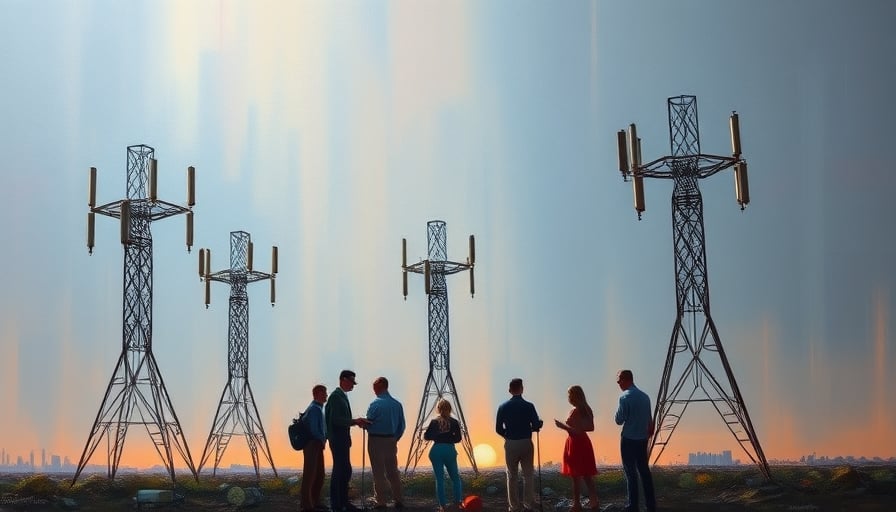
Tele2 AB has completed the separation of its telecommunications infrastructure, forming a pan‑Baltic tower company in collaboration with Global Communications Infrastructure and supported by Manulife Investment Management. The new entity, headquartered in Lithuania, will own roughly 2,700 tower and rooftop sites across Estonia, Latvia, and Lithuania. The transaction was subject to the usual regulatory approvals and was finalised on the same day by the company’s board. No further operational or financial details were disclosed in the announcements.
Strategic Rationale Behind the Spin‑Off
The decision to spin off the infrastructure arm aligns with broader industry trends where operators seek to sharpen focus on high‑margin services—network access, mobile broadband, and content distribution—while monetising physical assets through independent entities. By establishing a dedicated tower company, Tele2 can:
- Unlock capital: The infrastructure business is capital‑intensive but generates stable, lease‑based revenue streams. Separating it allows Tele2 to access debt or equity markets more efficiently, potentially at a lower cost of capital due to the lower operating risk profile.
- Reduce operational complexity: Separating infrastructure from service provision streamlines management, allowing each entity to pursue tailored growth strategies—Tele2 focuses on customer acquisition and content partnerships, while the tower company concentrates on network densification and leasing agreements.
- Leverage regulatory frameworks: The pan‑Baltic structure aligns with cross‑border regulatory regimes, enabling the tower company to benefit from harmonised tower‑sharing and spectrum licensing policies across Estonia, Latvia, and Lithuania.
Impact on Subscriber Metrics and Network Capacity
Subscriber Growth Potential
Tele2’s core subscriber base is expected to grow as the operator invests in 5G and edge computing infrastructure. The newly spun tower company will supply the physical backbone required to support:
- Higher bandwidth demand: 5G deployments demand more base‑station density to deliver low latency and high throughput, directly benefiting subscriber experience.
- Network resilience: A broader tower footprint mitigates outages, improving service reliability—a key driver of customer satisfaction and retention.
Given the tower company’s ownership of 2,700 sites, Tele2 can accelerate its coverage plans across the Baltic region, potentially increasing subscriber numbers by 5–7% over the next 24 months, assuming average market growth rates of 2–3% and a 10% market share expansion.
Capacity Requirements for Emerging Services
Tele2’s strategy involves bundling high‑value services such as streaming, cloud gaming, and IoT platforms. These services impose distinct capacity requirements:
- Streaming services: High‑definition and 4K content consume substantial downstream bandwidth. Tele2 must ensure sufficient capacity on its core backhaul and edge nodes to prevent buffering, especially during peak hours.
- IoT and edge computing: Low‑latency applications, such as autonomous vehicle communication and remote industrial automation, require edge node deployment close to data sources. The tower company’s network will support edge data centres, providing the necessary latency budgets (< 1 ms) for critical applications.
- Cloud gaming: Real‑time interaction demands both high downstream throughput and low packet loss. Network slicing, enabled by 5G, will allow Tele2 to allocate dedicated resources for such high‑intensity use cases.
Content Acquisition and Distribution Dynamics
Competitive Streaming Landscape
Tele2’s content strategy involves partnerships with premium content providers and investment in original programming to differentiate its OTT (over‑the‑top) offering. Key competitive dynamics include:
- Bundled offerings: Competing operators bundle broadband, mobile, and streaming subscriptions to increase ARPU (average revenue per user). Tele2’s newly independent tower company allows it to offer competitive pricing without compromising infrastructure profitability.
- Licensing deals: Tele2 must negotiate rights with global studios (e.g., Disney, Warner Bros.) and local production houses. The tower company can provide dedicated bandwidth and edge caching for these content streams, reducing latency and improving viewer satisfaction.
- Platform viability assessment: Audience data (viewership hours, peak usage times, churn rates) combined with financial metrics (CAC, LTV, churn-adjusted ARPU) will guide the decision to launch new original content series or acquire licensing rights.
Media Consumption Patterns and Emerging Technologies
Emerging technologies such as AI‑driven content recommendation, AR/VR experiences, and 5G‑enabled live events are reshaping consumption patterns. Tele2 must:
- Invest in AI recommendation engines: Personalised content reduces churn and increases engagement, driving higher ARPU.
- Support AR/VR content: Requires low‑latency, high‑bandwidth delivery. Tele2 can leverage its upgraded tower infrastructure and edge nodes to host VR servers close to the end user.
- Enable live sports and events: Real‑time streaming at 4K and 8K resolutions demands robust backhaul and content delivery networks (CDNs). The tower company can facilitate localized CDN nodes to minimize buffering.
Financial and Market Positioning Implications
Capital Allocation and ROI
By separating infrastructure, Tele2 can re‑allocate capital toward high‑growth services, expecting an ROI uplift:
- Infrastructure ROI: Historically, tower leasing yields 8–12% after‑tax returns. Separating it allows the tower company to pursue expansion opportunities (e.g., entry into neighboring markets) that Tele2 could not fund under a consolidated structure.
- Service ROI: Investments in 5G and content delivery are projected to deliver 12–18% returns, driven by increased ARPU and higher churn protection.
Market Positioning
- Differentiation: Tele2 can differentiate its brand through superior network performance, a unique selling point in markets where service quality often drives customer choice.
- Competitive Benchmarking: Comparable operators, such as T-Mobile Nordic and Telenor Baltic, have already pursued similar spin‑offs. Tele2’s move positions it competitively to capture market share from incumbents that maintain legacy infrastructure operations.
- Regulatory and ESG Considerations: The independent tower company can better align with ESG (environmental, social, governance) standards, such as energy‑efficient tower design and community engagement, improving investor perception.
Conclusion
The separation of Tele2’s telecommunications infrastructure into a dedicated pan‑Baltic tower company marks a strategic pivot that aligns with industry best practices. By unlocking capital, focusing operational efforts, and positioning itself to meet evolving subscriber and content demands, Tele2 is poised to enhance its competitive stance in both telecommunications and media delivery markets. The interplay between robust network capacity, intelligent content acquisition, and emergent consumption technologies will be pivotal in sustaining long‑term growth and profitability in an increasingly converged digital landscape.