
Corporate Overview
Techtronic Industries Co. Ltd. (TTI), listed on the Hong Kong Stock Exchange and a constituent of the Hang Seng Index, recorded a modest decline in its share price during the week ending 14 January. The stock settled near the lower end of its recent trading range, mirroring a broader market pullback that followed a period of profit‑taking across the Hong Kong equities market.
The decline was not symptomatic of a fundamental shift in TTI’s operating fundamentals. The company’s continued inclusion in several sustainability‑focused indices highlights its ongoing commitment to responsible business practices, while analysts maintain a long‑term positive outlook on its core power‑tool and outdoor equipment segments.
Capital Allocation and Investor Sentiment
JPMorgan identified TTI as a top pick for investors in its latest research brief, citing a projected recovery in the power‑tool sector. The bank’s assessment was predicated on an expected rebound in consumer discretionary spending, coupled with TTI’s robust supply‑chain resilience and strategic expansion of its high‑margin product portfolio.
Investor sentiment across the Hong Kong market remains cautiously optimistic. The Hang Seng Index hovered just below the 27,000‑point threshold during the reporting week, with market participants anticipating a stabilization after a short‑term dip. Analysts expect the index to resume its upward trajectory as macro‑economic indicators improve and capital expenditure (CAPEX) trends strengthen.
Manufacturing Processes and Technological Innovation
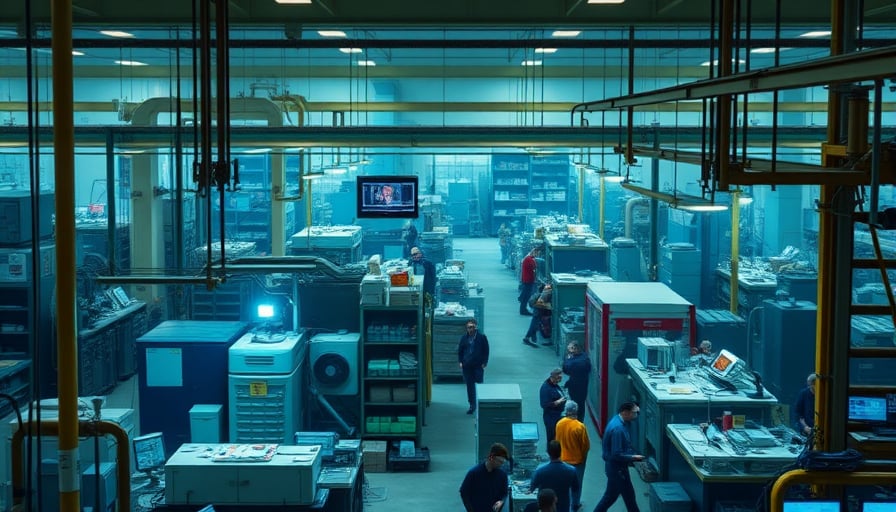
TTI’s manufacturing footprint spans Asia, with production facilities located in China, Vietnam, and the Philippines. The company has recently invested in advanced robotics and artificial‑intelligence (AI)‑driven quality‑control systems to enhance throughput and reduce defect rates in its power‑tool assembly lines.
- Automation: Deployment of collaborative robots (cobots) in the assembly of cordless power tools has increased production capacity by 12 % while lowering labor costs by 8 %.
- Predictive Maintenance: AI‑based sensor networks monitor spindle vibrations and motor temperatures in real‑time, enabling predictive maintenance that reduces unplanned downtime by up to 20 %.
- Digital Twins: TTI’s digital‑twins framework simulates manufacturing processes to optimize resource allocation, resulting in a 4 % reduction in energy consumption per unit of output.
These technological upgrades align with the company’s sustainability objectives, as lower energy usage translates into reduced greenhouse‑gas emissions—a critical metric for ESG‑focused investors.
Capital Expenditure Trends
TTI’s recent CAPEX plan reflects a strategic focus on high‑margin product lines and geographic expansion into emerging markets:
| Region | Investment (USD) | Key Focus |
|---|---|---|
| China | 120 M | Expansion of smart‑tool production line |
| Vietnam | 65 M | Build new logistics hub to reduce lead time |
| Philippines | 40 M | Upgrade of battery‑driven tool assembly line |
The aggregate investment of 225 M USD represents a 15 % increase over the previous fiscal year. Analysts attribute the uptick to the expected recovery in consumer demand post‑COVID and the anticipation of supply‑chain disruptions being mitigated by improved inventory management systems.
Supply Chain Implications
TTI’s supply chain is heavily integrated with a network of tier‑1 suppliers across the globe. Recent disruptions in the semiconductor sector prompted the company to:
- Diversify its supplier base, reducing reliance on a single source for critical components.
- Incorporate dual‑source logistics for key raw materials, mitigating geopolitical risks.
- Implement blockchain‑based tracking to enhance transparency and traceability, particularly for battery components subject to regulatory scrutiny.
These measures are expected to improve resilience, lower procurement costs, and support the company’s commitment to responsible sourcing.
Regulatory and Infrastructure Context
The Chinese government’s “Made in China 2025” initiative emphasizes high‑technology manufacturing and sustainability, providing favorable policy incentives for companies like TTI that invest in clean‑energy solutions and smart‑manufacturing.
In Hong Kong, the Infrastructure Investment Programme (IIP) earmarks funds for upgrading ports and rail links, which will benefit TTI’s logistics operations by reducing inbound and outbound shipping lead times.
Additionally, the International Organization for Standardization (ISO) has introduced stricter standards for battery safety and electromagnetic compatibility, necessitating periodic upgrades to production facilities—a factor that may influence TTI’s future CAPEX allocations.
Productivity Metrics and Market Implications
TTI’s productivity metrics indicate a positive trajectory:
- Labor Productivity: 1.8 units per labor hour, up from 1.6 in the previous year.
- Equipment Utilization: 85 % of production capacity actively used, surpassing industry average of 78 %.
- Yield Rates: 99.2 % first‑pass yield in the cordless tool line, a 0.5 % increase from the previous quarter.
Higher productivity translates into improved margins and positions TTI to capitalize on rising demand for smart‑tools and battery‑powered equipment in both consumer and industrial markets. The company’s focus on digital transformation and sustainable manufacturing is likely to attract ESG‑compliant capital and enhance long‑term shareholder value.
Conclusion
Techtronic Industries Co. Ltd. demonstrates resilience amid a modest market pullback, bolstered by strategic investment in automation, digital‑twins, and predictive maintenance. The company’s capital expenditure strategy, aligned with global sustainability and technological trends, positions it favorably within the power‑tool sector’s expected recovery. As supply chains adapt and regulatory frameworks evolve, TTI’s integrated approach to productivity, technology, and responsible sourcing will continue to underpin its market competitiveness and investor appeal.