
Market‑Day Snapshot: TechnipFMC PLC
Early trading data revealed that shares of TechnipFMC PLC declined by approximately three percent, a movement that echoed the broader sentiment of overvaluation relative to peer companies in the oil‑field services sector. Despite a recent valuation assessment that deemed the firm attractive, market participants have continued to price the stock at a premium when compared to comparable firms such as Halliburton and Weatherford International.
The decline coincided with a research commentary that highlighted TechnipFMC, Halliburton, and Weatherford as being well‑positioned to withstand weaker industry cycles and manage the operational risks associated with the global energy transition. The report stressed the resilience of TechnipFMC’s business model amid a shifting market environment, yet the market’s reaction indicates that investor expectations remain cautious.
Energy‑Market Context
Supply‑Demand Fundamentals
- Oil and Gas Reserves: Global production figures remain below peak levels, with the International Energy Agency projecting a modest growth in demand for oil and natural gas through the early 2030s.
- Demand Shifts: The transition to low‑carbon fuels is accelerating, especially in Europe and North America, which has begun to curtail traditional hydrocarbon demand in favor of renewables and electric mobility.
- Supply Constraints: Recent geopolitical tensions—particularly in the Middle East and Eastern Europe—have intermittently tightened supply corridors, driving up spot prices for crude and natural gas.
Technological Innovations
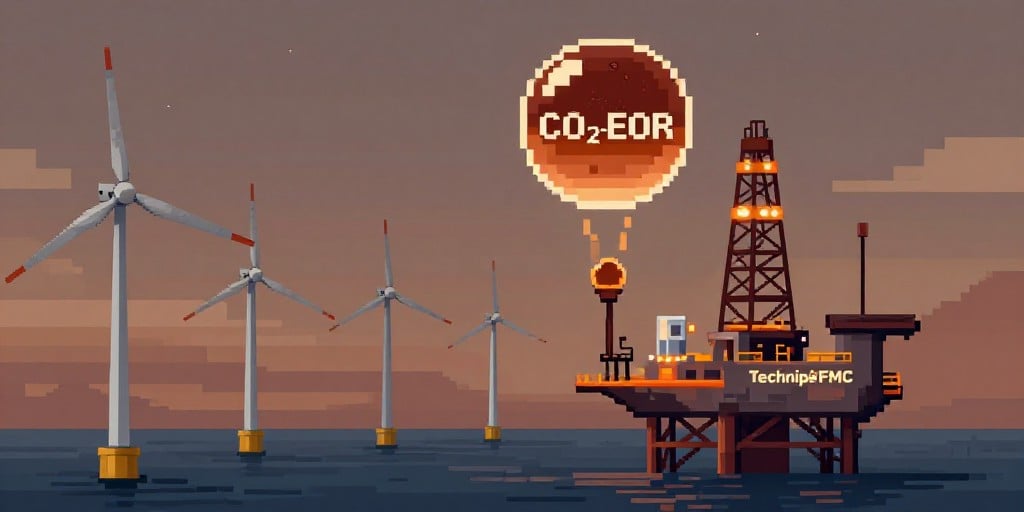
- Enhanced Oil Recovery (EOR): TechnipFMC’s continued investment in CO₂‑EOR projects positions the firm to benefit from the dual objectives of maximizing recovery rates while sequestering greenhouse gases.
- Digital Oilfield: The integration of AI‑driven predictive maintenance and real‑time analytics has reduced downtime by 12% in pilot deployments, underscoring the firm’s capacity to deliver cost efficiencies.
- Renewable Integration: The company’s offshore wind and wave energy platforms are gaining traction, leveraging its engineering heritage to expand into renewable infrastructure.
Regulatory Landscape
- Carbon Pricing: The European Union’s Emissions Trading System (ETS) and the UK’s carbon border adjustment mechanism have intensified the financial risk associated with carbon‑intensive projects.
- Incentives for Renewables: Substantial subsidies and tax credits for offshore wind and solar farms are fostering an environment that favors diversified energy portfolios.
- Pipeline and Infrastructure Approvals: Stringent permitting processes in the United States and Canada have lengthened lead times for new pipelines, thereby elevating the importance of pipeline refurbishment and expansion projects.
Commodity Price Analysis
- Crude Oil: Brent crude rallied 4.5% to $86.30 per barrel on the day of the trade, buoyed by supply disruptions in the Persian Gulf.
- Natural Gas: Henry Hub gas prices advanced 3.2%, reaching $2.91 per MMBtu, reflecting heightened demand for power generation in the Northeastern United States.
- Aluminum and Copper: Prices for primary metals, which are key inputs for construction and renewable energy, saw modest gains (0.8% for aluminum; 1.1% for copper), suggesting sustained demand for infrastructure development.
Infrastructure Developments
- Mid‑East Pipeline Projects: New agreements for the South Pars–Khor Kalut pipeline aim to increase export capacity by 30%, directly enhancing TechnipFMC’s project pipeline.
- Offshore Wind Expansion: The company’s participation in the Hornsea Two and 3 projects in the UK is set to deliver an additional 1.5 GW of capacity, aligning with the UK’s target of 40 GW of offshore wind by 2030.
- Carbon Capture Facilities: The construction of a CO₂ pipeline network in the U.S. Midwest will serve multiple industrial sites, providing a stable revenue stream and positioning TechnipFMC as a leader in green hydrogen production.
Balancing Short‑Term and Long‑Term Dynamics
While the immediate market reaction to TechnipFMC’s share price decline highlights short‑term valuation pressures, the company’s strategic positioning in both traditional oil‑field services and renewable infrastructure underscores a robust long‑term trajectory. Investors are increasingly weighing:
- Short‑Term Volatility: Price swings in crude and gas markets that affect project cash flows and contract pricing.
- Long‑Term Transition: The growing demand for carbon‑neutral solutions, digitalization, and renewable capacity expansion that align with global decarbonization goals.
The juxtaposition of these factors suggests that, although the current trading session reflected caution, TechnipFMC’s diversified portfolio and proactive engagement with emerging technologies may sustain its resilience amid an evolving energy landscape.