
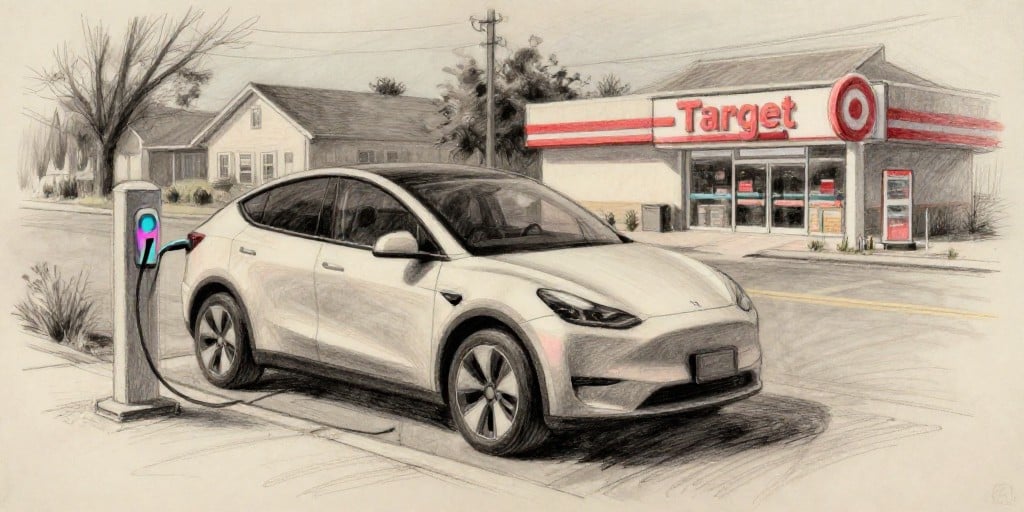
Target Corp. Accelerates Electric‑Vehicle Charging Expansion to Drive Foot‑Traffic and Sustainability
Target Corporation’s recent deployment of approximately 150 high‑speed electric‑vehicle (EV) charging stations across its U.S. store locations underscores a growing trend among large‑box retailers to merge digital convenience with physical retail experience. While the stations are not positioned as a direct revenue engine, they serve as strategic levers to attract shoppers, enhance dwell time, and signal a commitment to sustainability that resonates with younger, environmentally conscious consumers.
The Intersection of Digital Transformation and Brick‑and‑Mortar
Retailers are increasingly recognizing that the future of commerce hinges on seamless integration between online and offline channels. Digital tools—such as mobile payment platforms, loyalty apps, and inventory‑tracking systems—are now commonplace in physical stores. Adding EV charging infrastructure extends this convergence by creating an ecosystem where customers can shop, pay, and charge their vehicles in a single visit. In this context, the charging stations act as a “digital extension” of the in‑store experience, encouraging shoppers to spend more time on premises and to explore additional product categories while waiting.
Generational Spending Patterns and the Rise of Experience‑Focused Consumers
Millennials and Gen Z shoppers exhibit a clear preference for experiences that combine convenience with purpose. According to recent market research, these cohorts are more likely to support brands that align with their values, such as environmental stewardship and community impact. The presence of EV charging points positions Target as a forward‑thinking retailer that supports the mobility shift and caters to the lifestyle of electric‑vehicle owners, a demographic that is projected to double by 2030. Even if the average spend per charging session is modest, the cumulative effect on foot‑traffic and basket size can be substantial, especially in regions where public charging options are scarce.
Competitive Landscape and Market Opportunities
Target is no longer the only major retailer investing heavily in charging infrastructure. Walmart, Costco, Home Depot, and Lowe’s are already operating sizeable networks of fast chargers, and new entrants from the automotive and energy sectors are poised to increase competition. Nonetheless, Target’s strategy differentiates itself through strategic placement of stations in high‑density shopping centers and its integration with existing loyalty programs. By embedding charging facilities within the existing retail footprint, Target leverages its established supply chain and real‑estate assets, thereby reducing capital expenditure and maximizing return on investment.
Forward‑Looking Analysis
Projected Retail Parking Lot Penetration Industry forecasts indicate that by 2030, a significant majority of fast‑charging sites will be located in retail parking lots. Target’s early entry into this space positions the company to capture market share before the segment saturates. This advantage also translates into greater bargaining power with equipment suppliers and potential revenue-sharing agreements with charging‑network operators.
Enhanced Data Analytics and Personalization The integration of charging data with existing customer profiles offers unprecedented opportunities for personalization. For instance, Target can send targeted promotions or digital coupons to shoppers as they charge, encouraging cross‑product purchases. Over time, the accumulation of charging‑behavior data can refine predictive analytics around consumer habits, thereby improving inventory planning and marketing efficiency.
Sustainability Credentials and Brand Loyalty As corporate sustainability becomes a key metric for investors and consumers alike, Target’s charging network bolsters its environmental narrative. This can enhance brand perception among eco‑conscious shoppers and may even influence corporate procurement decisions for B‑to‑B partnerships where sustainability is a criterion.
Potential for Revenue Diversification While the current model focuses on driving foot traffic, the long‑term strategy could evolve to include tiered charging services, subscription models for frequent shoppers, or partnerships with municipalities to provide public charging. Such diversification would align with broader energy‑transition policies and create new revenue streams that complement core retail operations.
Conclusion
Target’s expansion into high‑speed EV charging reflects a broader corporate shift toward integrating digital capabilities with physical retail spaces, meeting the evolving expectations of younger, experience‑seeking consumers, and capitalizing on a market poised for rapid growth. By positioning its stores as hubs of convenience, sustainability, and technology, Target not only strengthens its competitive moat but also sets a precedent for how retailers can adapt to the intertwined dynamics of mobility, digital transformation, and consumer lifestyle trends.