Technical Overview of Super Micro’s New Liquid‑Cooled CPU Rack for Agent‑Based AI
Super Micro Computer Inc. has announced a next‑generation CPU rack that combines Nvidia’s Vera family of processors with the company’s own liquid‑cooling architecture. The system is positioned as part of Super Micro’s Data Center Building Block Solutions portfolio and is intended to support high‑density, agent‑based artificial‑intelligence workloads in both on‑premise and edge deployments.
Key Architectural Features
| Feature | Description | Business Implications |
|---|---|---|
| CPU Integration | Nvidia Vera CPUs (e.g., Vera 1/2) | Provides a specialized instruction set for AI agent virtualization, reducing latency per sandbox. |
| Concurrent Agent Capacity | Up to 22,500 sandboxed agents per rack | Enables large‑scale simulation or inference workloads, ideal for multi‑tenant environments such as financial risk modeling or autonomous vehicle testbeds. |
| Networking & Security | Nvidia BlueField‑4 NFV SoC | Offloads packet inspection and encryption from host CPUs, allowing the primary CPUs to focus on AI inference. |
| Software Stack | Nvidia OpenShell Reference Architecture & Open Agent Safety Platform | Offers out‑of‑the‑box governance, ensuring compliance and monitoring of agent behavior—critical for regulated industries. |
| Power Flexibility | AC or 800‑V DC input | Simplifies integration in legacy data centers while also supporting modern high‑efficiency DC‑power designs. |
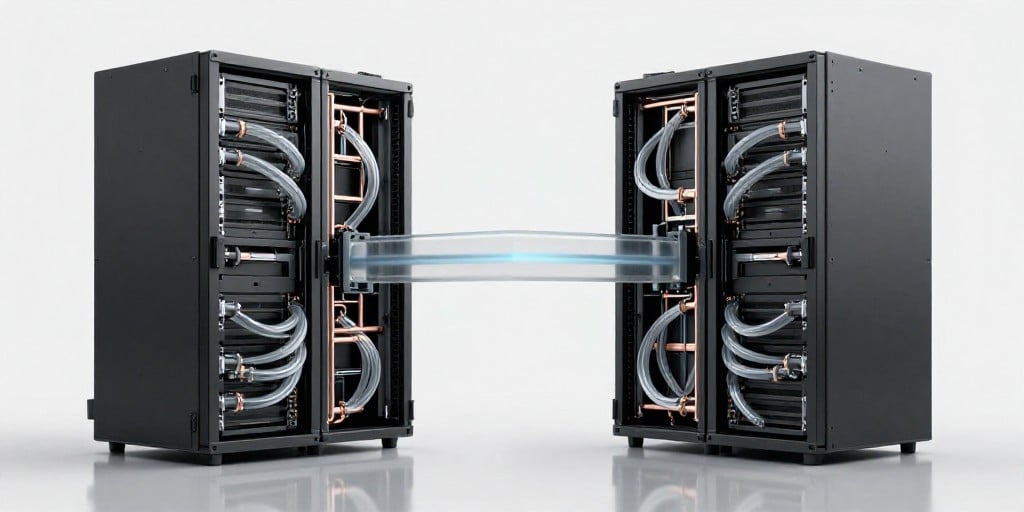
| Cooling | Fully liquid‑cooled chassis with modular radiator modules | Delivers superior thermal performance, permitting higher CPU densities without the thermal throttling that typically limits rack‑level deployments. |
Market Context
The announcement arrives at a time when the AI hardware sector is witnessing rapid investment, yet also grappling with heightened scrutiny over AI spending and commodity price fluctuations. Recent earnings from leading AI chipmakers (e.g., Nvidia, AMD) have shown strong revenue growth, reinforcing investor confidence. However, Super Micro’s shares dipped in pre‑market trading—an isolated reaction that reflects broader market sensitivity to short‑term AI expenditure and oil‑price volatility rather than any fundamental weakness in the product.
Industry analysts note that the ability to run thousands of agent sandboxes in a single rack directly addresses a pressing pain point: the need for cost‑effective, scalable infrastructure to support large‑scale reinforcement learning, distributed simulation, and multi‑user inference workloads. The integration of Nvidia’s safety platform also satisfies emerging regulatory demands for AI transparency and auditability.
Expert Perspectives
“By leveraging Vera’s domain‑specific architecture, Super Micro delivers a clear performance advantage for agent‑centric workloads,” said Dr. Elena Karpov, Chief Analyst at Data Center Intelligence. “The inclusion of BlueField‑4 ensures that network and security processing do not become bottlenecks, which is often a challenge in densely packed AI racks.”
“The 800‑V DC option is forward‑looking,” observed Mark Liu, CTO of CloudOps Solutions. “Many data centers are already transitioning to high‑voltage DC to reduce losses and improve PUE. A rack that supports both AC and DC offers flexibility during that shift.”
Actionable Insights for IT Decision‑Makers
- Capacity Planning: For workloads requiring thousands of isolated AI agents, evaluate the rack’s 22,500‑sandbox capacity against your current and projected workloads. Consider whether the added density offsets the cost of additional cooling infrastructure.
- Security Alignment: If your organization must monitor and regulate AI agent behavior, the built‑in Open Agent Safety Platform can reduce the need for third‑party compliance tooling.
- Power Infrastructure: Assess whether your data center’s power design can accommodate 800‑V DC input. If not, the AC option provides a temporary bridge while you plan a transition to higher‑voltage DC.
- Vendor Ecosystem: Since the rack is tightly integrated with Nvidia’s hardware and software stack, ensure that your existing procurement processes can handle potential licensing and support agreements across both vendors.
Conclusion
Super Micro’s liquid‑cooled CPU rack represents a focused effort to deliver high‑density, secure AI infrastructure that aligns with current industry trends toward specialized hardware and edge‑centric deployment. While short‑term market volatility has modestly affected share price, the product’s technical merits—particularly its integration of Nvidia’s agent‑centric CPUs, safety platform, and flexible power options—position it as a compelling choice for organizations looking to scale AI workloads cost‑effectively.