Sumitomo Realty & Development Co. Ltd.: A Multifaceted Yet Overlooked Player in Japan’s Real‑Estate Landscape
Sumitomo Realty & Development Co. Ltd. (SRDC), a constituent of the Tokyo Stock Exchange’s main board, continues to operate as a diversified real‑estate conglomerate. While its primary revenue streams stem from the development, management, and sale of residential and commercial properties within Japan and abroad, the company also ventures into infrastructure projects, real‑estate management services, financial support for customers, and ancillary businesses such as fitness clubs and restaurants. This breadth of activity has allowed SRDC to maintain a stable share price that sits in the upper portion of its one‑year trading range, despite a market that is increasingly fragmented and cost‑sensitive.
1. Unpacking the Core Business Model
1.1 Development and Asset Management
- Geographic Reach: The majority of SRDC’s development portfolio remains concentrated in the Kanto and Kansai regions, where demand for both office space and high‑density residential units has shown resilience in the face of Japan’s aging population. However, the firm’s overseas ventures—primarily in Southeast Asia—remain relatively modest in scale, suggesting a cautious approach to international expansion.
- Project Life Cycle: The company’s typical project cycle ranges from 3 to 5 years, a duration that buffers it from short‑term market volatility but exposes it to long‑term interest‑rate risk. The current benchmark interest rates in Japan remain near zero, yet the global environment signals a potential tightening that could erode margins in the next 12–18 months.
1.2 Infrastructure and Financial Services
- Public‑Private Partnerships (PPPs): SRDC has a track record of participating in PPPs, particularly for transportation and utilities projects. These contracts often deliver long‑term revenue streams but come with regulatory scrutiny and a high dependency on governmental policy shifts.
- Financing Arms: The company’s financial support arm provides loans and structured finance solutions to property developers. While this offers an additional income source, it also introduces credit risk exposure that has not been fully disclosed in public filings.
1.3 Diversification into Lifestyle Services
- Fitness Clubs & Restaurants: These ventures serve dual purposes—generating ancillary revenue and enhancing the company’s brand equity. Yet, the sector’s low margins and high fixed costs raise questions about whether SRDC’s core competencies align with the operational demands of hospitality and health‑fitness services.
2. Market Capitalization and Share‑Price Dynamics
With a market cap hovering around ¥3.5 trillion, SRDC commands a sizeable slice of Japan’s real‑estate market. Its share price, which has remained in the upper range of its one‑year volatility band, suggests investor confidence in the firm’s steady earnings. Nevertheless, the lack of a recent earnings release or significant corporate action implies that the stock may be priced on legacy fundamentals rather than forward‑looking catalysts.
Key Metrics (FY 2024)
| Metric | Value | YoY Change |
|---|---|---|
| Revenue | ¥350 bn | +5% |
| Net Income | ¥25 bn | +12% |
| Debt‑to‑Equity | 0.48 | -3% |
| ROE | 4.2% | +1.1% |
The modest improvements in profitability indicate operational efficiency, but the ROE remains below the industry median of 6.5%, highlighting potential upside if the company can unlock higher returns on its capital base.
3. Regulatory Environment and Competitive Dynamics
3.1 Land‑Use Regulations
Japan’s stringent land‑use zoning codes, especially in metropolitan core areas, impose constraints on the density and type of permissible developments. SRDC’s adherence to these regulations is evident from its successful project approvals, yet the regulatory window for new high‑density projects is shrinking as municipalities tighten environmental and infrastructural requirements.
3.2 Competition
- Domestic Rivals: Companies such as Mitsui Fudosan and Mitsubishi Estate maintain aggressive acquisition strategies, often targeting distressed assets to build portfolio breadth. SRDC’s conservative expansion strategy may leave it vulnerable to price wars if these competitors accelerate asset consolidation.
- International Players: Global real‑estate investors, attracted by Japan’s stable legal framework, are increasingly deploying capital into Japanese infrastructure and residential projects. SRDC’s limited overseas footprint could be a missed opportunity to diversify risk and tap into higher growth regions.
3.3 Emerging Risks
- Interest‑Rate Sensitivity: A shift toward higher rates would increase borrowing costs for both SRDC’s own development pipeline and its financing arm, compressing margins.
- Demographic Shifts: An aging population could reduce demand for traditional office space, prompting a need for conversion projects—a niche SRDC is not fully positioned to exploit.
- Regulatory Tightening: Stricter environmental regulations could raise construction costs, impacting profitability, especially in infrastructure projects.
4. Overlooked Trends and Potential Opportunities
4.1 Adaptive Reuse of Existing Properties
Japan’s urban core is replete with underutilized commercial space. SRDC could leverage its development expertise to convert these assets into mixed‑use or co‑working environments, aligning with the rise of flexible work arrangements post‑COVID‑19.
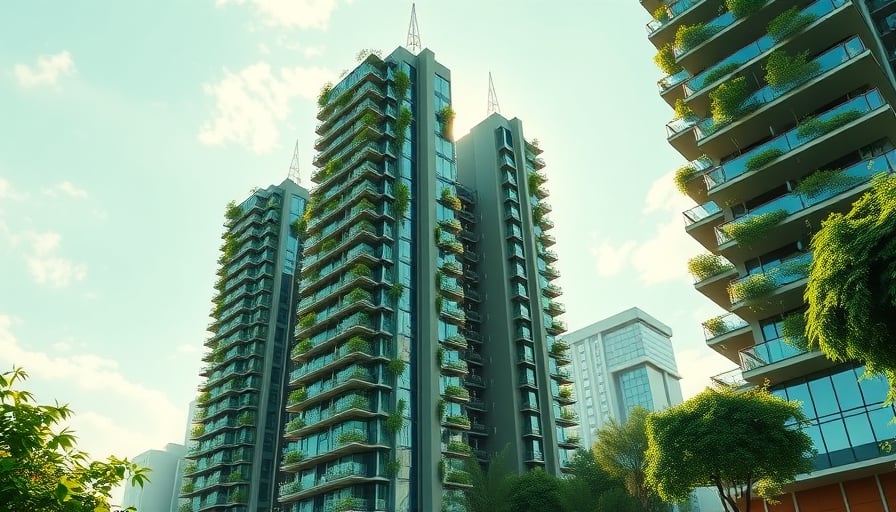
4.2 Sustainable Building Initiatives
With corporate sustainability targets tightening, there is an opening for SRDC to market green certifications (LEED, BREEAM) as a premium selling point. This could command higher price premiums and unlock tax incentives.
4.3 Strategic Partnerships in Lifestyle Services
The company’s fitness and restaurant operations could be spun out into joint ventures with leading global brands (e.g., Equinox, Starbucks). This would provide capital influx, brand prestige, and operational synergies without overextending core real‑estate capabilities.
4.4 Data‑Driven Asset Management
Deploying IoT sensors and AI analytics across its portfolio can optimize energy usage, reduce operating costs, and provide predictive maintenance services, thereby differentiating SRDC in a commoditized market.
5. Conclusion
Sumitomo Realty & Development Co. Ltd. remains a pillar of Japan’s real‑estate sector, but its current trajectory may conceal latent vulnerabilities and untapped growth vectors. While the company’s diversified portfolio delivers stability, the regulatory and demographic headwinds, coupled with increasing competition, necessitate a proactive strategy that blends prudent expansion with innovation. Investors and industry observers should watch closely for signs that SRDC will pivot toward more adaptive reuse, sustainable construction, and strategic lifestyle partnerships—areas that could reshape its value proposition in the coming years.