
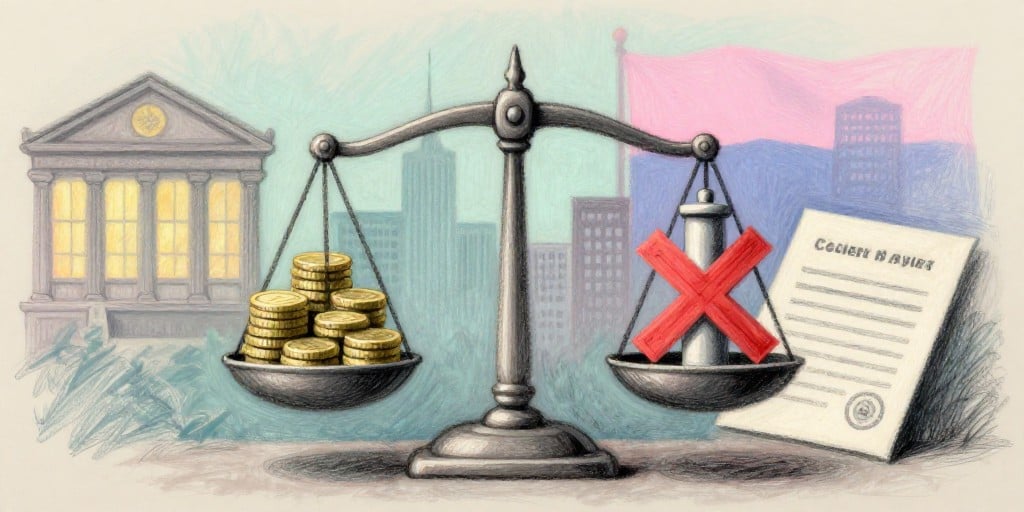
Linde Plc Navigates a Dual Landscape of Dividend Strength and Legal Uncertainty
Linde Plc, the world’s leading industrial gas supplier, is currently at the intersection of robust financial performance and a high‑profile legal dispute. While its dividend policy and earnings outlook remain attractive to investors, the company’s engagement in a cancelled Russian natural‑gas processing project has attracted scrutiny from major German banks, raising questions about regulatory compliance and potential financial exposure.
Dividend Aristocrat Status Reinforces Investor Confidence
In the United Kingdom, financial analysts have upgraded Linde’s shares to a “Strong Buy” recommendation. The rating is part of a broader assessment of Dividend Aristocrats—companies that have consistently increased dividends for decades. Linde’s ability to sustain a healthy payout ratio, combined with a stable dividend policy, positions it favorably among peers such as Air Products and Engie.
The analysis emphasizes that Linde’s dividend yield, projected to grow in line with earnings, offers a cushion in periods of market volatility. Analysts also note that the company’s capital allocation strategy—balancing dividend payouts with reinvestment into core gas‑processing operations—aligns with long‑term shareholder value creation.
Legal Proceedings in Frankfurt Cast a Shadow on Corporate Governance
Concurrently, Linde is embroiled in litigation initiated by a consortium of German banks led by Deutsche Bank. The banks seek compensation for guarantees issued for a Russian natural‑gas processing venture that Linde ultimately cancelled. The banks argue that the guarantees were rendered void when Linde halted the project in compliance with EU sanctions.
The Frankfurt court proceedings have already seen the banks recover assets that were seized in Russia, indicating a potentially favorable outcome for the lenders. A preliminary ruling that could favor the banks would raise questions about the adequacy of Linde’s risk‑management framework in navigating geopolitical and regulatory environments.
Linde’s legal team maintains that the company’s actions were fully compliant with sanctions and that liability for the guarantees should be disputed. The company’s stance underscores its commitment to regulatory adherence while highlighting the complexities of operating across jurisdictions with divergent political pressures.
Core Operations Continue to Meet Industry Benchmarks
Despite the legal headwinds, Linde’s core business remains aligned with industry expectations. The company’s gas‑processing operations—encompassing liquefied natural gas (LNG) production, oxygen manufacturing, and specialty gases—continue to generate the bulk of revenue.
Linde’s presence in markets with stringent environmental and safety standards, such as the European Union and the United States, underscores its resilience. The company has invested in digital monitoring technologies and advanced safety protocols to maintain compliance with evolving regulations. Analysts note that these initiatives reinforce Linde’s competitive positioning against rivals such as Praxair and Air Liquide.
Inter‑Sector Linkages and Broader Economic Implications
The dual narrative of dividend strength and legal uncertainty offers insight into broader economic trends. The high dividend yield reflects a global shift toward yield‑seeking investment strategies amid low‑interest‑rate environments. Simultaneously, the sanctions‑related lawsuit highlights the increasing impact of geopolitical risk on multinational enterprises, especially those in energy‑related sectors.
Moreover, the case illustrates how financial institutions are actively reassessing guarantees and credit exposures in response to regulatory developments. This trend is likely to influence how banks structure future contracts with industrial suppliers, potentially leading to stricter due diligence and risk‑sharing mechanisms.
Outlook: Short‑Term Uncertainty, Long‑Term Resilience
Analysts predict that the legal proceedings may introduce short‑term uncertainty, particularly regarding cash‑flow projections and potential litigation costs. However, they remain optimistic that Linde’s long‑term fundamentals—rooted in its diversified industrial gas portfolio and disciplined dividend policy—will endure.
The company’s strategic focus on sustainability, safety, and technological innovation positions it to capitalize on growing demand for clean industrial gases, especially as global economies accelerate decarbonization efforts. As such, the “Strong Buy” recommendation is likely to persist, provided the company continues to navigate its legal challenges without significant reputational or financial damage.