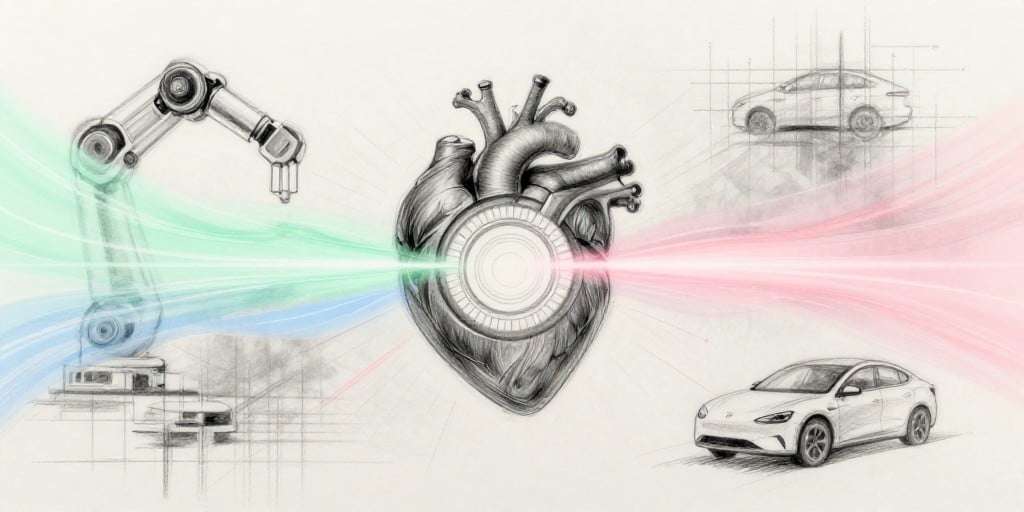
STMicroelectronics Drives Position‑Sensor Market Growth Amid Industry 4.0 Momentum
STMicroelectronics (ST) continues to solidify its position as a leading supplier in the global position‑sensor market, according to a recent analysis by MarketsandMarkets. The report projects a substantial expansion of the sector, fueled by escalating investment in automation, robotics, electric vehicles (EVs), and advanced driver assistance systems (ADAS).
Technological Edge in Position Sensing
ST’s product portfolio spans 3‑D, magnetic, inductive, non‑contact, and digital sensing technologies. These solutions enable high‑precision measurement, real‑time motion control, and robust equipment reliability—critical requirements in high‑value applications such as automotive manufacturing and industrial automation. The company’s continuous innovation cycle, supported by a dedicated research and development pipeline, ensures that its sensors meet stringent accuracy and durability standards demanded by modern production lines and vehicle platforms.
Market Drivers and Growth Outlook
The MarketsandMarkets forecast indicates steady growth for the position‑sensor market, with a compound annual growth rate (CAGR) of 8.9 % between 2024 and 2029. Key growth catalysts include:
| Driver | Impact on Demand | Expected Effect |
|---|---|---|
| Automation & Robotics | Increased need for precise motion tracking in robotic arms and conveyor systems | Higher sensor adoption in industrial plants |
| Electric Vehicles | Position sensing critical for battery management, motor control, and ADAS | Surge in automotive sensor orders |
| Advanced Driver Assistance Systems | Real‑time vehicle dynamics monitoring requires high‑accuracy sensors | Expanded automotive supply chain integration |
| Industry 4.0 Initiatives | Digital manufacturing demands sensor‑based feedback loops | Elevated demand for integrated sensor solutions |
ST’s focus on digital and non‑contact sensing aligns with industry trends toward cleaner, lower‑maintenance solutions, reducing downtime and extending asset life.
Financial Performance in Context
In the European equity market, ST recorded a modest share price appreciation during the quarter, reflecting broader gains among semiconductor and engineering groups. This uptick coincided with positive performance in energy and infrastructure stocks, underscoring the interconnected nature of supply chains and the escalating power requirements of data centers and EV production facilities.
Strategic Positioning for IT Decision‑Makers
For IT and procurement leaders, ST’s sensor ecosystem offers several actionable advantages:
- Standardization Across Platforms – ST’s sensor families are designed to integrate seamlessly with common industrial protocols (e.g., EtherCAT, Profinet, CANopen), simplifying system architecture and reducing integration costs.
- Scalability for Cloud‑Enabled Manufacturing – The company’s digital sensors support edge‑to‑cloud data pipelines, enabling real‑time analytics and predictive maintenance that align with IIoT initiatives.
- Energy Efficiency – Non‑contact and inductive sensors consume minimal power, contributing to lower operating costs in high‑density data center environments.
Expert Perspective
Dr. Elena Rossi, Senior Analyst at TechInsights, notes, “STMicroelectronics’ balanced portfolio of analog and digital position sensors places it in a unique position to serve both legacy industrial equipment and next‑generation autonomous platforms. As manufacturers grapple with the dual pressures of productivity and sustainability, ST’s low‑power, high‑precision solutions offer a compelling value proposition.”
Conclusion
STMicroelectronics remains firmly positioned at the nexus of emerging mobility solutions and digital manufacturing. Its sustained investment in advanced sensor technologies, coupled with a favorable market trajectory driven by automation, robotics, and EV adoption, equips the company to capitalize on the continuing momentum of Industry 4.0 initiatives. IT leaders and software professionals should monitor ST’s product roadmaps closely, as integrating these high‑performance sensors can unlock significant operational efficiencies and competitive differentiation in their respective domains.