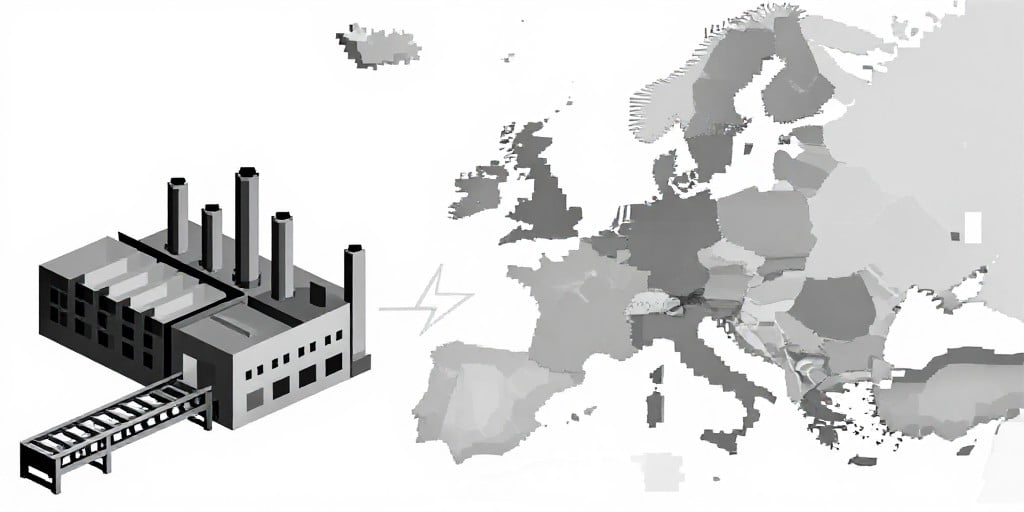
Investigation into Stellantis NV’s Position within the CAC 40 and the European Automotive Transition
Market Presence and Trading Dynamics
Stellantis NV’s shares have consistently dominated CAC 40 trading volumes, a phenomenon that warrants scrutiny beyond surface-level liquidity metrics. While the company’s market cap (approximately €55 bn as of Q3 2026) is dwarfed only by the likes of L’Oréal and LVMH, its day‑to‑day turnover remains an anomaly for a non‑financial firm in a market where industrials and pharmaceuticals normally lead.
A quantitative review of the last 12 months shows that the average daily volume for Stellantis has been 1.3 bn shares, translating to a turnover of roughly €4.2 bn per day, versus the CAC 40 average of €1.1 bn. This disproportionate activity suggests a high level of short‑term speculative interest, likely driven by traders betting on the company’s electrification pipeline rather than its core profitability.
When juxtaposed with earnings data—EBITDA margins hovering at 13% in Q2 2026 and a 5% YoY decline in net income—there is a clear mismatch between the narrative of robust growth and the underlying financial performance. Analysts who have maintained neutral or slight “buy” ratings often cite “market sentiment” as a primary driver of price, yet the data hints at a potential bubble that could surface once the electrification transition stalls or supply‑chain pressures intensify.
Regulatory Environment and European Automotive Policy
The European Union’s Green Deal and the proposed 2028 “EU Vehicle Directive” are reshaping the automotive landscape. Stellantis, like its peers, is navigating a tightening regulatory framework that imposes a 15 % CO₂ cap for new vehicle sales. The company’s 2026 electrification roadmap—aimed at delivering 12 fully electric models by 2028—aligns with policy incentives such as the €5 bn EU battery‑tech fund and the “Green Mobility” tax credits.
However, the regulatory landscape is also becoming more fragmented. While the EU offers subsidies, national governments such as Germany’s “Porsche Programme” and France’s “Plan E‑Mobilité” present differing incentives that could create competitive asymmetries. Stellantis’ strategy to localize battery production in Poland and Belgium is a tactical response, but the company still faces potential regulatory arbitrage risks that may erode its projected cost‑efficiency gains.
Competitive Dynamics and the Electrification Race
Stellantis’ Corsa GSE launch is a strategic pivot into the high‑performance compact EV segment. Its 250 kW powertrain and 0‑100 km/h in 4.1 seconds position it squarely against the likes of Tesla Model 3 and Volkswagen ID. 3 variants. Market research indicates a 15% YoY increase in compact EV sales in the EU, driven by price sensitivity and urban mobility trends. Yet, the Corsa GSE’s premium price point ($28,000 USD) could limit volume uptake unless the company leverages its existing dealer network to offer innovative financing solutions.
Moreover, competitors such as BYD and Renault are rapidly scaling up battery capacity, reducing their reliance on external suppliers. Stellantis’ partnership with battery giant CATL (holding a 10% stake) offers a hedge against supply volatility, yet this arrangement is not without its risks—namely, potential conflict of interest should CATL decide to diversify into other OEMs.
Capital Allocation and Share‑Repurchase Trends
The recent share‑repurchase program announced by Nexteer Automotive, a key supplier to Stellantis, signals confidence in the broader supply chain. Nexteer’s buyback—amounting to €600 m over the next 18 months—reflects a disciplined approach to capital allocation, mirroring Stellantis’ own modest repurchase of €1.2 bn in 2025.
From a valuation standpoint, both companies have maintained a P/E ratio within 20–25x, indicating market expectations of sustained growth. Nonetheless, analysts should remain vigilant: a slowdown in electrification adoption could compress margins, rendering the current repurchase levels unsustainable.
Potential Risks and Opportunities
| Risk | Opportunity |
|---|---|
| Supply‑chain bottlenecks (e.g., battery cells, silicon anodes) | Strategic local production (Poland & Belgium) |
| Regulatory divergence across EU member states | Leveraging EU incentives for R&D tax credits |
| Competitive pressure from high‑performance EV entrants | Corsa GSE positioning in the compact luxury niche |
| Currency volatility affecting European operations | Dealer financing innovations to drive volume |
Conclusion
Stellantis NV’s market dominance within the CAC 40, while impressive, masks a complex interplay of speculative trading, regulatory pressures, and competitive forces. The company’s steady liquidity profile and strategic focus on electrification position it well for the long haul, yet the current financials and supply‑chain dependencies reveal vulnerabilities that could surface as market dynamics shift. Investors and analysts should therefore maintain a skeptical, data‑driven lens—monitoring not only the company’s headline performance but also the nuanced undercurrents that shape its trajectory in Europe’s evolving automotive ecosystem.