
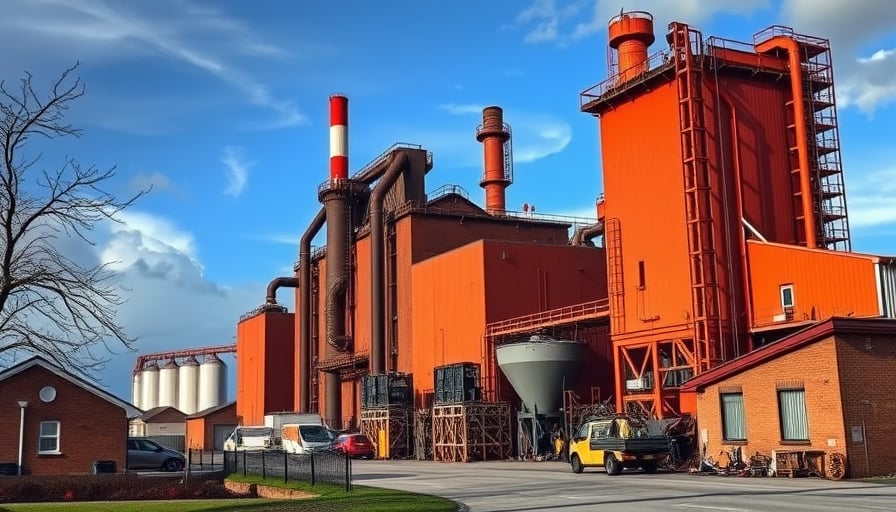
Corporate Analysis: Steel Dynamics Inc. in the Context of U.S. Metal Market Dynamics
Steel Dynamics Inc. (SD) continues to attract the attention of long‑term investors, even as the broader U.S. steel and aluminum sector experiences a temporary downturn. The company’s stock has historically been perceived as a momentum play, underpinned by solid fundamentals and a diversified product portfolio that spans flat rolled steel, engineered bar‑quality steel, and structural beams. Recent trading activity, however, has aligned with a broader decline across U.S. metal producers, largely in response to speculation that the administration may ease tariff restrictions on these commodities. This potential policy shift has precipitated a sector‑wide sell‑off, affecting SD alongside other major players such as Nucor, Commercial Metals, and Steelcase.
Fundamental Strengths and Product Diversification
SD’s resilience stems from its multi‑segment operating model, which mitigates exposure to cyclicality in any single sub‑sector:
- Flat Rolled Steel – The core of SD’s production, serving automotive, construction, and appliance markets. Demand trends for this segment are closely tied to macroeconomic indicators such as housing starts and vehicle production, yet the company’s efficient production footprint buffers against short‑term volatility.
- Engineered Bar‑Quality Steel – A niche product that commands higher margins, supplied to industrial and infrastructure projects. SD’s expertise in precision alloying and quality control provides a competitive edge over generic bar steel producers.
- Structural Beams – Critical for building and infrastructure construction. The firm’s integration of beam manufacturing with downstream fabrication services allows for end‑to‑end solutions, enhancing customer loyalty.
Beyond these core products, SD’s strategic investments in metals recycling and ferrous resource segments add diversification. Recycling operations reduce dependency on raw material price swings, while the resource arm secures supply chains for critical inputs. Additionally, the company’s steel fabrication services complement its production arm, offering value‑added services such as cutting, forming, and coating that enhance revenue stability.
Impact of Tariff Policy Uncertainty
The U.S. administration’s potential easing of tariff restrictions on steel and aluminum has introduced a notable degree of uncertainty. While such a policy change could alleviate competitive pressure from foreign producers, it also signals a shift toward a more liberalized import regime, potentially intensifying competition for domestic producers. Investors have reacted to this duality by tightening their risk profiles, resulting in a sell‑off that extends beyond SD to the broader metal sector.
From a macroeconomic standpoint, tariff relaxation could:
- Lower input costs for domestic producers if tariffs on imported steel scrap and finished goods decrease, improving operating margins.
- Increase import competition, especially from China and other emerging economies, which could compress domestic pricing power.
The net effect on SD’s valuation will depend on how quickly the company can translate reduced input costs into improved profitability while maintaining market share against a more open competitor landscape.
Sectoral Correlations and Broader Economic Trends
The steel sector’s performance is intrinsically linked to several broader economic forces:
- Construction Activity – A leading indicator for demand in structural beams and flat rolled steel. A slowdown in housing or commercial development can dampen sales across SD’s core product lines.
- Automotive Production – Drives demand for flat rolled steel and engineered bars. Fluctuations in vehicle manufacturing cycles, influenced by consumer demand and supply chain constraints, directly affect SD’s revenue mix.
- Infrastructure Spending – Both public and private infrastructure projects benefit from engineered bar‑quality steel and structural beams. Government investment initiatives, such as infrastructure stimulus packages, can provide tailwinds for SD.
- Commodity Prices – Iron ore and coal prices influence production costs. SD’s diversified resource strategy helps hedge against volatile commodity pricing.
Cross‑industry linkages are evident when examining the steel sector’s interdependence with the automotive, construction, and energy industries. For instance, a shift towards electric vehicles reduces demand for high‑strength steel in conventional powertrains, whereas renewable energy projects (e.g., wind turbine foundations) can increase demand for structural beams.
Competitive Positioning and Market Outlook
Relative to peers, SD maintains a competitive advantage through:
- Operational Efficiency – Advanced process technologies and lean manufacturing practices reduce unit costs.
- Supply Chain Integration – Vertical integration from resource acquisition to fabrication services ensures greater control over quality and lead times.
- Financial Health – Strong balance sheet metrics, including low leverage and healthy cash flow generation, provide resilience against cyclical downturns.
Looking forward, several factors could influence SD’s trajectory:
- Policy Developments – The timeline and scope of tariff reforms will shape cost structures and competitive dynamics.
- Demand Recovery – A rebound in construction and automotive sectors post‑pandemic would likely benefit SD’s core product demand.
- Sustainability Initiatives – Increasing regulatory focus on carbon emissions may favor SD’s recycling operations, positioning the firm as a forward‑looking player in green steel initiatives.
Conclusion
Steel Dynamics Inc. remains a compelling case study in how a diversified operational model can sustain a company amid shifting macroeconomic and policy environments. While the immediate impact of tariff policy uncertainty has triggered a sector‑wide sell‑off, the firm’s robust fundamentals, product mix, and strategic positioning provide a foundation for long‑term resilience. Investors monitoring SD should weigh the interplay of policy, demand cycles, and sectoral correlations to gauge the company’s evolving risk‑return profile.