
Starbucks Corporation Maintains Steady Performance Amid Consumer‑Discretionary Volatility
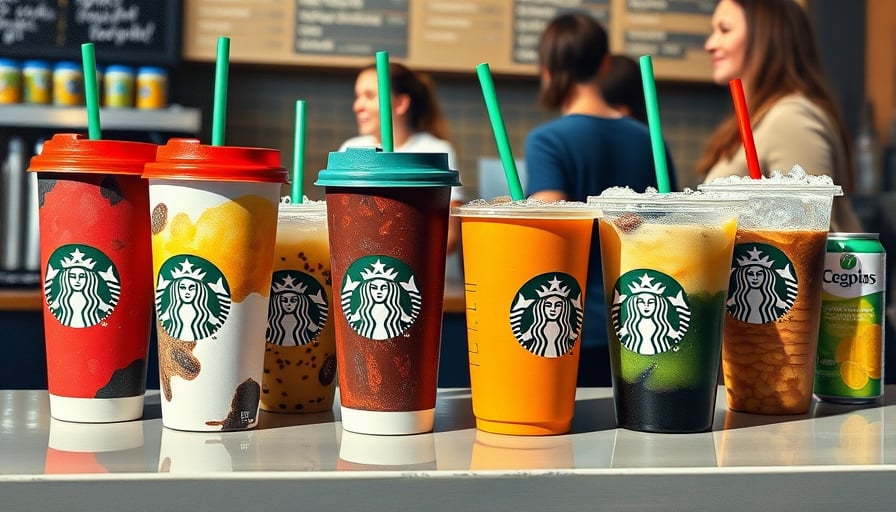
Starbucks Corporation, a leading specialty‑coffee roaster and retailer, has maintained a steady trajectory under its current leadership. Recent market observations indicate that the company’s share price has remained within a range that reflects the broader consumer‑discretionary environment, with volatility moderated by the firm’s global brand strength and diversified product portfolio. Analysts note that Starbucks continues to focus on expanding its range of packaged and ready‑to‑drink beverages, while sustaining its commitment to sustainability and innovation across its supply chain. The company’s performance remains aligned with the overall consumer‑discretionary sector, and its market capitalisation positions it as a prominent player among beverage‑service firms.
Sector‑Specific Dynamics
The specialty‑coffee market is characterized by high consumer discretionary spending, strong brand loyalty, and increasing demand for convenience‑oriented products. Starbucks has leveraged these dynamics through strategic expansion of its ready‑to‑drink (RTD) line, which now includes a variety of cold‑brewed and flavored beverages sold through grocery and mass‑distribution channels. This diversification reduces dependence on in‑store sales and aligns with evolving consumer preferences for on‑the‑go consumption.
Supply‑chain sustainability remains a critical driver in the sector. Starbucks’ “Farm to Cup” program and its investments in renewable energy for roasting facilities reinforce its reputation as a responsible corporate citizen. This focus on environmental stewardship not only satisfies regulatory expectations but also attracts the growing cohort of eco‑conscious investors.
Competitive Positioning
Within the beverage‑service landscape, Starbucks competes with a mix of high‑margin specialty retailers and large grocery retailers that offer private‑label coffee products. The company’s differentiation stems from a robust global distribution network, a sophisticated digital platform, and a premium brand that commands higher price points. While competitors such as Dunkin’ and McDonald’s have expanded their RTD offerings, Starbucks’ commitment to quality and innovation—evidenced by recent collaborations with technology firms for AI‑driven personalization—continues to solidify its market leadership.
Economic and Market Context
The broader consumer‑discretionary sector has faced headwinds from rising inflation and tightening monetary policy, which suppress discretionary spending. Despite these challenges, Starbucks’ stock has exhibited relative resilience, reflecting its diversified revenue streams and strong international presence. The firm’s market capitalisation, hovering above $200 billion, places it among the top tier of beverage‑service companies, underscoring its capacity to weather macroeconomic swings.
Cross‑Industry Implications
Starbucks’ strategic focus on packaged goods and sustainability offers lessons for other consumer‑discretionary firms. The success of the RTD segment demonstrates how product diversification can mitigate store‑based sales volatility, a principle applicable to apparel, apparel‑tech, and household‑goods sectors. Moreover, the company’s integration of advanced analytics for inventory management and customer insights showcases how data‑driven decision‑making can enhance operational efficiency across industries.
Outlook
Analysts project continued modest revenue growth as Starbucks expands its RTD portfolio into emerging markets and explores new flavor profiles. The firm’s ongoing investment in digital ordering platforms and supply‑chain automation is expected to improve margins over the next 12–18 months. While macro‑economic uncertainty may influence short‑term consumer spending, Starbucks’ brand equity, diversified product mix, and sustainability agenda position it well for long‑term resilience within the consumer‑discretionary landscape.