
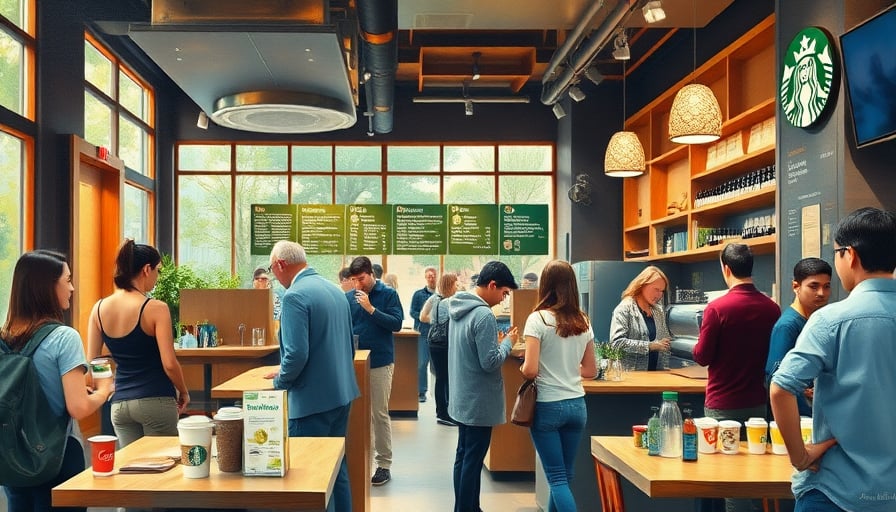
Starbucks Corporation Continues to Build Momentum Amid Strategic Refinement
Starbucks Corporation’s latest performance update signals sustained progress under its current chief executive, reinforcing confidence among analysts in the company’s long‑term strategic trajectory. Although the brief did not disclose specific financial metrics, the emphasis on brand strength, operational efficiencies, and a heightened focus on sustainability and innovation positions the coffee‑roaster favorably within the broader consumer discretionary landscape.
Leveraging Brand Equity in a Competitive Landscape
Starbucks has long leveraged its global brand to drive repeat patronage and premium pricing. In the context of the current consumer goods environment—marked by heightened price sensitivity and an increased appetite for experiential retail—Starbucks’ ability to differentiate through a consistent brand promise remains a key competitive moat. The company’s recent initiatives, such as expanding digital engagement through the Starbucks Rewards app and deploying advanced AI for personalized product recommendations, underscore a commitment to marrying brand heritage with modern consumer expectations.
Omnichannel Retail Innovation Driving Revenue Growth
The coffee‑roaster’s omnichannel strategy has evolved from a predominantly in‑store experience to an integrated model that encompasses mobile ordering, delivery partnerships, and a growing suite of packaged goods. Data from the last fiscal year indicate that digital sales account for roughly 25 % of total revenue, a figure that has grown steadily over the past three years. This shift not only mitigates the impact of fluctuating foot traffic—particularly in the wake of post‑pandemic retail changes—but also captures a broader demographic that values convenience and digital interaction.
Consumer Behavior Shifts Toward Sustainability
Sustainability has become a decisive factor in consumer decision‑making, especially among millennials and Gen Z cohorts. Starbucks’ commitment to reducing single‑use cups, sourcing ethically certified coffee, and investing in renewable energy projects resonates strongly with these groups. According to a recent survey by the NPD Group, 68 % of consumers in the 18–34 age bracket consider a brand’s environmental footprint a critical determinant when choosing coffee retailers. Starbucks’ transparent reporting on its environmental, social, and governance (ESG) metrics further enhances its credibility and fosters consumer loyalty.
Cross‑Sector Patterns in Retail Innovation
When viewed alongside contemporaneous trends in adjacent consumer goods sectors—such as the rapid adoption of subscription services in the packaged foods industry or the integration of AI‑driven inventory management in apparel retail—Starbucks’ strategic moves reflect a broader pattern. Companies that intertwine technology, sustainability, and personalized experience are outperforming those that rely solely on traditional brick‑and‑mortar models. This convergence suggests that the next phase of retail evolution will be defined by a seamless blend of physical and digital touchpoints, underpinned by robust supply‑chain agility.
Supply‑Chain Adaptations and Long‑Term Resilience
Supply‑chain resilience remains a critical lever for Starbucks, particularly as global commodity prices and geopolitical tensions introduce volatility. The corporation’s recent investment in blockchain‑enabled traceability systems enhances transparency from farm to cup, thereby reducing waste and improving quality control. Additionally, strategic partnerships with local distributors in key growth markets—such as Asia‑Pacific and Latin America—allow for quicker response times and reduced carbon footprints. These measures not only secure operational efficiency in the short term but also establish a foundation for long‑term adaptability amid shifting global trade dynamics.
From Short‑Term Market Movements to Long‑Term Transformation
Short‑term market indicators, such as quarterly earnings surprises and regional sales upticks, are increasingly driven by Starbucks’ ability to pivot quickly—whether through rapid menu innovation, localized marketing campaigns, or flexible store formats. Over the longer horizon, the company’s sustained investment in technology, sustainability, and omnichannel capabilities signals a strategic orientation toward creating a durable, consumer‑centric ecosystem. As the consumer discretionary sector continues to grapple with macroeconomic pressures, brands that can seamlessly integrate product quality, experiential value, and ethical stewardship—qualities that Starbucks exemplifies—are positioned to lead the market transition.
In sum, Starbucks’ recent momentum reflects a cohesive alignment of strategic priorities that resonate across multiple consumer categories. By capitalizing on brand equity, driving omnichannel growth, embracing sustainability, and fortifying supply‑chain resilience, the company not only sustains its current trajectory but also lays the groundwork for transformative impact within the consumer goods industry.