
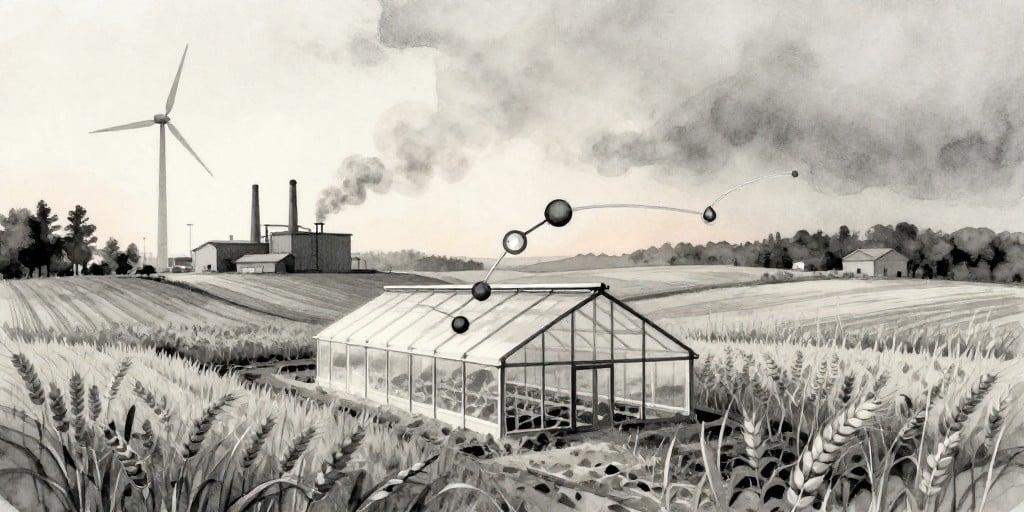
Corporate News: Stantec Inc. Expands Investment in Decentralized Green Ammonia Technology
Executive Summary
During a routine board meeting, Stantec Inc. approved a strategic expansion of its investment in a Canadian clean‑technology partner that has demonstrated a small‑scale, decentralized green ammonia production system. The partner’s pilot on a large grain farm in Manitoba has successfully produced carbon‑free fertilizer and fuel, signaling a potential shift in sustainable agriculture and energy markets. While the announcement refrains from disclosing specific financial figures, the decision reflects Stantec’s intent to deepen its footprint in renewable‑energy engineering and consulting across North America.
1. Strategic Rationale
Stantec’s leadership articulated that the partnership aligns with the company’s broader mandate: delivering engineering and consulting services for renewable energy and sustainable infrastructure. By backing a technology that can supply both fertilizer and fuel without greenhouse gas emissions, Stantec seeks to:
- Diversify revenue streams beyond traditional consulting projects.
- Position itself as a provider of end‑to‑end sustainable solutions in agriculture—a sector increasingly under pressure to reduce its carbon footprint.
- Create high‑value, skilled jobs in engineering, science, and trades, supporting local economies and reinforcing the firm’s public‑sector relationships.
The board’s confidence in the technology’s competitive advantage suggests an expectation that green ammonia will become a critical commodity in the coming decade, especially as global nitrogen demand rises by 20–30 % through 2050.
2. Market Dynamics and Competitive Landscape
| Factor | Current Status | Implications for Stantec | Competitive Edge |
|---|---|---|---|
| Demand for Low‑Carbon Fertilizer | Rapidly increasing due to EU Carbon Pricing and U.S. Farm Bill incentives. | Potential for high uptake on farms already exploring renewable energy. | Early mover advantage in a nascent market. |
| Regulatory Support | Canada’s Green Infrastructure Strategy and Zero‑Emission Vehicle mandates encourage clean‑ammonia use. | Creates a favorable policy environment for pilot scaling. | Ability to leverage government grants and subsidies. |
| Technological Maturity | Pilot scale, limited commercial deployments. | Requires investment in scaling, supply‑chain, and reliability testing. | Stantec’s engineering expertise can bridge technical gaps. |
| Alternative Solutions | Haber‑Bosch with CCS, biogenic ammonia, and nitrogen‑recycling technologies. | Stantec must differentiate on cost, scalability, and integration with existing ag‑infrastructure. | Strong consulting network can integrate multiple solutions. |
| Capital Intensity | High upfront CAPEX; lower OPEX relative to conventional methods. | Stantec could offer financial advisory to secure investment. | Potential for bundled financing and risk‑sharing models. |
Stantec’s move taps into a niche yet expanding sector. The company’s reputation for delivering complex infrastructure projects could translate into a consulting advantage over purely technology firms that lack established delivery capabilities.
3. Regulatory Environment
- Canadian Federal Policies: The 2030‑2050 Emission Reduction Target and the Industrial Innovation Program provide tax credits and loan guarantees for green ammonia projects.
- Provincial Incentives: Manitoba’s Sustainable Agriculture Initiative offers rebates for on‑farm renewable energy installations.
- International Standards: ISO 14001 and the Clean Development Mechanism (CDM) could facilitate carbon credit generation, providing an additional revenue channel.
Stantec’s engagement with policy frameworks can help secure these incentives for the pilot, thereby reducing the risk profile of the investment.
4. Financial Analysis (Assumptions)
| Item | Estimate | Rationale |
|---|---|---|
| Pilot CAPEX | $5 M – $8 M | Reflects current small‑scale ammonia unit cost plus engineering, permitting, and integration on a large farm. |
| Scale‑Up CAPEX | $30 M – $50 M | Projected cost to deploy a 5 MW equivalent unit across multiple sites. |
| OPEX | $1.5 M – $2 M per year | Includes feedstock (biomass), maintenance, and staffing. |
| Revenue Streams | $2 M – $4 M per year (fertilizer sales) + $0.5 M – $1 M per year (fuel sales) | Based on current market prices for green ammonia‑derived products. |
| Payback Period | 5–7 years | Conservative estimate assuming ramped sales growth and cost savings from carbon credits. |
| Discount Rate | 10–12 % | Reflects the risk premium for emerging tech in regulated markets. |
Note: These figures are illustrative; Stantec has not released official financial data.
5. Risks and Mitigating Factors
| Risk | Impact | Mitigation by Stantec |
|---|---|---|
| Technology Scaling Failure | Project may not reach commercial viability. | Leverage Stantec’s engineering portfolio to conduct robust feasibility studies and pilot replication. |
| Regulatory Uncertainty | Shifts in subsidies or carbon pricing could erode profitability. | Maintain active lobbying and policy monitoring; structure contracts with flexibility clauses. |
| Supply‑Chain Constraints | Shortage of specialized components (e.g., PEM electrolyzers). | Utilize Stantec’s global supplier network and secure long‑term supply agreements. |
| Market Adoption Lag | Farmers may hesitate to adopt new fertilizer technology. | Develop integrated advisory services to educate clients on cost savings and environmental benefits. |
| Competition from Established Fertilizer Producers | Existing players could replicate green ammonia production. | Capitalize on first‑mover advantage in consulting and supply‑chain integration. |
6. Opportunities
- Cross‑Sector Integration: Combine green ammonia with wind or solar farms to create synergistic power and fertilizer generation hubs.
- Carbon Credit Generation: Tap into carbon markets, potentially enhancing revenue streams.
- Portfolio Expansion: Use the partnership as a platform to introduce other green chemical solutions (e.g., green methanol, hydrogen).
- Regional Leadership: Position Stantec as a leading advisor in Canada’s agricultural decarbonization efforts, potentially opening doors to public‑sector contracts.
7. Conclusion
Stantec Inc.’s decision to deepen its investment in a decentralized green ammonia partner underscores a strategic pivot toward high‑impact, low‑carbon technologies that align with both global sustainability imperatives and the firm’s core competencies. While financial specifics remain undisclosed, the move carries significant upside potential in a burgeoning market. By marrying its engineering prowess with emerging clean‑tech solutions, Stantec positions itself to influence a critical segment of the food‑system and energy nexus—provided it navigates the outlined risks through diligent regulatory engagement, rigorous scaling protocols, and robust market development strategies.