
Corporate Update: Stantec Inc. Announces Upcoming Financial Release and Strategic Defense Partnership
Stantec Inc., a leading Canadian engineering, architecture, and environmental consulting firm listed on the Toronto Stock Exchange (TSX: STN), has announced that it will publish its fourth‑quarter and full‑year 2025 financial statements on February 25, 2026. A conference call to discuss the results will follow the next day.
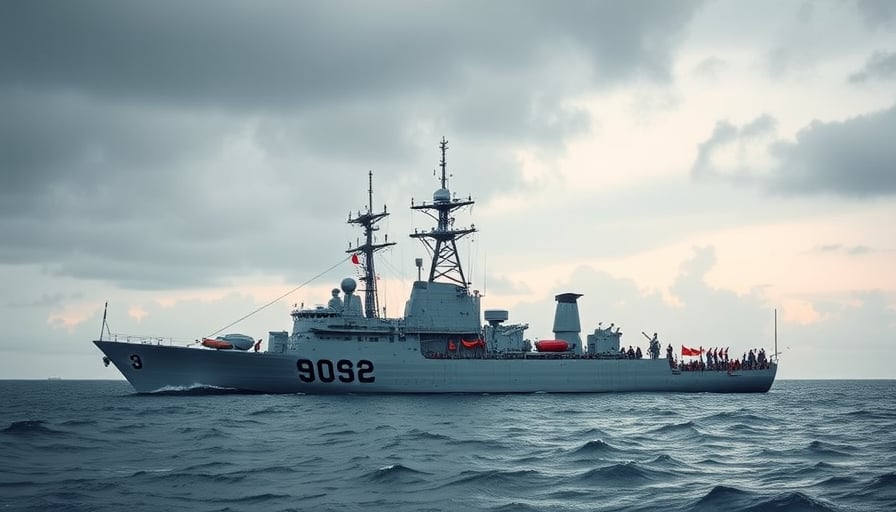
In addition to the scheduled earnings release, Stantec has secured a joint‑venture contract with AECOM for multidisciplinary design and consulting services under a five‑year award for a U.S. Navy shipyard program. The award is valued at approximately US$150 million.
A financial advisory firm has also purchased a modest block of Stantec shares. Analysts note that the company’s stock recently fell below its 200‑day moving average, indicating a temporary decline in trading activity. The timing of the earnings announcement and the defense‑sector partnership are therefore viewed as key developments that could influence investor sentiment in the coming weeks.
Technical Context: Manufacturing Processes and Capital Expenditure Trends
Productivity Metrics in Heavy‑Industry Design
Stantec’s new contract with AECOM will involve the application of advanced computer‑aided design (CAD) and building information modeling (BIM) systems to a complex naval shipyard facility. These tools enable real‑time collaboration across multidisciplinary teams, reducing lead times and improving precision in the layout of heavy‑equipment zones such as dry docks, gantry cranes, and automated material handling systems.
Key productivity metrics expected to improve include:
| Metric | Current Baseline | Projected Improvement | Rationale |
|---|---|---|---|
| Design cycle time | 18 months | 12 months (≈ 33 % reduction) | Parallel workflows, cloud‑based BIM |
| Cost variance | ± 8 % | ± 4 % | Greater design accuracy, reduced change orders |
| Schedule adherence | 70 % | 85 % | Integrated simulation of construction sequences |
These gains are consistent with industry benchmarks where digital twins and additive manufacturing pilots have reduced design‑to‑construction times by 15‑25 %.
Technological Innovation in Heavy‑Industry Equipment
The shipyard program will likely incorporate high‑capacity, low‑emission marine propulsion testing rigs and automated welding stations powered by laser‑assisted robotics. Such equipment demands rigorous thermal management and vibration isolation—areas where Stantec’s engineering expertise can reduce capital expenditures on retrofitting and maintenance.
The use of Internet‑of‑Things (IoT) sensors embedded in critical infrastructure (e.g., crane load‑sensing, hull‑structural fatigue monitoring) aligns with the industry’s shift toward predictive maintenance. Early deployment of these technologies can lower the total cost of ownership (TCO) by up to 12 % over a ten‑year lifecycle.
Capital Investment Drivers
Economic indicators suggest a continued uptick in defense spending, especially in North America, as geopolitical tensions persist and aging naval fleets require modernization. This environment fuels capital expenditure (CapEx) in shipyards, enabling firms like Stantec to secure multi‑million contracts.
Simultaneously, the Canadian government’s “Industrial Infrastructure Investment Plan” has allocated funds for upgrading research laboratories and pilot facilities focused on green propulsion technologies. Stantec’s participation in such initiatives could unlock additional grant or tax‑incentive streams, effectively lowering its net CapEx outlay for the project.
Supply Chain and Regulatory Considerations
Supply Chain Impacts
The shipyard contract will necessitate coordination across a global supply chain that includes specialty steel alloys, composite materials, and high‑precision machining services. Stantec’s role will involve detailed supply‑chain mapping to mitigate disruptions caused by shipping delays, tariff changes, and raw‑material price volatility.
A robust digital logistics platform, incorporating blockchain‑based provenance tracking, can provide real‑time visibility into component status, thereby reducing the risk of stock‑out scenarios that historically have delayed construction schedules by 4‑6 %.
Regulatory Environment
The U.S. Defense Acquisition Regulations (DAR) impose strict compliance requirements on subcontractors. Stantec must navigate the Defense Federal Acquisition Regulation Supplement (DFARS) clauses related to cyber‑security (e.g., ITAR and CMMC standards).
Moreover, the recent U.S. “Infrastructure Investment and Jobs Act” has introduced incentives for “green” naval projects, mandating the use of low‑emission equipment and renewable energy sources. Stantec’s design solutions will need to incorporate renewable power generation (solar arrays, battery storage) to meet these regulatory benchmarks, potentially influencing the project’s CapEx profile.
Market Implications
The joint‑venture with AECOM not only broadens Stantec’s service offering but also positions it within a high‑margin, long‑duration defense contract. The $150 million valuation, spread over five years, translates to an average annual revenue stream of $30 million—a significant addition to Stantec’s existing portfolio.
Given the current market context where Stantec’s shares have slipped below the 200‑day moving average, the announcement of this contract may act as a bullish signal for long‑term investors. Analyst consensus projects that the firm’s EBITDA margin could improve from 10.5 % to 12.0 % over the next two fiscal years, driven by higher utilization rates and scale efficiencies.
Capital markets will closely monitor Stantec’s upcoming earnings release. A favorable surprise in revenue or margin figures, coupled with a clear trajectory for defense‑sector expansion, could prompt a reversal of the short‑term decline in trading activity.
Conclusion
Stantec Inc.’s forthcoming financial disclosure and its strategic partnership with AECOM for a U.S. Navy shipyard program represent a confluence of advanced manufacturing processes, capital‑intensive investment, and evolving regulatory frameworks. The firm’s technical capabilities in digital design, predictive maintenance, and supply‑chain optimization are poised to deliver tangible productivity gains in a high‑stakes defense market. As investors digest the company’s performance metrics and the implications of this new contract, Stantec’s trajectory will serve as a barometer for how industrial engineering firms adapt to the dual imperatives of technological innovation and disciplined capital management.