
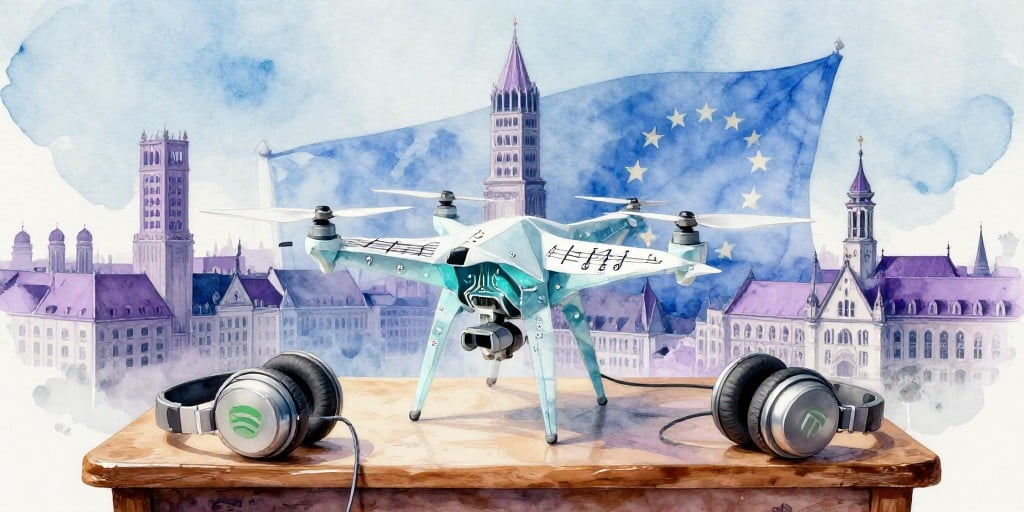
Investigative Analysis of Spotify Technology SA’s Strategic Engagement in European Defence Technology
Spotify Technology SA, best known for its music‑streaming platform, has quietly positioned itself as a significant investor in a Munich‑based drone and AI startup, Helsing. This move exemplifies a broader, emerging trend where technology investors cross traditional industry boundaries to back firms with dual civilian and defence applications. The following analysis unpacks the financial, regulatory, and competitive dimensions of this investment, identifies overlooked trends, and evaluates risks and opportunities that may elude conventional observers.
1. Financial Foundations and Capital Structure
1.1 Capital Inflow and Valuation Implications
- Series E Capital Injection: Helsing recently closed a sizable Series E round, attracting major financial institutions and growth‑equity arms. While the exact valuation remains undisclosed, the sheer volume of capital—topping €600 million in the preceding round led by Prima Materia—suggests a valuation in the range of €4–6 billion.
- Spotify’s Commitment: As an early backer, Spotify’s continued participation signals confidence in Helsing’s ability to monetize its AI and drone technologies. The company’s equity stake, estimated at 5–7 % post‑Series E, provides a direct financial upside if the company secures sizeable defence contracts.
1.2 Employee‑Stock‑Option (ESOP) Reconfiguration
- Shift to Virtual Plan: Helsing’s decision to replace a traditional ESOP with a virtual equity plan has raised employee concerns. The move potentially dilutes the alignment between employee incentives and long‑term shareholder value.
- Legal Consultation: The legal consultations initiated by employees reflect heightened sensitivity to governance practices, particularly in firms with defence ties where compliance scrutiny is intense.
2. Regulatory Landscape
2.1 Export Control and Dual‑Use Regulations
- EU Dual‑Use Controls: Products that can serve both civilian and defence purposes fall under the EU Dual‑Use Regulation. Helsing must navigate export licensing for its AI software and drone hardware, especially if targeting foreign defence ministries.
- UK Export Licensing: Post‑Brexit, the UK’s export regime may differ, creating potential fragmentation in market access for Helsing’s products.
2.2 Funding Source Constraints
- Spotify’s Funding Channels: As a publicly listed company in the United States, Spotify is subject to the U.S. Export Administration Regulations (EAR). While Spotify’s investment in Helsing is not directly governed by U.S. sanctions, indirect financial flows could be scrutinised by the Office of Foreign Assets Control (OFAC) if Helsing’s clients include sanctioned entities.
3. Competitive Dynamics
3.1 Market Positioning
- First‑Mover Advantage in AI‑Integrated Drones: Helsing’s integration of advanced AI into unmanned aerial vehicles (UAVs) positions it ahead of many European competitors that focus solely on hardware.
- Maritime Vessel Expansion: The planned shift into autonomous maritime vessels expands Helsing’s moat but also intensifies competition with established players such as BAE Systems and Saab, who possess entrenched defence relationships.
3.2 Institutional Investor Ecosystem
- Growth‑Equity Arms: The involvement of growth‑equity funds suggests a pipeline of capital that can sustain R&D-intensive projects.
- Government Contracting: European defence budgets are increasingly earmarking funds for emerging technologies. Helsing’s European base reduces logistical and regulatory barriers compared to U.S. or Asian competitors.
4. Uncovered Trends and Potential Implications
| Trend | Implication |
|---|---|
| Tech Investors Bridging Civilian and Defence Sectors | Diversification of investor portfolios; increased scrutiny from regulatory bodies. |
| Virtual Equity Plans in High‑Risk Sectors | Potential misalignment of employee incentives; heightened legal and reputational risk. |
| European Defence Tech Ecosystem Growth | Opportunity for strategic partnerships; risk of talent drain to U.S. firms. |
| Geopolitical Tensions (e.g., EU‑Russia dynamics) | Accelerated procurement cycles for EU defence firms; increased demand for autonomous systems. |
5. Risks and Opportunities
5.1 Risks
- Regulatory Compliance: Missteps in dual‑use licensing could lead to fines or product bans.
- Talent Retention: Dissatisfaction over ESOP restructuring may hamper recruitment of AI specialists.
- Geopolitical Shocks: Sudden changes in EU‑Russia relations could either inflate demand or trigger embargoes.
5.2 Opportunities
- First‑Mover AI Advantage: Helsing can capture early adopters in EU defence agencies seeking autonomous solutions.
- Spotify’s Strategic Visibility: By backing Helsing, Spotify gains credibility in the defence sector, potentially opening doors for future technology collaborations.
- Cross‑Sector Innovation: Dual‑use technology can pivot to civilian markets (e.g., logistics, disaster response), diversifying revenue streams.
6. Conclusion
Spotify Technology SA’s investment in Helsing illustrates a calculated gamble: leveraging its capital and global reach to stake a claim in an emerging, high‑value defence technology niche. While the financial backing signals optimism, the underlying regulatory complexity, employee governance issues, and intense competitive landscape demand vigilant oversight. Stakeholders—investors, regulators, and employees—must remain alert to the evolving dynamics of European defence technology to navigate this multifaceted opportunity successfully.