Executive Summary
South32 Limited’s latest regulatory filing—an updated Appendix 3C notification of a routine daily share buy‑back—has been posted to the Australian Securities Exchange (ASX) and mirrored on the Johannesburg and London exchanges, as well as the National Storage Mechanism. While the disclosure is brief and contains no substantive operational or financial commentary, it offers a window into the company’s capital‑allocation strategy, risk posture, and the broader mineral‑sector landscape that underpins the global energy transition.
Capital‑Allocation Logic in a Volatile Asset Class
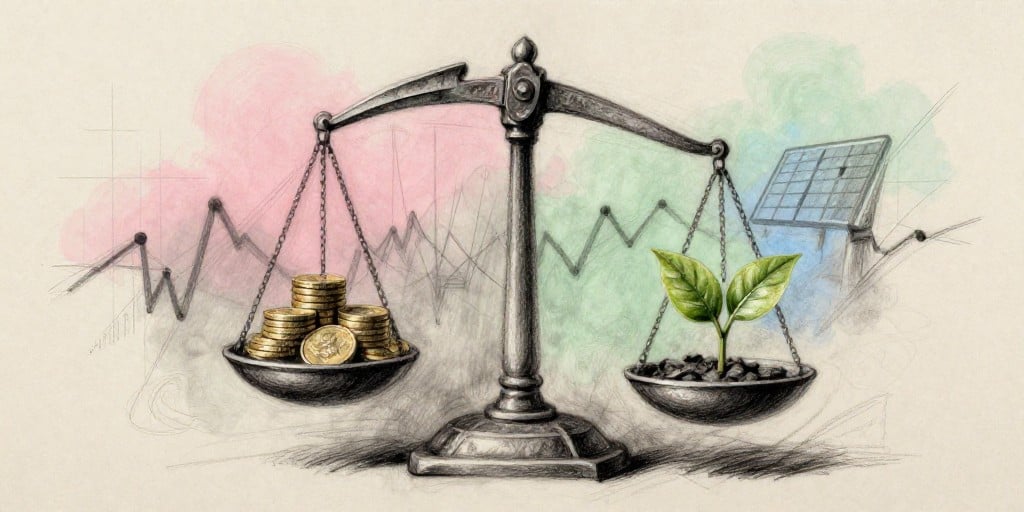
Share buy‑backs represent a strategic tool that can signal confidence in intrinsic value, provide a mechanism for returning excess cash, and potentially support earnings per share (EPS) in the face of commodity‑price volatility. For a diversified mining entity such as South32, which operates in copper, coal, zinc, lead, and alumina, the decision to execute a daily buy‑back raises several questions:
| Question | Analytical Lens | Implications |
|---|---|---|
| What is the source of the buy‑back capital? | Cash‑flow modelling and liquidity ratios (current, quick) | A healthy cash‑flow profile would mitigate the risk of diverting funds from exploration or community investment. |
| How does the buy‑back align with the company’s long‑term capital expenditure (CAPEX) commitments? | CAPEX vs. free‑cash‑flow (FCF) trend analysis | If buy‑backs are funded from surplus FCF, they may be sustainable; otherwise, they could constrain future expansion. |
| Is the buy‑back part of a broader dividend policy shift? | Dividend payout ratio and historical trend | A consistent buy‑back could complement dividends, enhancing shareholder yield, but may also signal a lack of better investment opportunities. |
South32’s disclosure does not provide details on the buy‑back funding source or the timing of future capital‑intensive projects, limiting our ability to evaluate whether the operation is opportunistic or opportunistic.
Regulatory and Market Context
South32’s dual listing on the ASX and JSE subjects it to divergent regulatory regimes, each with distinct disclosure expectations and market‑participant expectations.
ASX – Transparent Disclosure
The ASX’s requirement for an Appendix 3C notification ensures timely communication of significant share‑repurchase activity. Analysts track such filings for signals of share‑price manipulation risk or for evidence of undervaluation.
JSE – Investor Relations Dynamics
The JSE’s emphasis on community engagement and responsible mining adds an additional layer of scrutiny. The involvement of Standard Bank as a sponsor suggests a desire to underscore the company’s credibility among institutional investors.
Implications for Share Price Volatility
Historically, daily share buy‑backs by mining firms have correlated with modest upside in share price, often offset by the market’s sensitivity to commodity price swings. A lack of accompanying commentary raises concerns about market perception; investors may interpret the announcement as a neutral or even defensive maneuver.
Competitive Dynamics in the Energy‑Transition Commodity Landscape
South32 operates in key markets for copper, zinc, lead, and alumina—materials that are critical to the electrification of transport, renewable energy infrastructure, and battery technology. Several overlooked trends shape the competitive landscape:
- Geopolitical Shifts in Supply Chains
- Opportunity: South32’s presence across the Americas, Australia, and Southern Africa positions it to benefit from diversification strategies employed by global tech and automotive firms seeking to insulate supply chains from regional disruptions.
- Risk: Political instability or regulatory changes in Southern Africa could impose operational constraints and increase compliance costs.
- Regulatory Tightening on Coal
- Opportunity: The company’s coal assets may be repurposed or decommissioned with potential for carbon‑capture investment, creating a niche revenue stream.
- Risk: Accelerated phase‑out of coal in major economies could depress demand for coal‑derived products, impacting valuation.
- Technological Disruption in Recycling
- Opportunity: Advanced recycling technologies could reduce the need for primary mining, creating a partnership or supply‑chain role for South32.
- Risk: Failure to invest in recycling capabilities may render the company’s assets less competitive.
Risk–Opportunity Matrix
| Category | Potential Risk | Potential Opportunity |
|---|---|---|
| Capital Allocation | Over‑reliance on buy‑backs could erode future investment capacity. | Using free cash flow prudently can enhance shareholder value without compromising growth. |
| Regulatory | Increasing environmental and community‑sourcing requirements may elevate costs. | Transparent ESG commitments can attract ESG‑focused investors and improve market perception. |
| Commodity Exposure | Copper price volatility could swing profitability; coal’s declining demand trajectory. | Diversification across commodity types mitigates concentration risk. |
| Geopolitical | Regional instability in Zambia or Brazil. | Strategic partnerships with governments and local stakeholders can secure long‑term access. |
Conclusion
South32’s routine daily share buy‑back, while lacking operational detail, invites a nuanced examination of capital discipline, regulatory adherence, and strategic positioning amid a rapidly evolving energy‑transition commodity ecosystem. Investors and analysts should monitor subsequent disclosures for insight into how the company balances shareholder returns against the imperative to invest in responsible mineral development and community engagement. The absence of accompanying financial metrics underscores the need for greater transparency to validate whether the buy‑back represents an optimal deployment of capital or a precautionary response to market pressures.