
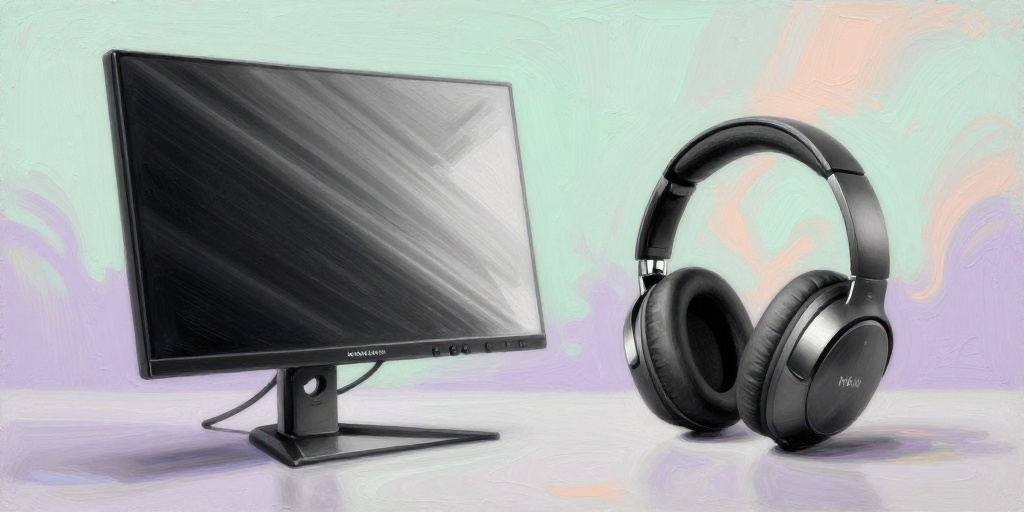
Sony Group Corp Expands Esports Hardware Portfolio with High‑Refresh OLED Monitor and Advanced Gaming Headphones
Sony Group Corp’s recent product announcements underscore a decisive shift toward a vertically integrated esports ecosystem. The company unveiled the INZONE M10S II, a 27‑inch QHD OLED gaming monitor, and the INZONE H6 Air gaming headphones—both positioned to meet the escalating demands of competitive gamers and professional content creators. These releases illuminate Sony’s strategic emphasis on hardware‑centric value creation, aligning with broader consumer‑goods trends toward high‑performance, immersive experiences.
Market Context and Competitive Positioning
- High‑refresh OLED monitors are rapidly gaining traction, with the global gaming‑monitor market projected to grow from $4.8 billion in 2023 to $7.2 billion by 2028 (source: IDC). Sony’s pricing, which situates the M10S II in the upper mid‑range, is a calibrated response to the premium segment dominated by brands such as ASUS ROG, Alienware, and Acer Predator.
- Gaming headphones have seen a 15 % year‑over‑year increase in revenue globally, driven by the rise of immersive role‑playing and multiplayer titles. Sony’s H6 Air, priced near $200, targets mid‑tier consumers who demand superior audio fidelity without the high cost of flagship models like the WH‑1000XM5.
By offering a complementary monitor–headphone bundle, Sony capitalizes on a cross‑category synergy that enhances brand loyalty and encourages ecosystem lock‑in, a strategy that has proven effective for companies like Apple and Microsoft.
Consumer Behavior Shifts Driving Product Development
Demand for Ultra‑Low Latency Esports competitors now routinely benchmark input lag below 5 ms. The M10S II’s 540‑Hz mode at full resolution and 720‑Hz mode at a reduced pixel count directly address latency concerns, delivering a near‑real‑time visual experience that is critical for professional play.
Preference for Adaptive Performance Modern gamers seek devices that adjust to content—fast action versus cinematic storytelling. Sony’s motion‑blur‑reduction algorithm and dynamic refresh capability allow users to toggle between clarity and speed without sacrificing brightness, a feature that aligns with the industry’s shift toward adaptive hardware.
Value‑Driven Purchasing With rising inflation, consumers increasingly evaluate cost‑per‑performance metrics. Sony’s mid‑tier pricing for both monitor and headphones positions them as premium yet accessible solutions, appealing to a wide demographic that ranges from casual enthusiasts to semi‑professional gamers.
Omnichannel Retail Strategy
Sony is leveraging its extensive distribution network, encompassing:
- Direct-to-Consumer (D2C) Platforms – The company’s e‑commerce portal allows consumers to configure hardware bundles, receive real‑time inventory updates, and benefit from post‑purchase support.
- Retail Partnerships – Alliances with major electronics retailers such as Best Buy, B&H, and specialty gaming outlets facilitate in‑store demonstrations and exclusive launch events.
- Online Marketplaces – Availability on Amazon and Rakuten expands reach to price‑sensitive customers who prioritize convenience.
By integrating these channels, Sony ensures a seamless customer journey from discovery to post‑purchase engagement, thereby reinforcing brand trust and fostering repeat business.
Supply Chain Innovations
Sony’s collaboration with LG for tandem OLED panels exemplifies a strategic partnership that mitigates component scarcity—an issue that has plagued the semiconductor industry. This partnership:
- Secures a stable supply of high‑quality OLED displays, reducing lead times and mitigating price volatility.
- Enables co‑development of custom panel specifications, allowing Sony to tailor refresh rates and pixel densities to esports requirements.
Moreover, Sony’s investment in regional manufacturing facilities across Asia reduces shipping costs and carbon emissions, aligning with sustainability imperatives that increasingly influence consumer purchasing decisions.
Long‑Term Industry Transformation
The confluence of high‑refresh technology, adaptive performance algorithms, and integrated hardware ecosystems signals a broader transformation in the consumer‑goods landscape:
- Hardware–Software Convergence – Sony’s hardware offerings dovetail with its robust software ecosystem (e.g., PlayStation® Network, cloud gaming services), creating a holistic experience that transcends individual products.
- Experience‑Centric Brand Positioning – As consumers prioritize immersive experiences over mere product features, brands that deliver cohesive ecosystems will dominate. Sony’s emphasis on esports, a rapidly growing sector, positions it as a leading innovator.
- Resilience Through Diversification – By diversifying across monitors, headphones, and future potential accessories (e.g., haptic gloves, AR headsets), Sony spreads risk and captures multiple revenue streams, a strategy that strengthens financial stability in volatile markets.
Conclusion
Sony Group Corp’s introduction of the INZONE M10S II monitor and INZONE H6 Air headphones is more than a product launch; it represents a calculated alignment with evolving consumer expectations and industry trends. Through strategic pricing, omnichannel retail integration, and supply‑chain collaboration, Sony is poised to capture a significant share of the esports and high‑performance gaming markets. In the broader context of consumer‑goods transformation, Sony’s moves exemplify the shift toward ecosystem‑driven value creation and underscore the long‑term importance of agility, technology partnership, and customer‑centric innovation.