
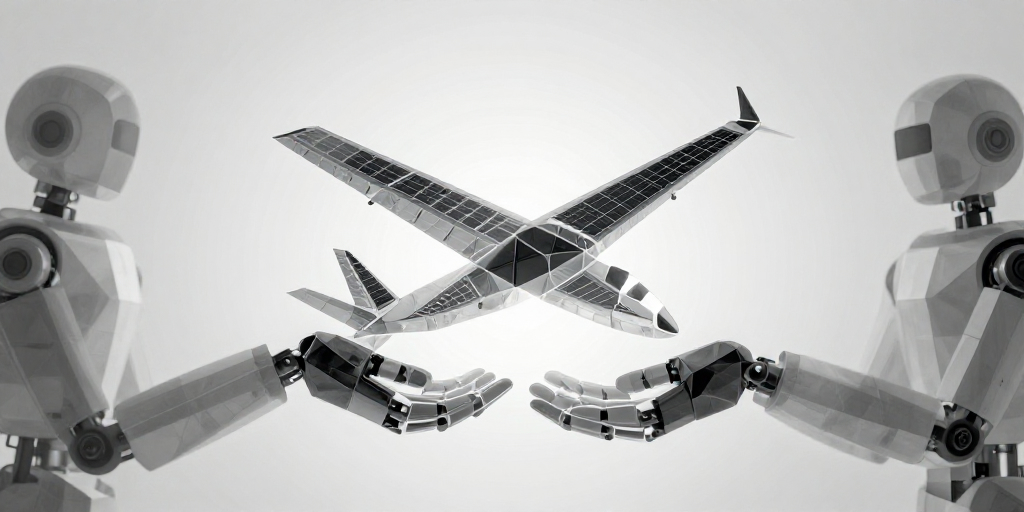
SoftBank’s Dual Pursuit of Technological Innovation and Societal Care
SoftBank Group Corp. has recently intensified its focus on two seemingly disparate yet strategically aligned ventures: the development of lightweight materials for solar‑powered aircraft and the continued deployment of eldercare robotics, most notably the Pepper robot. This dual portfolio illustrates the company’s broader ambition to embed advanced technology into critical societal infrastructure, while navigating a complex regulatory and competitive landscape.
1. Lightweight Materials for Solar‑Powered Aircraft
Business Fundamentals The aerospace sector is increasingly driven by the need to reduce operational costs and carbon emissions. Solar‑powered aircraft, which combine photovoltaic cells with lightweight composite structures, present a disruptive opportunity. SoftBank’s investment in research and development of novel carbon‑fiber blends, polymer matrix composites, and hybrid lamination techniques seeks to lower the aircraft’s mass-to-power ratio, directly influencing flight efficiency and range.
Regulatory Environment International Civil Aviation Organization (ICAO) guidelines and the European Union Aviation Safety Agency (EASA) have begun to formulate certification pathways for unmanned solar aircraft. In Japan, the Civil Aviation Bureau is actively evaluating safety protocols for autonomous flight. SoftBank’s early engagement with these regulators could secure a first‑mover advantage in securing type‑certification approvals, a critical barrier to market entry.
Competitive Dynamics The market for solar‑powered aircraft is nascent but crowded with niche start‑ups such as Solar Impulse and larger incumbents like Boeing and Airbus exploring hybrid‑electric concepts. SoftBank’s capital and partnership network can accelerate prototyping cycles and secure pilot projects with national research institutions. However, the capital intensity of aerospace R&D—often exceeding $200 million per demonstrator—poses a significant risk, particularly if regulatory timelines extend.
Overlooked Opportunities
- Energy Storage Integration: Combining lightweight batteries with solar cells could yield hybrid aircraft capable of longer missions.
- Secondary Markets: Agricultural drone fleets and maritime surveillance systems could adopt the same material technologies, diversifying revenue streams.
2. Eldercare Robotics and the Pepper Robot
Business Fundamentals Japan’s demographic trajectory predicts a 35 % rise in the population aged 65 and older by 2040. The resulting labor shortage in the long‑term care sector threatens service quality and operational costs. SoftBank’s Pepper robot, a humanoid platform equipped with natural language processing and sensor suites, has already been deployed in nursing homes, serving both as a social companion and a data collection device.
Regulatory Environment The Japanese Ministry of Health, Labour and Welfare (MHLW) has issued guidelines for robotic assistance in care facilities, emphasizing safety, data privacy, and human‑robot interaction (HRI) standards. Additionally, the Act on the Promotion of Advanced Technologies for Long‑Term Care supports subsidies for technologies that reduce caregiver burdens. SoftBank’s early compliance with these regulations positions it favorably for future licensing and procurement contracts.
Competitive Dynamics Key competitors include Panasonic’s “HAP” series, Sony’s “Aibo” line, and smaller robotics firms such as 6C Inc. and Alva Robotics. SoftBank’s advantage lies in its robust AI ecosystem, including its Deep Learning Accelerator (DLA) platform and established partnerships with major telecommunications carriers. However, the high cost of manufacturing humanoid robots—often exceeding $70,000 per unit—limits scalability unless cost‑reduction breakthroughs occur.
Risk Assessment
- Human‑Centered Care Concerns: The public and policy makers largely agree that robots should augment rather than replace caregivers. Missteps in positioning Pepper as a replacement could erode trust and provoke regulatory backlash.
- Workforce Impact: Even with complementary roles, the introduction of robots may alter wage structures and job descriptions, potentially leading to resistance from caregiver unions.
Potential Opportunities
- Data Monetization: Pepper’s sensors can generate valuable health data for predictive analytics, opening revenue channels in health informatics.
- International Expansion: Markets in South Korea, China, and Europe face similar aging demographics and could adopt the technology under localized regulatory frameworks.
3. Strategic Synergy and Corporate Positioning
SoftBank’s investments in both aerospace materials and eldercare robotics demonstrate a pattern of targeting sectors where technology intersects with critical societal needs. By aligning with national policy initiatives—such as Japan’s AI companion strategy and its long‑term care reform—SoftBank gains:
- Regulatory Leverage: Early collaboration with regulators can streamline certification and procurement processes.
- Capital Efficiency: Leveraging its existing investment platform allows rapid scaling of promising ventures.
- Risk Diversification: Diversifying across industries mitigates sector‑specific downturns, particularly in high‑capex fields.
4. Conclusion
SoftBank Group Corp. is navigating a complex landscape where advanced manufacturing and human‑centered AI solutions converge. Its dual focus on lightweight aerospace materials and eldercare robotics reflects an understanding that technology must serve both efficiency and empathy to succeed in markets shaped by regulatory constraints, competitive pressure, and evolving societal expectations. The company’s ability to balance these dimensions will determine whether it can translate these ambitious investments into sustainable, scalable business outcomes.