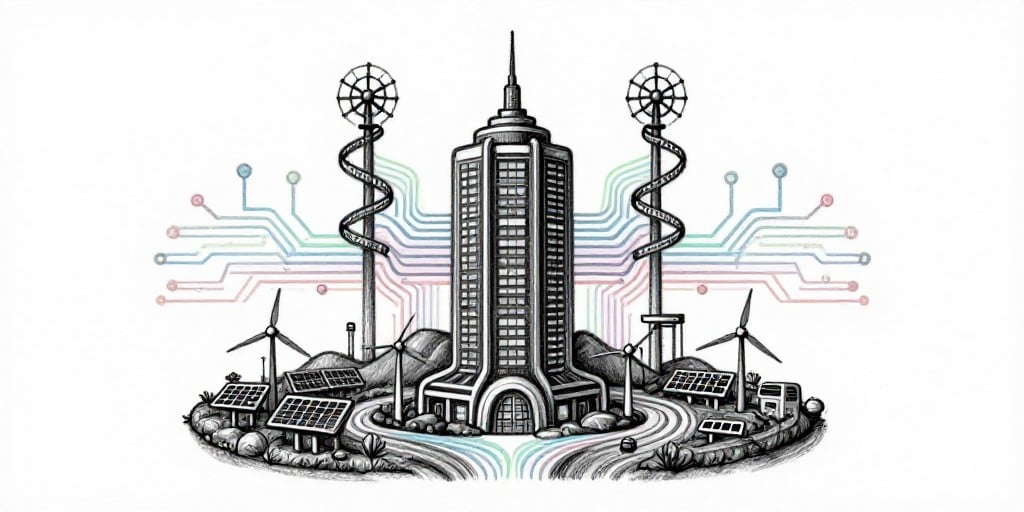
SoftBank Group Corp. Deepens Footprint in AI‑Driven Data‑Center Expansion
SoftBank Group Corp. is once again positioned at the intersection of high‑growth technology investment and large‑scale infrastructure development. Recent disclosures reveal the conglomerate’s intensified involvement in expansive data‑center initiatives designed to support the next wave of artificial‑intelligence (AI) applications. The company’s strategic deployments, particularly in the realms of AI‑centric computing and renewable‑energy‑powered facilities, are reshaping competitive dynamics across the technology and infrastructure sectors.
Expansive Data‑Center Portfolio
SoftBank has earmarked billions of yen for the construction and operation of new data‑center campuses in key geographies, including Asia‑Pacific, North America, and Europe. These facilities are engineered to meet the soaring demand for low‑latency, high‑throughput computing required by machine‑learning workloads. By integrating advanced cooling technologies and hybrid power systems—combining grid electricity with on‑site renewable generation—the group aims to reduce carbon intensity and operating expenses.
The data‑center strategy dovetails with SoftBank’s broader portfolio, which includes significant stakes in cloud service providers, edge‑computing startups, and AI research labs. This vertical integration facilitates the rapid deployment of AI services, from natural‑language processing to autonomous vehicle perception, while positioning the conglomerate as a critical enabler for enterprises seeking to digitize operations.
Contractual Scrutiny from Competitors
High‑profile executives at rival technology firms have voiced concerns regarding SoftBank’s contractual commitments within these data‑center ventures. Questions focus on exclusivity clauses, pricing structures, and the allocation of intellectual‑property rights. While SoftBank has not publicly responded to these inquiries, market sentiment has shifted toward a more cautious stance, reflected in modest volatility in the company’s shares and an uptick in analyst coverage of its debt‑to‑equity metrics.
The scrutiny underscores the broader trend of intensified scrutiny on large conglomerates that blend capital deployment with strategic partnerships. Regulators in multiple jurisdictions are now examining whether such arrangements could create market‑distorting effects, particularly in the rapidly evolving AI infrastructure space.
Strategic Partnerships and Joint Ventures
SoftBank’s portfolio expansion is not limited to data‑centers. The conglomerate has forged joint ventures with leading AI and robotics firms, including collaborations with firms specializing in computer vision, robotics automation, and autonomous systems. These partnerships provide mutual benefits: SoftBank supplies capital and operational infrastructure, while its partners contribute cutting‑edge technology and intellectual property.
The joint‑venture model exemplifies SoftBank’s broader diversification strategy. By maintaining equity stakes in both hardware‑centric and software‑centric firms, the group mitigates sector‑specific risks while capturing upside from complementary growth trajectories.
Renewable‑Energy Integration
Recognizing the energy intensity of large‑scale data‑center operations, SoftBank has invested in renewable‑energy projects that directly power its facilities. Recent agreements with solar and wind farms in Japan and the United States enable the conglomerate to achieve near‑zero‑carbon footprints for select campuses. The renewable energy component not only supports corporate sustainability goals but also creates a new revenue stream through the sale of excess clean power to local utilities.
This move aligns with global trends wherein data‑center operators seek to decouple their growth from carbon emissions. It also positions SoftBank as a bridge between traditional infrastructure developers and the clean‑energy sector, further diversifying its investment base.
Market Dynamics and Regulatory Landscape
The interplay between SoftBank’s investment decisions and the macro‑economic environment is evident. Rising interest rates and tightening credit conditions exert pressure on the conglomerate’s leverage ratios, while the global push for AI‑driven digital transformation fuels demand for the infrastructure it provides. Additionally, regulatory scrutiny—particularly in the United States and European Union—concerning antitrust implications and data‑privacy requirements may shape the terms of future collaborations.
In this context, SoftBank’s continued focus on diversified technology investments and renewable‑energy‑backed infrastructure appears to be a calculated response to both market opportunities and regulatory headwinds. By maintaining a flexible portfolio that spans hardware, software, and clean‑energy, the conglomerate seeks to sustain its influence across multiple sectors that are increasingly intertwined by digital transformation imperatives.
Conclusion
SoftBank Group Corp.’s recent developments highlight a strategic synthesis of capital deployment, partnership cultivation, and sustainability integration. The company’s expanded data‑center footprint, coupled with joint ventures in AI and robotics and a commitment to renewable energy, reinforces its role as a pivotal player in the technology‑infrastructure nexus. As market dynamics evolve and regulatory frameworks tighten, SoftBank’s ability to navigate these complexities will likely determine its long‑term positioning in the global technology investment landscape.