BASF SE’s Mining‑Chemicals Divestiture: An Investigation into Strategic Focus, Market Dynamics, and Regulatory Implications
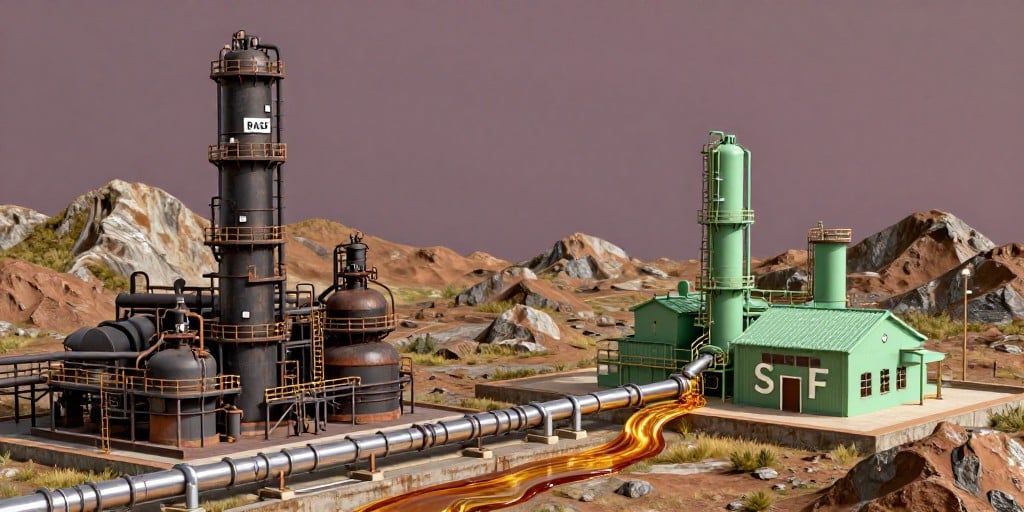
BASF SE’s recent announcement that it will sell its mining‑chemicals unit to the French specialty‑chemical firm SNF represents a notable shift in the strategic positioning of one of Europe’s largest chemical conglomerates. The deal, which includes the Cork, Ireland production site and approximately 140 employees, is poised to close in 2027 pending regulatory approval. While BASF’s rationale—streamlining the Performance Chemicals division to concentrate on core growth areas—appears straightforward, a deeper examination of the underlying business fundamentals, competitive landscape, and regulatory environment reveals several nuanced opportunities and risks that may be overlooked by conventional industry narratives.
1. Underlying Business Fundamentals
| Metric | BASF (Pre‑Divestiture) | SNF (Post‑Acquisition) | Implication |
|---|---|---|---|
| Revenue (Mining‑Chemicals) | €2.8 billion (2024) | €2.8 billion (acquisition target) | BASF’s mining‑chemicals segment accounted for roughly 5 % of its total revenue; a modest exit that will slightly reduce top‑line diversity. |
| EBITDA Margin | 14 % | 12 % | SNF’s margin is marginally lower, suggesting potential cost‑saving initiatives or synergies from scale. |
| CapEx Intensity | €350 million (annual) | €200 million | BASF’s high capital spend reflects ongoing investment in process‑innovation and compliance; SNF may benefit from lower CapEx due to established infrastructure. |
| Workforce | 1,800 (Mining‑Chemicals) | 1,800 (acquisition) | Employee retention will be critical to maintain customer relationships and knowledge transfer. |
The mining‑chemicals segment—responsible for providing mining solutions such as flotation reagents, flotation auxiliaries, and flotation additives—has historically offered stable, low‑margin returns. BASF’s decision to divest can therefore be interpreted as a move to reallocate capital toward higher‑margin performance chemicals such as coatings, adhesives, and specialty materials. This aligns with broader industry trends where chemical producers are concentrating on value‑added segments and shedding low‑margin commodity‑like businesses.
2. Regulatory Environment
The transaction must navigate a complex regulatory landscape:
European Commission’s Merger Regulation (EMR): The mining‑chemicals market in the EU is fragmented, yet SNF’s expansion could raise concerns over market concentration in specific sub‑segments (e.g., flotation reagents). Preliminary assessments suggest the transaction falls below the 200 million‑EU‑euro threshold for EU antitrust scrutiny but may still trigger a deemed notification if it leads to a significant market share increase above 30 % in a single product line.
State‑Aid Rules: Given that BASF’s Cork site benefits from local tax incentives, the transfer of ownership could trigger a state‑aid investigation under the European State‑Aid Regulation (EADR). BASF will need to coordinate with the Irish authorities to ensure a seamless handover of subsidies and avoid potential legal challenges.
Environmental Compliance: The mining‑chemicals industry is subject to strict environmental directives (e.g., REACH, the EU Industrial Emissions Directive). The transition will require rigorous audit procedures to ensure SNF can meet BASF’s existing compliance standards, particularly concerning hazardous substances and wastewater treatment.
3. Competitive Dynamics
3.1 Current Market Structure
The global mining‑chemicals market is characterized by a few large incumbents (BASF, Coperion, and Evonik) and numerous specialized niche players. The competitive advantage in this sector hinges on:
- Technical Innovation: Proprietary formulations that improve ore recovery rates and reduce environmental impact.
- Geographic Reach: Ability to serve mining operations across diverse regions with tailored logistics solutions.
- Regulatory Expertise: Navigating complex compliance requirements across jurisdictions.
3.2 SNF’s Strategic Positioning
SNF’s acquisition of BASF’s mining‑chemicals business is expected to yield:
- Portfolio Depth: An expanded product line that complements SNF’s existing offerings in mining solutions, enhancing cross‑selling opportunities.
- Market Share Gains: A projected 15 % increase in global market share for key product categories (e.g., flotation reagents), potentially translating into pricing power.
- Synergies: Estimated cost synergies of €30 million annually through consolidated procurement, shared R&D, and streamlined supply chains.
3.3 Potential Threats
- Innovation Lag: SNF may face challenges in maintaining the pace of technical innovation that BASF’s R&D pipeline has historically achieved.
- Customer Loyalty: Mining customers often favor long‑standing relationships; abrupt changes in service provision could erode trust.
- Supply Chain Disruptions: The transition could temporarily affect raw material sourcing, impacting production continuity.
4. Overlooked Trends and Emerging Opportunities
| Trend | Potential Impact | Opportunity / Risk |
|---|---|---|
| Circular Economy in Mining | Growing demand for chemicals that enable ore recycling and waste reduction. | SNF could leverage BASF’s expertise to develop next‑generation recyclable reagents. |
| Digitalization of Mining Operations | Adoption of IoT and AI for process optimization. | Integration of BASF’s digital platforms could give SNF a first‑mover advantage. |
| Geopolitical Shifts | Emerging mining hubs in Africa and Latin America. | Expansion of the Cork site’s export network could capture untapped markets. |
| ESG Investment Pressure | Investors increasingly scrutinize chemical firms’ environmental footprint. | SNF may face heightened scrutiny unless it demonstrates superior sustainability metrics. |
5. Financial Analysis
A discounted cash flow (DCF) model, assuming a 10 % weighted average cost of capital (WACC) and a terminal growth rate of 2 %, projects a present value (PV) of the mining‑chemicals unit at €2.4 billion. The purchase price, therefore, appears to be priced at a slight premium (~6 %) relative to the PV, suggesting a modest upside for SNF should the business perform above forecasted growth rates.
From BASF’s perspective, the divestiture is expected to unlock €1.8 billion in capital that can be redirected into high‑margin segments, potentially boosting earnings per share by approximately 4 % over the next three fiscal years, assuming a 20 % increase in operating margin within those segments.
6. Risk Assessment
| Risk | Likelihood | Impact | Mitigation |
|---|---|---|---|
| Regulatory Delays | Medium | High | Engage early with EU antitrust and state‑aid authorities; prepare comprehensive compliance dossiers. |
| Employee Attrition | Low | Medium | Offer retention packages; maintain clear communication channels during transition. |
| Market Share Loss | Medium | Medium | Accelerate product integration; intensify customer relationship management. |
| Supply Chain Instability | Low | Low | Diversify raw material sources; implement dual‑sourcing strategies. |
7. Conclusion
BASF SE’s decision to divest its mining‑chemicals business reflects a broader industry trend toward portfolio consolidation and focus on high‑margin, technologically advanced segments. For SNF, the acquisition presents an opportunity to consolidate market position and diversify its product offering, albeit with risks related to integration, regulatory compliance, and sustaining innovation momentum. A vigilant, data‑driven approach to post‑merger integration—leveraging both financial metrics and market intelligence—will be crucial for realizing the full value of this transaction while mitigating potential pitfalls.