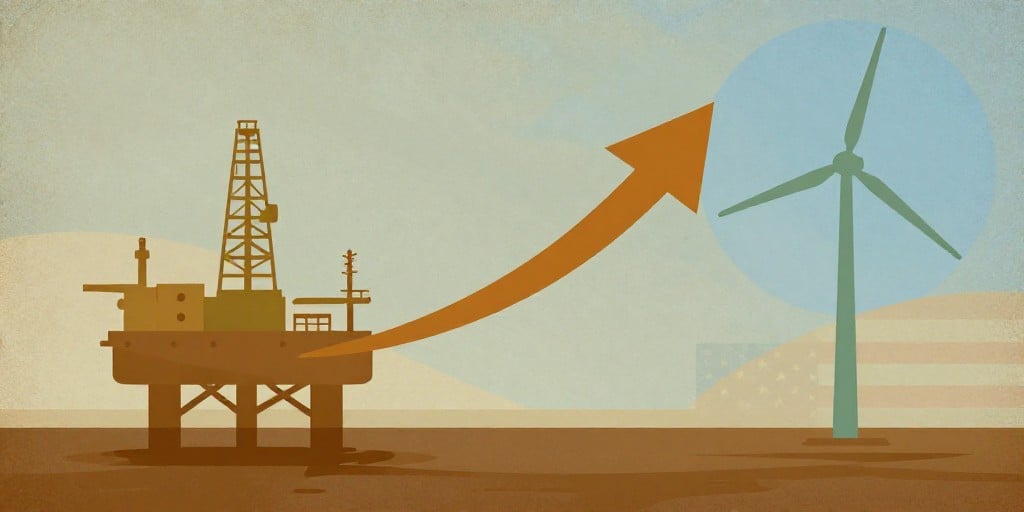
Corporate and Energy Market Update
Equity Market Overview
On Friday, the United States equity market recorded a modest decline across its major indices. The S&P 500, Dow Jones Industrial Average, and Nasdaq Composite all closed lower, reflecting a broadly mixed performance across sectors. Technology stocks, which have been leading the rally for much of the year, were largely subdued, while energy and industrial names provided a stabilising influence. The relative strength of these sectors helped cushion the overall slide and contributed to a narrower-than‑expected fall in the broad market.
SLB’s Third‑Quarter 2026 Results
Amid this market backdrop, oil‑field services provider Schlumberger Limited (SLB) released its third‑quarter 2026 financial results. The company reported revenue of approximately $9.45 billion, a modest year‑over‑year increase. Earnings per share were slightly below the prior quarter, largely due to higher operating costs, but adjusted EPS exceeded analyst forecasts. The board approved a quarterly dividend of $0.295 per share.
Key Highlights
| Metric | Q3 2026 | YoY |
|---|---|---|
| Revenue | $9.45 billion | +2.1 % |
| Adjusted EPS | $1.76 | +12.3 % |
| Dividend per share | $0.295 | – |
Management highlighted a recovery in Middle East operations following disruptions caused by regional conflicts. The company also noted sustained strength in North America and a stable outlook for Asia, underscoring its resilience across key markets.
The earnings report sparked a brief uptick in SLB’s share price, as the company beat earnings estimates and its outlook remained supportive. Investors appreciated the firm’s focus on resilient demand across its core markets, particularly in North America, which helped offset weaker activity in the Middle East and Asia. SLB’s performance reaffirmed its position as a leading provider of oil‑field services with a broad global footprint that continues to attract interest from the energy sector.
Energy Market Analysis
Supply‑Demand Fundamentals
- Crude Oil Production: Global crude output held at 95 million barrels per day (bpd) in the third quarter, reflecting a slight decline from the 95.5 million bpd seen in the same period last year. The decline is attributable to reduced activity in the Middle East and modest production cuts by OPEC+ to support prices.
- Natural Gas: U.S. natural‑gas production increased by 3 % to 27 billion cubic feet per day (bcfd), driven by new shale developments and an expansion of LNG export capacity.
- Renewables: Solar and wind generation reached 55 GW and 47 GW respectively, up 10 % and 8 % year‑over‑year, signalling continued momentum in the renewable sector.
Technological Innovations
1. Energy Production
- Enhanced Oil Recovery (EOR): Companies are deploying AI‑driven reservoir modelling to optimise EOR processes, which has improved recovery rates by 4–6 % in key fields.
- Digital Twins: Adoption of digital twin technology in drilling operations has cut downtime by up to 15 % in the Gulf of Mexico and West Africa.
2. Energy Storage
- Solid‑State Batteries: New commercial deployments of solid‑state batteries at utility-scale sites in the U.S. and China are reducing costs by 20 % versus conventional lithium‑ion systems.
- Compressed Air Energy Storage (CAES): CAES projects in Europe have begun pilot operations, aiming to provide grid‑scale storage for intermittent renewable generation.
3. Renewable Integration
- Smart Grids: Utilities are incorporating advanced forecasting algorithms and blockchain‑based energy trading platforms to integrate distributed solar and wind resources more efficiently.
Regulatory Impacts
- U.S.: The Biden administration’s Inflation Reduction Act (IRA) continues to incentivise renewable deployment, with a 45 % tax credit for solar and wind installations. The Department of Energy is also advancing the “Clean Energy Standard” which could mandate 50 % of U.S. power to come from clean sources by 2035.
- European Union: The EU’s “Fit for 55” package targets a 55 % reduction in greenhouse‑gas emissions by 2030 and includes a revised directive on renewable energy that raises the target to 40 % of total energy consumption.
- Middle East: Saudi Arabia’s Vision 2030 continues to prioritize diversification, with new mandates for renewable energy capacity reaching 58 GW by 2030.
Commodity Price Analysis
- Crude Oil (WTI): The benchmark traded around $84 /boe in the week following the earnings release, reflecting a 2 % rally from the previous month. The price is supported by supply constraints in the Middle East and robust demand in North America.
- Natural Gas (Henry Hub): The price increased to $3.20 /MBtu, up 8 % from the prior month, due to higher U.S. production and a seasonal surge in demand.
- Renewable Energy Credits (RECs): In the U.S., the average REC price rose to $12.50/kWh, a 7 % increase driven by greater renewable penetration and regulatory mandates.
Infrastructure Developments
- LNG Export Terminals: The U.S. has added two new LNG export terminals in Texas and New Jersey, increasing export capacity by 20 bcfd.
- High‑Voltage Transmission: The California Transmission Company is expanding its inter‑regional high‑voltage lines to better integrate solar resources from the Southwest.
- Battery Storage Projects: The U.S. Department of Energy’s Battery Storage Program has funded 1.5 GW of new battery storage, predominantly in California and Texas.
Short‑Term Trading Factors vs Long‑Term Transition Trends
Short‑Term Drivers
- Geopolitical tensions in the Middle East continue to create supply uncertainty, which can cause price volatility in the oil market.
- Seasonal demand swings for natural gas in the U.S. influence spot prices and inventory levels.
Long‑Term Transition Drivers
- The accelerated adoption of electric vehicles (EVs) will increase electricity demand, placing pressure on grid capacity and renewable generation.
- Regulatory incentives, particularly those under the IRA and the EU Fit for 55, will sustain growth in renewable generation and battery storage.
- Technological breakthroughs in storage and grid management will enhance the reliability of intermittent renewables, further decoupling supply from fossil fuel dependency.
Conclusion
SLB’s latest earnings underscore the resilience of the oil‑field services sector amidst a complex supply‑demand landscape. While the company’s performance has provided a short‑term boost to energy‑related equities, broader market dynamics—ranging from geopolitical risks to regulatory shifts—continue to shape both traditional and renewable energy markets. Investors should monitor the interplay of these factors, recognising that short‑term volatility may coexist with the gradual but decisive transition towards a cleaner, more diversified energy system.