
Skanska AB Secures Multi‑Billion‑Krona Contract for U.S. Data‑Centre Development
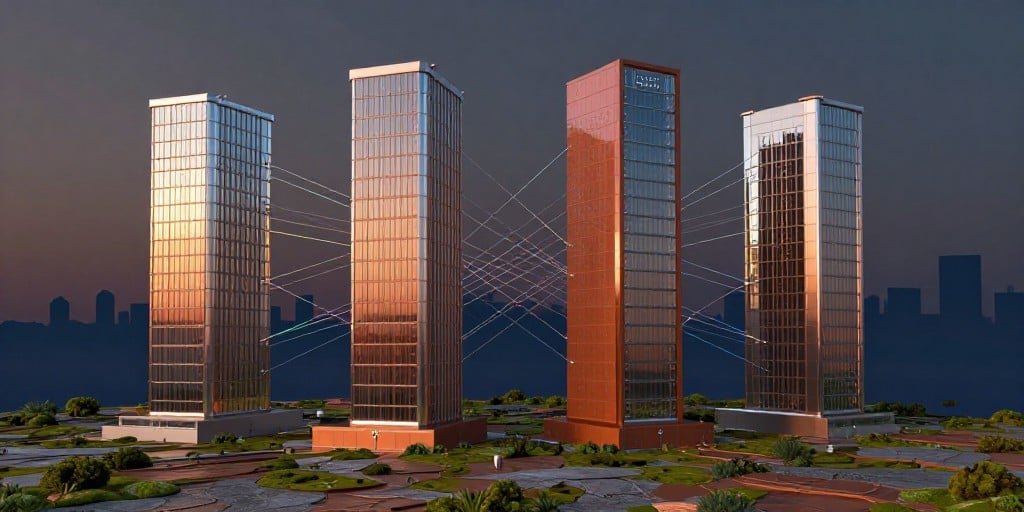
Skanska AB, the Swedish multinational construction firm, announced the award of a substantial contract to build four data centres in the southeastern United States. The project, valued at approximately 11.2 billion Swedish kronor, is slated to commence in the third quarter of 2026 and reach completion in the same quarter of 2028. The agreement encompasses the erection of the shell and interior fit‑out for technical spaces, support areas, and office functions, with a projected built area of roughly 75,000 square metres.
Project Scope and Timeline
- Contract Value: 11.2 billion SEK (≈ 1.2 billion USD)
- Duration: 24 months (Q3 2026 – Q3 2028)
- Total Built Area: 75,000 m²
- Scope: Shell construction, interior fit‑out of technical spaces, support zones, and office facilities
The execution of this project underscores Skanska’s commitment to high‑value infrastructure that delivers sustainable, long‑term returns. By entering a sizable contract in the U.S. data‑centre market, Skanska is reinforcing its strategic focus on technologically advanced construction sectors that have seen rapid expansion driven by digital transformation and cloud computing demands.
Strategic Implications for Skanska
Expansion of U.S. Footprint The order adds significant depth to Skanska’s U.S. presence, a market that has historically offered robust growth opportunities. A higher order book in the third quarter of 2026 positions the firm favorably against competitors seeking to capture market share in the rapidly evolving data‑centre landscape.
Alignment with Long‑Term Asset Development Data‑centre construction is intrinsically linked to enduring infrastructure, aligning with Skanska’s broader strategy of investing in projects that yield long‑term revenue streams. The project’s scale and duration enhance the firm’s ability to manage cash flows and leverage economies of scale.
Technological Positioning The construction of data‑centres necessitates advanced technical expertise in cooling, power distribution, and redundancy systems. Skanska’s successful procurement of this contract signals its capability to deliver sophisticated infrastructure, strengthening its competitive positioning against specialized construction firms.
Financial Impact The influx of new orders is expected to reinforce Skanska’s revenue pipeline in 2026, contributing to a healthier balance sheet and potentially supporting future investment in high‑growth sectors.
Market Reactions
On the day of the announcement, Skanska’s shares experienced a modest decline on the Stockholm Exchange. The dip, while small, reflected typical market volatility as investors awaited the Swedish central bank’s forthcoming interest‑rate decision. Despite the temporary share price movement, analysts broadly welcomed the development:
Analyst Viewpoints
Strategic Validation: The contract validates Skanska’s emphasis on data‑centre construction, a segment poised for continued expansion.
U.S. Upside: Analysts highlighted the potential upside of Skanska’s U.S. operations, noting that the company’s performance in this market could become a significant contributor to its global earnings.
Investor Sentiment While short‑term price movements were subdued, the longer‑term outlook appears positive, driven by the firm’s growing foothold in high‑value infrastructure and the increasing demand for data‑centres across the United States.
Broader Economic Context
The data‑centre industry is a bellwether for digital infrastructure investment. Global data traffic has surged, driven by remote work, e‑commerce, and the expansion of cloud services. U.S. data‑centre construction, in particular, has been propelled by favorable regulatory environments and strong demand from major cloud providers and enterprises seeking domestic facilities.
Skanska’s engagement in this sector reflects an astute recognition of these macro‑trends. By securing a multi‑billion‑krona contract, the company positions itself to capture a share of the burgeoning market, while also reinforcing its reputation as a capable provider of large‑scale, technically complex projects. This strategic alignment is likely to resonate with investors who prioritize sustainable, high‑return ventures and can help mitigate the cyclical nature of construction cycles.
Conclusion
Skanska AB’s recent contract win for the construction of four data centres in the southeastern United States marks a significant milestone in the firm’s expansion strategy. The project’s scale, timing, and technical demands illustrate Skanska’s capacity to deliver high‑value infrastructure that aligns with evolving market needs. While the immediate market reaction was modest, the long‑term implications for Skanska’s positioning within the U.S. construction market and its alignment with global digital infrastructure trends are markedly positive.