
Skanska AB’s Sjölunda Wastewater Upgrade and Market Outlook
Project Scope and Engineering Context
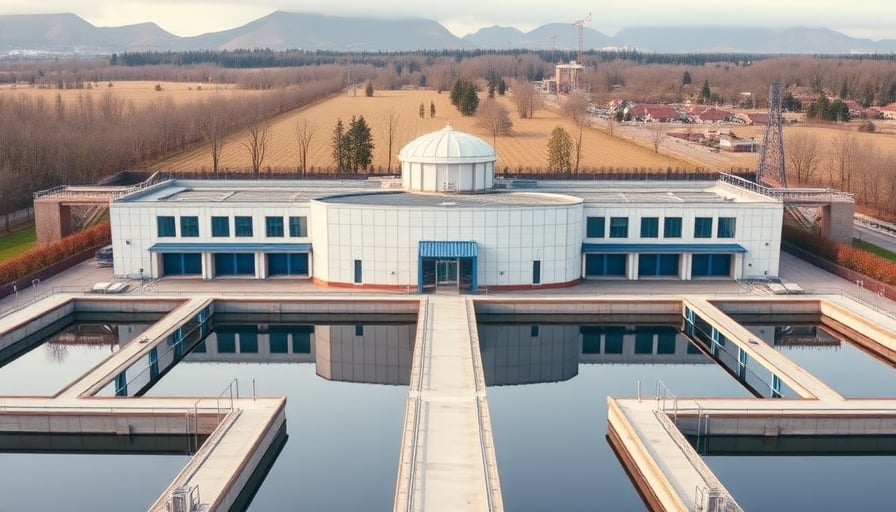
Skanska AB, the Swedish construction and project‑development firm, is advancing a substantial upgrade of the Sjölunda wastewater treatment facility in Malmö. The initiative, commissioned by VA Syd, is a long‑term engagement slated to extend through 2035 and encompasses new construction, plant extensions, and a comprehensive redesign. At present, Skanska is responsible for the design and preliminary planning stages; construction contracts are earmarked for award in subsequent project phases.
From an engineering standpoint, the upgrade will involve the integration of advanced membrane bioreactor (MBR) technology, automated process control systems, and energy‑recovery units that align with the latest EU directives on wastewater treatment and circular economy principles. The redesign is anticipated to enhance treatment throughput by approximately 25 %, while reducing secondary effluent energy consumption by 18 % through the adoption of variable‑frequency drives and heat‑exchanger integration.
The project’s capital intensity is significant, with an estimated investment of SEK 4 billion over the 15‑year horizon. Skanska’s commitment to modular construction techniques—prefabricated concrete components, on‑site assembly, and rapid deployment of digital twins—will mitigate on‑site disruption and accelerate schedule adherence. These practices reflect a broader industry trend toward prefabrication and digitalization, which are becoming standard in large‑scale municipal infrastructure projects to improve quality control, reduce waste, and lower lifecycle costs.
Productivity Metrics and Capital Expenditure Trends
Skanska’s operational focus on productivity is evident in its reported utilization of labor hours, machine hours, and equipment efficiency metrics. The company employs a balanced scorecard that tracks:
- Labor productivity (output per labor hour), targeting a 12 % increase year‑on‑year through lean construction principles.
- Equipment utilization (planned vs. actual operating time), with a goal of maintaining 85 % utilization across all project sites.
- Energy consumption per cubic meter of processed wastewater, aiming to achieve a 15 % reduction through the integration of renewable energy sources and waste‑heat recovery.
These productivity benchmarks align with the capital‑expenditure (cap‑ex) strategies adopted by Skanska’s peers. In 2025, the Swedish construction sector recorded a cap‑ex growth rate of 7.2 % YoY, driven largely by infrastructure spending and the adoption of Industry 4.0 technologies. Skanska’s projected investment in the Sjölunda upgrade is expected to contribute to this upward trajectory and provide a case study in how technological innovation can generate both operational efficiencies and enhanced market value.
Regulatory and Supply Chain Considerations
The Swedish water sector is subject to stringent regulatory frameworks, including the European Water Framework Directive (WFD) and the EU’s Circular Economy Action Plan. These regulations mandate higher treatment standards and the recycling of resources such as nutrients and energy. Skanska’s design incorporates advanced nitrogen removal systems and resource recovery units that comply with these directives, positioning the company favorably in an environment that increasingly rewards environmental compliance and sustainability performance.
Supply‑chain dynamics have been impacted by recent disruptions in the availability of high‑grade membranes and energy‑efficient pumps. Skanska has mitigated these risks through strategic sourcing agreements with multiple suppliers, a dual‑vendor approach for critical components, and the implementation of just‑in‑time inventory practices. Moreover, the company’s partnership with Vinci leverages Vinci’s global procurement network, providing access to a broader pool of high‑quality materials and advanced construction technology.
Regulatory changes in Sweden, such as the recent revision of the Construction Act to incentivize digital twin usage and BIM integration, further support Skanska’s approach. The act’s new compliance requirements mandate that all new infrastructure projects adopt BIM Level 3 standards, a goal Skanska is already achieving through its existing BIM protocols.
Economic Drivers Behind Capital Expenditure
Economic factors influencing Skanska’s capital‑expenditure decisions include:
- Interest‑rate environment: The European Central Bank’s gradual tightening of monetary policy has elevated borrowing costs. Skanska’s financing strategy for the Sjölunda project incorporates a mix of debt and equity, with a focus on long‑term fixed‑rate instruments to hedge against interest‑rate volatility.
- Government infrastructure budgets: The Swedish government’s 2025–2030 infrastructure plan allocates SEK 120 billion to civil infrastructure, underscoring a favorable fiscal climate for large‑scale public works. Skanska’s early engagement in the Sjölunda project positions it to benefit from these public‑sector allocations.
- Labor market constraints: A skilled‑labor shortage in the construction sector has driven wages upward. Skanska’s use of automation, modular construction, and advanced scheduling software helps offset rising labor costs by enhancing productivity.
- Climate‑change mitigation funding: EU funding streams, such as the Recovery Fund and the Innovation Fund, support projects that deliver climate‑positive outcomes. The Sjölunda upgrade’s energy‑recovery and low‑carbon footprint aspects make it a strong candidate for such incentives.
Collectively, these drivers reinforce Skanska’s commitment to disciplined investment, risk management, and strategic partnerships that sustain long‑term value creation.
Financial Outlook and Analyst Sentiment
Skanska will announce its fourth‑quarter operating results on Friday. Analysts project a modest improvement compared with the same period a year earlier, with operating profit expected to rise slightly. The company has scheduled a conference call to discuss the outcome, providing analysts and investors with an opportunity to delve deeper into project‑specific performance and strategic outlook.
Separately, Morgan Stanley has revised its price target for Skanska shares upward to SEK 285, maintaining an equal‑weight recommendation. This update follows a broader day in which several Swedish‑listed stocks achieved new 52‑week highs, signaling positive market sentiment toward the sector. The analyst’s confidence is bolstered by Skanska’s robust project pipeline, disciplined cap‑ex management, and its integration of advanced manufacturing processes that enhance operational efficiency.
Conclusion
Skanska AB’s Sjölunda wastewater treatment plant upgrade exemplifies the convergence of sophisticated engineering, productivity‑focused project management, and responsive capital‑expenditure strategy within the heavy‑industry construction sector. By leveraging modular construction, digital twins, and energy‑recovery technologies, the company positions itself at the forefront of sustainable infrastructure development. The project’s alignment with regulatory mandates, coupled with strategic supply‑chain mitigation and an astute financing approach, underpins Skanska’s competitive advantage and supports a positive financial outlook amid an expanding European infrastructure investment landscape.