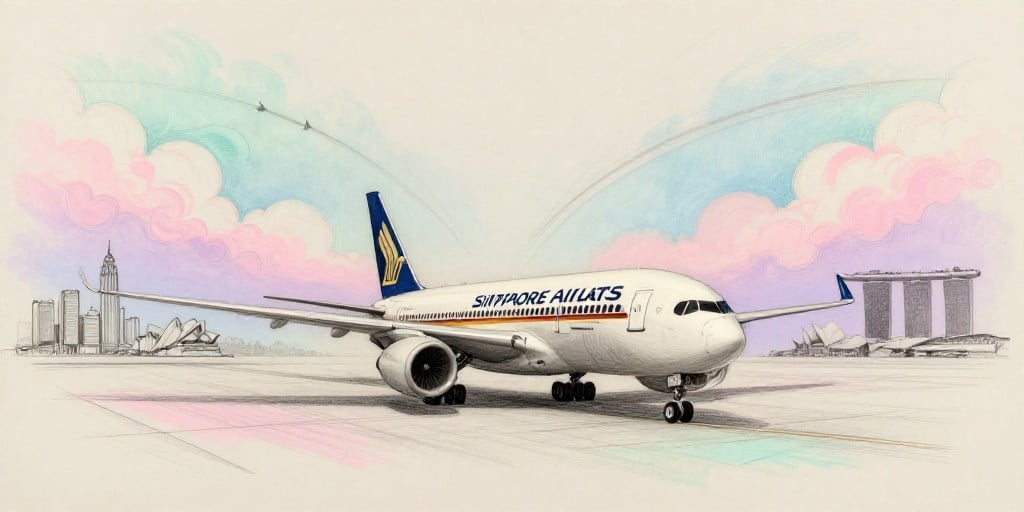
Singapore Airlines Expands into Western Sydney: Implications for the Asia‑Pacific Airline Landscape
Singapore Airlines Ltd. has confirmed that it will operate passenger services at the newly opened Western Sydney International Airport (WSIA), located at Badgerys Creek. The carrier’s involvement follows an announcement that a small but growing list of airlines—Air New Zealand Ltd., Vietjet Aviation JSC, and Fiji Airways—will also use the facility in the coming months. Singapore Airlines’ decision aligns with its broader strategy to expand its presence in the Asia‑Pacific region, particularly in markets with significant expatriate communities and growing travel demand.
1. Strategic Rationale for WSIA Entry
Singapore Airlines (SIA) has long pursued a network of “regional hubs” to capture long‑haul traffic while providing seamless connections to its flagship Singapore base. The decision to launch services at WSIA reflects several core strategic considerations:
| Factor | Analysis | Impact |
|---|---|---|
| Expatriate Communities | Western Sydney hosts a sizable and diverse expatriate population, many of whom maintain regular travel links to Southeast Asia. | Increased short‑haul feeder traffic to SIA’s long‑haul network. |
| Market Growth | Post‑pandemic recovery has seen a surge in leisure travel within Australia and between Australia and Asia. | Opportunity to capture a growing share of the domestic‑to‑international corridor. |
| Network Optimization | WSIA’s proximity to Sydney’s western suburbs offers a complementary alternative to Kingsford Smith, reducing congestion on the city‑center airport. | Enables SIA to diversify departure/arrival points, improving resilience. |
| Competitive Positioning | Early entry establishes brand presence ahead of potential competition from low‑cost carriers or other full‑service airlines. | Enhances SIA’s perceived commitment to Australian customers. |
2. Operational Challenges and Infrastructure Constraints
While the WSIA offers strategic advantages, several operational hurdles must be navigated:
- Limited Flight Volume – The terminal currently serves only a handful of flights per day. SIA’s initial launch will likely involve a modest frequency to gauge demand.
- Connectivity Issues – A delayed rail link and the absence of a dedicated, low‑cost shuttle bus service limit accessibility for passengers traveling from Sydney’s western suburbs.
- Capacity Constraints – The airport’s design accommodates growth, but early operational phases may involve capacity bottlenecks, particularly during peak travel periods.
These challenges suggest that SIA’s entry will be cautiously incremental, with a focus on building demand before expanding frequency.
3. Broader Industry Context
3.1 Post‑Pandemic Route Expansion
Airlines worldwide are re‑evaluating route networks to capitalize on emerging travel flows. Key trends include:
- Regional Hubs – Airlines are increasingly establishing secondary hubs to tap into local markets while maintaining long‑haul connectivity.
- Flexible Scheduling – Dynamic frequency adjustments respond to volatile demand patterns, especially in leisure travel segments.
- Partnerships – Codeshare and interline agreements are more prevalent, allowing carriers to offer broader connectivity without deploying additional aircraft.
SIA’s move to WSIA exemplifies this trend, leveraging its existing alliance network to reinforce service coverage.
3.2 Economic Factors
- Exchange Rate Volatility – Fluctuations in the Australian dollar affect operating costs and fare structures for international carriers.
- Fuel Price Trends – Volatility in jet‑fuel prices necessitates hedging strategies and careful cost management.
- Regional Tourism Policies – Government initiatives to attract international visitors can create short‑term demand spikes, influencing airline capacity planning.
SIA’s decision appears predicated on a long‑term view, anticipating gradual stabilization of these economic variables.
4. Competitive Implications
With SIA’s entry, other carriers—including low‑cost and regional airlines—may reassess their strategies for Western Sydney:
- Frequency Increases – SIA’s presence could stimulate demand, prompting airlines like Jetstar or Virgin Australia to add flights to capture market share.
- Route Rationalization – Airlines may consolidate routes that overlap with SIA’s offerings, optimizing fleet utilization.
- Marketing Initiatives – Promotion of the airport’s convenience and connectivity could become a key differentiator in the competitive landscape.
5. Outlook for Western Sydney International Airport
The WSIA’s objective of becoming a major hub by the 2040s hinges on sustained passenger growth and infrastructure development. SIA’s commitment provides a credible endorsement that may:
- Accelerate investment in the rail link and shuttle bus services, improving overall accessibility.
- Encourage additional carriers to consider the airport, amplifying its role in the Sydney market.
- Generate a virtuous cycle of demand and service expansion, ultimately enhancing the airport’s competitiveness against Kingsford Smith.
6. Conclusion
Singapore Airlines’ expansion into Western Sydney reflects a calculated move to strengthen its Asia‑Pacific network, capitalize on emerging travel patterns, and diversify its route portfolio in a post‑pandemic environment. While operational and infrastructure challenges persist, the carrier’s involvement signals confidence in the long‑term potential of the market. If the WSIA can overcome its current limitations, it stands to become a significant alternative gateway, reshaping the competitive dynamics of Australia’s aviation sector and contributing to broader regional economic growth.