
Siemens AG Announces Strategic Restructuring, Capital Return, and New Defence‑Technology Partnerships
Overview of the Restructuring Initiative
Siemens AG has confirmed the sale of its Low‑Voltage Motors and Geared Motors division to Innomotics, an Indian specialty‑motor manufacturer, with the transaction expected to close by mid‑2026 pending regulatory approval. This divestiture is a key component of the conglomerate’s broader portfolio rationalisation, designed to concentrate capital and engineering resources on electrification, industrial automation, and digitalisation—segments that drive the company’s future revenue growth and margin expansion.
The divestment is expected to generate a liquidity boost of approximately €1.2 billion (based on current valuations) and will reduce the company’s manufacturing footprint in the heavy‑motor sector by roughly 15 % of total production capacity. By shedding a non‑core division that has historically generated modest margin contribution (c. 5 % of EBIT), Siemens aims to reallocate capital toward higher‑yield projects such as next‑generation factory automation platforms, AI‑enabled predictive maintenance, and electrified transportation solutions.
Capital Allocation and Share‑Buyback Commitment
Simultaneously, Siemens has reaffirmed its share‑buyback program in the 95th interim report. The programme, which has already repurchased over 1 % of the company’s outstanding shares since the fiscal year’s start, continues to be financed through a combination of operating cash flow and a modest level of external debt. The buyback strategy aligns with the firm’s long‑term objective of enhancing shareholder value while maintaining a robust capital expenditure (CapEx) budget of €8–10 billion for the upcoming fiscal year.
The strategic realignment is expected to free up operational cash flow, allowing Siemens to pursue accelerated investments in digital twins, edge‑computing platforms, and high‑performance battery technologies—areas that are projected to command a CAGR of 12–14 % in the coming decade.
Partnership with Rheinmetall and Healthineers
In a bid to deepen its footprint in high‑value, technology‑intensive sectors, Siemens has entered into a partnership with Rheinmetall, the German defence contractor. The alliance extends beyond traditional defence electronics to include the medical‑technology subsidiary, Healthineers, positioning Siemens as a key supplier for advanced diagnostic imaging and surgical robotics.
From an engineering standpoint, the collaboration leverages Rheinmetall’s expertise in robust industrial control systems and Healthineers’ cutting‑edge medical imaging hardware. Combined, the partnership is poised to deliver integrated solutions that marry high‑precision control with real‑time data analytics, thereby reducing system downtime and enhancing throughput in both defence and medical markets.
Impact on Manufacturing Processes and Productivity
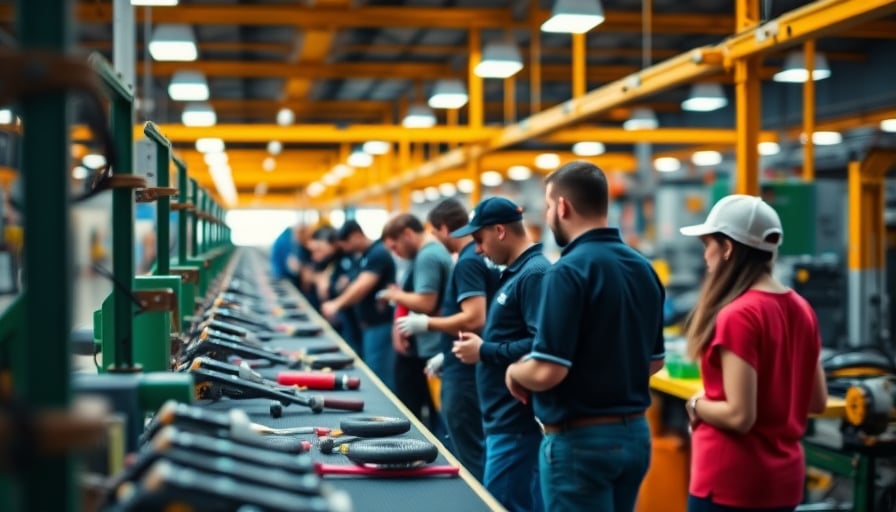
The divestment of the Low‑Voltage and Geared Motors division will compel Siemens to consolidate its motor‑manufacturing operations into fewer, higher‑throughput facilities. Advanced robotics, automated material handling, and predictive maintenance will be deployed to maintain product quality while reducing cycle times by an estimated 8 %. Concurrently, the company plans to integrate modular production lines that enable rapid re‑tooling for new product variants—an approach that has proven effective in Siemens’ Automation & Drives division.
Capital investment in these new production models is expected to be €350 million over the next 18 months, targeting a productivity uplift of 10–12 % across the remaining motor and drive segments. This aligns with industry benchmarks where smart‑factory initiatives yield measurable gains in output per labor hour and reductions in defect rates.
Supply Chain and Regulatory Considerations
The transaction with Innomotics introduces cross‑border supply‑chain implications. Siemens will need to manage the transition of key suppliers, intellectual property, and customer contracts to the new owner. Regulatory scrutiny from the European Commission and Indian authorities is anticipated, particularly in relation to technology transfer and data privacy. Siemens’ robust compliance framework is designed to mitigate potential delays and ensure a smooth handover of manufacturing assets.
Furthermore, the partnership with Rheinmetall and Healthineers is subject to defence export controls and stringent medical device certification regimes (e.g., MDR in the EU). Siemens has committed to maintaining rigorous traceability and quality assurance protocols to meet these regulatory standards.
Economic Drivers of Capital Expenditure
Macro‑economic factors—such as rising labour costs, supply‑chain bottlenecks, and geopolitical tensions—continue to influence CapEx decisions in the heavy‑industry sector. Siemens’ focus on electrification and digitalisation is positioned to counterbalance inflationary pressures by improving operational efficiency and reducing energy consumption across its manufacturing networks. Moreover, the company’s commitment to sustainable manufacturing aligns with global ESG mandates, potentially unlocking green financing options and favourable tax incentives.
Market Implications
The restructuring and investment strategy signals to market participants that Siemens is actively reshaping its balance sheet to concentrate on high‑margin, high‑growth sectors. The divestment is expected to strengthen the company’s debt profile and free capital for strategic acquisitions and R&D. The partnership with Rheinmetall and Healthineers expands Siemens’ reach into defence‑aided public‑private partnerships, likely improving revenue resilience in cyclical periods.
In short, Siemens’ coordinated approach—selling non‑core assets, maintaining shareholder returns, and forging high‑value alliances—positions the conglomerate to sustain competitive advantage in a rapidly evolving industrial landscape.