Siemens AG Expands AI‑Enabled Capabilities in Manufacturing and Electronic Design Automation
Siemens AG has recently unveiled two initiatives that collectively signal a strategic pivot toward embedding artificial intelligence across its industrial and digital‑automation portfolios. The developments—an AI‑enabled production facility in Amberg, Bavaria, and the launch of the Fuse EDA AI Agent—are noteworthy not merely for their headline value but for the underlying business fundamentals, regulatory contexts, and competitive dynamics they reveal.
1. AI‑Enabled Factory at Amberg: A Testbed for Hard‑and‑Software Synergy
1.1 Investment Profile
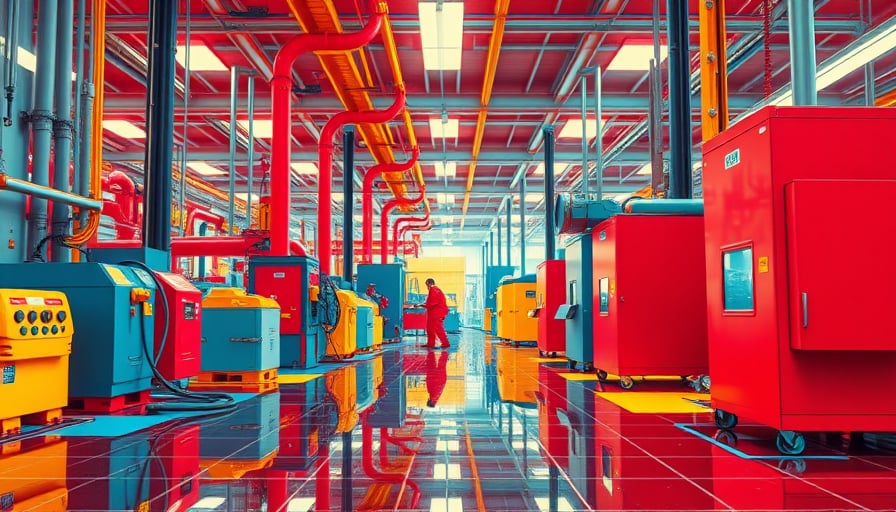
Siemens has earmarked €200 million to establish a new production facility in Amberg, positioning it as the company’s first fully autonomous, AI‑driven factory. The capital outlay is spread across three core components:
- Hardware Layer – robotics, sensor suites, and edge computing nodes.
- Software Layer – Siemens’ proprietary Digital Twin platform integrated with predictive analytics engines.
- Cyber‑Physical Interface – secure, real‑time data pipelines that link physical assets to cloud services.
The project is slated for completion by the end of 2025, with a projected return on investment (ROI) of 18 % over a five‑year horizon based on productivity gains and reduced downtime.
1.2 Market Premise
The global market for intelligent automation is projected to reach US$122 billion by 2030, growing at a CAGR of 12.5 %. Siemens’ Amberg plant positions the firm to capture a share of this expanding segment by demonstrating the superiority of a hard‑and‑software paradigm versus purely digital solutions. In practice, this means that Siemens can claim ownership over both the physical machinery and the software controlling it, creating a more tightly integrated ecosystem that is harder for competitors to replicate.
1.3 Competitive Implications
- Traditional Automation Vendors (e.g., Rockwell Automation, ABB) largely rely on third‑party software stacks; Siemens’ integrated approach offers a potential moat.
- Emerging Startups focused on digital twins may lack the physical manufacturing expertise required to deliver end‑to‑end solutions.
- Industry 4.0 Consortiums are increasingly prioritizing joint ventures; Siemens’ commitment to open standards (e.g., OPC UA, ISO 23053) could facilitate collaborations while preserving proprietary advantages.
1.4 Regulatory Considerations
- EU AI Act (proposed 2024) mandates stringent risk assessments for high‑impact AI systems. Siemens’ approach, which couples AI decision logic with hardware constraints, may ease compliance by reducing algorithmic opacity.
- Data Protection – The facility will generate terabytes of sensor data; adherence to GDPR and the upcoming EU Data Governance Act is critical.
2. Fuse EDA AI Agent: Autonomous Workflow Automation for Semiconductor Design
2.1 Technical Overview
Fuse EDA AI Agent is designed to orchestrate complex engineering workflows across semiconductor, 3‑D IC, and printed‑circuit‑board (PCB) design ecosystems. Key technical differentiators include:
- Retrieval‑Augmented Generation (RAG): The agent retrieves relevant design data from Siemens’ extensive EDA knowledge base, then generates design suggestions.
- Multimodal Data Support: Handles both symbolic data (schematics) and image data (layout scans).
- Secure Agentic Orchestration: Employs role‑based access controls and audit trails, compatible with NVIDIA’s GPU‑accelerated inference engines.
2.2 Financial Rationale
The EDA market is projected to reach US$31 billion by 2028, with a CAGR of 14 %. By automating repetitive tasks and reducing design cycle times, Fuse EDA promises a 20 % reduction in engineering labor costs for customers. Siemens estimates the agent could generate €120 million in incremental revenue over the next three years, based on subscription and licensing models.
2.3 Strategic Alignment
- Digital‑Automation Portfolio Expansion – Fuse complements existing Siemens EDA tools such as NX and Simcenter.
- NVIDIA Partnership – Leveraging NVIDIA’s AI infrastructure enhances performance and positions Siemens as a frontrunner in GPU‑accelerated EDA solutions.
- Engineering Productivity – The agent addresses a critical bottleneck: the gap between design intent and manufacturability, thereby increasing customer satisfaction and reducing time‑to‑market.
2.4 Competitive Dynamics
- EDA Giants (Cadence, Synopsys) offer sophisticated toolchains but lack integrated AI‑driven orchestration.
- AI‑Focused Startups (e.g., Ansys AI, Mentor AI) provide niche AI modules; Siemens’ end‑to‑end platform may outcompete them on breadth.
- Open‑Source Movements (e.g., OpenROAD) are gaining traction; Siemens’ subscription model could be a double‑edged sword—providing revenue but potentially limiting adoption in cost‑sensitive segments.
2.5 Regulatory and Safety Factors
- Design Compliance – The agent must adhere to ISO 26262 (automotive), IPC‑2221 (electronics), and other domain‑specific standards.
- AI Transparency – Ensuring explainable AI outputs will be essential to satisfy regulatory bodies and customer auditors.
3. Synergies and Risk Profile
3.1 Cross‑Segment Synergies
- Data Sharing – The Amberg plant’s sensor data could feed into Fuse’s RAG model, enriching the AI knowledge base.
- Unified Cloud Infrastructure – Both initiatives rely on Siemens’ MindSphere platform, enabling seamless data flow and analytics.
- Customer Lock‑In – Clients engaged with the AI factory may adopt the Fuse EDA Agent for downstream product development, creating a virtuous cycle.
3.2 Potential Risks
- Capital Allocation – The €200 million outlay may strain Siemens’ balance sheet, especially amid macro‑economic headwinds such as rising interest rates.
- Talent Shortage – Recruiting AI specialists with deep knowledge of both hardware and semiconductor design could prove difficult.
- Regulatory Lag – Delays in EU AI Act adoption may create uncertainty in compliance timelines, affecting product launch schedules.
- Cybersecurity Threats – An integrated cyber‑physical system expands the attack surface; Siemens must invest heavily in security architectures.
3.3 Opportunity Landscape
- Emerging Markets – Rapid industrialization in Southeast Asia and Africa could drive demand for AI‑enabled factories.
- Industry Collaboration – Partnering with universities and research labs can accelerate AI model development while sharing risk.
- Vertical Integration – Siemens could acquire smaller AI‑driven EDA startups to bolster Fuse’s capabilities and capture niche markets.
4. Conclusion
Siemens’ dual strategy—establishing an AI‑enabled production facility in Amberg and launching the Fuse EDA AI Agent—demonstrates a deliberate move toward tightly coupled hardware–software ecosystems. While the initiatives are aligned with projected market growth and regulatory trends, they also expose the company to capital, talent, and compliance risks that must be carefully managed. By leveraging cross‑segment synergies, adhering to evolving AI governance frameworks, and maintaining a focus on engineering productivity, Siemens can position itself as a formidable contender in high‑technology markets, even as macro‑economic uncertainties persist.