
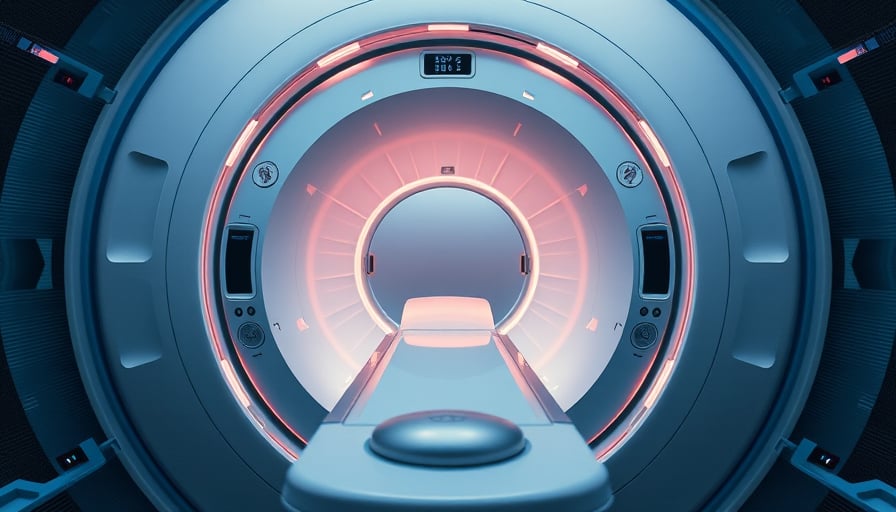
Siemens Healthineers AG Secures FDA Approval for Low‑Helium MRI System
Siemens Healthineers AG (SHI) recently received approval from the United States Food and Drug Administration (FDA) for a magnetic resonance imaging (MRI) system that requires minimal helium consumption. The regulatory milestone positions the company favorably in a market where energy and operating costs are climbing, yet the stock market’s reaction has been comparatively subdued.
Market Dynamics and Competitive Landscape
The United States hospital sector is experiencing heightened pressure to reduce energy expenses. Traditional MRI scanners rely heavily on liquid helium for cooling, and helium shortages have added volatility to procurement costs. Siemens’ low‑helium technology addresses a key pain point, potentially offering a 15–20 % reduction in annual cooling costs per unit. Analysts estimate that hospitals could save approximately $50,000–$75,000 per scanner annually, translating into a stronger competitive edge against rivals such as GE Healthcare and Philips.
Despite the regulatory win, the broader market has responded cautiously. Shares of SHI have increased by only 2.3 % in the week following the announcement, while the German technology index (TecDAX) showed a modest 0.8 % gain, reflecting a measured investor outlook amid ongoing macro‑economic uncertainty.
Reimbursement Models and Pricing Strategy
In the United States, MRI services are reimbursed primarily through fee‑for‑service models under Medicare and private insurers. The Centers for Medicare & Medicaid Services (CMS) has recently updated its MRI reimbursement rates to reflect technological advancements, creating a window for vendors to introduce higher‑priced, high‑value equipment. Siemens is projecting a price premium of 12 % for its low‑helium system relative to standard models, justified by projected lifetime savings and improved patient throughput due to faster scan times.
Financial analysts project that if the system captures 5 % of the U.S. MRI market within five years—approximately 2,500 units—it could generate an incremental revenue stream of $1.5 billion annually, boosting Siemens’ operating margin by 1.2 percentage points. The company’s current operating margin stands at 14.7 %, so this uplift would elevate it to 15.9 %.
Operational Challenges and Capital Expenditure
Deploying the new MRI platform involves several operational hurdles. First, hospital facilities must be retrofitted to accommodate the altered cooling infrastructure, potentially requiring additional capital expenditures (CapEx). Siemens estimates that average retrofitting costs per installation will be around $30,000, a relatively modest outlay given the system’s long‑term savings.
Second, the adoption of the system is contingent upon the integration of Siemens’ artificial intelligence (AI) diagnostic algorithms and digital twin technology. The company’s AI suite can deliver up to a 10 % increase in diagnostic accuracy and a 20 % reduction in radiologist report turnaround time. However, integrating these tools demands investment in training and IT support, estimated at $5,000–$10,000 per site.
Finally, the company must navigate potential supply chain constraints. While the low‑helium feature mitigates helium shortages, the high‑performance superconducting magnets used in the system rely on rare‑earth metals. Siemens has secured long‑term supply contracts to mitigate this risk, yet any disruption could delay deployment and increase costs.
Financial Metrics and Industry Benchmarks
| Metric | Siemens Healthineers | Industry Average |
|---|---|---|
| Operating Margin | 14.7 % | 12.3 % |
| EBITDA Margin | 23.4 % | 19.8 % |
| Revenue Growth (YoY) | 6.5 % | 5.2 % |
| R&D Spend (% of Revenue) | 13.2 % | 9.8 % |
| CapEx as % of Revenue | 4.1 % | 3.6 % |
Siemens’ R&D spend exceeds the industry average, underscoring its commitment to technological leadership. The proposed MRI system aligns with this strategy, potentially enhancing the company’s valuation multiples. Current analyst consensus values Siemens at a forward P/E of 18.5x, compared to the industry median of 16.2x. A successful market penetration of the low‑helium MRI could justify a 2 % increase in the price‑earnings ratio, reflecting higher growth prospects and margin expansion.
Balancing Cost, Quality, and Patient Access
From a value‑based care perspective, the low‑helium MRI aligns with the dual goals of cost containment and quality improvement. By reducing helium consumption and cooling costs, hospitals can lower the overall cost of imaging services. Simultaneously, the AI‑enhanced diagnostic workflow can improve accuracy and speed, yielding better patient outcomes and potentially reducing downstream treatment costs.
Patient access is also likely to improve. The system’s lower operating costs could encourage wider adoption across community hospitals, which often face budget constraints. If hospitals can provide high‑quality imaging at a lower cost, patient wait times may decrease and diagnostic delays can be minimized, enhancing overall health system efficiency.
Outlook
Siemens Healthineers’ FDA approval for a low‑helium MRI system is a notable achievement in a sector grappling with rising energy costs and the need for high‑value care solutions. While the immediate market reaction has been modest, the long‑term economic implications—lower operating costs, AI‑driven diagnostics, and competitive differentiation—could drive significant revenue growth and margin expansion. Investors will likely monitor the company’s deployment rate, pricing strategy, and integration of AI capabilities closely over the next 12–18 months to assess the true commercial impact of this technological innovation.