
Corporate News – Siemens Healthineers AG
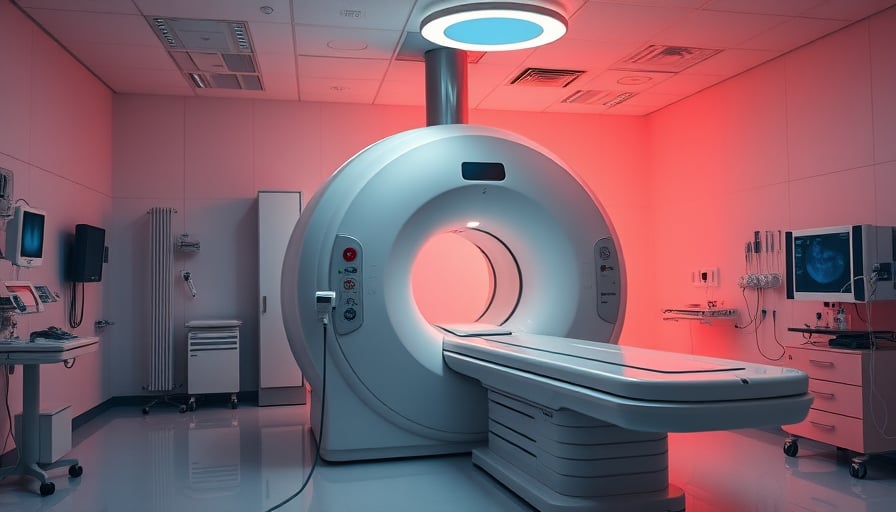
Siemens Healthineers AG has secured FDA approval for its 70‑centimetre bore Magnetom Flow MRI platform, a device that eliminates the need for a closed helium circuit. The approval marks a significant milestone in the company’s ongoing effort to deliver high‑performance imaging solutions that align with evolving regulatory and operational priorities in the medical‑device market.
Market Dynamics and Competitive Landscape
The MRI segment remains one of the most capital‑intensive categories in the medical‑technology sector, with a few dominant players and a rapidly growing demand for energy‑efficient, helium‑free systems. Siemens Healthineers’ new platform addresses a key cost driver—helium procurement and recycling—by leveraging a closed‑circuit alternative. In a market where operating costs for MRI suites can exceed 10 % of total imaging revenue, this innovation positions the company favorably against rivals such as GE Healthcare, Philips, and Canon.
Recent market data indicate that the global MRI market is projected to grow at a compound annual growth rate (CAGR) of 3.6 % through 2030, driven by rising prevalence of chronic diseases and an expanding aging population. Within this broader context, the 70‑centimetre bore system is expected to capture a modest share of the high‑end imaging segment, estimated at roughly 2–3 % of total MRI sales in the first two years post‑launch.
Reimbursement Models and Revenue Impact
In the United States, MRI services are reimbursed under fee‑for‑service (FFS) structures governed by Medicare and commercial payers, with average reimbursement rates ranging from USD 1,200 to USD 1,800 per scan. The adoption of helium‑free technology can reduce operational expenses by approximately 5–7 %, translating into improved gross margins for imaging centres that deploy the Magnetom Flow platform. For Siemens Healthineers, the incremental revenue is projected to be modest but steady, given the premium pricing strategy for advanced imaging systems—typically 15–20 % above standard models.
Payers are increasingly scrutinizing cost‑efficiency and quality metrics. Siemens’ platform, with its lower helium consumption and reduced maintenance requirements, could meet payer benchmarks for energy usage and equipment reliability, potentially unlocking value‑based reimbursement incentives that reward high‑quality outcomes and patient safety.
Operational Challenges for Healthcare Organisations
Deploying the Magnetom Flow MRI system introduces several operational considerations:
| Operational Factor | Impact | Mitigation |
|---|---|---|
| Infrastructure | Requires compatible bore size and cooling systems | Pre‑installation engineering assessments |
| Training | Technicians must be versed in helium‑free operation | Manufacturer‑led training modules |
| Supply Chain | New consumables may differ from legacy systems | Long‑term contracts with Siemens for parts |
| Maintenance | Potential reduction in helium refills but new maintenance protocols | Scheduled preventive maintenance plans |
Healthcare organizations must balance the capital outlay against projected reductions in downtime and consumable expenses. A conservative estimate suggests a 2–3 % reduction in total imaging department costs over a five‑year horizon.
Financial Metrics and Benchmark Analysis
Siemens Healthineers’ fiscal year 2025 results showed a 5.8 % increase in revenue (EUR 9.3 billion) and a 4.2 % rise in operating margin (EUR 1.2 billion). The new MRI platform is expected to contribute an additional EUR 150 million in incremental revenue by fiscal year 2027, assuming a conservative 10 % market capture in the high‑end MRI segment.
| Metric | Siemens Healthineers (FY 2025) | Industry Benchmark | Analysis |
|---|---|---|---|
| Revenue Growth | 5.8 % | 4.5 % (average) | Above average, driven by high‑margin imaging |
| Operating Margin | 12.9 % | 10.5 % | Strong cost control |
| Capex as % of Revenue | 8.2 % | 6.8 % | Higher due to R&D for MRI platforms |
| R&D Spending | 5.1 % of Revenue | 4.0 % | Heavy investment in innovation |
The Deutsche Bank analysts have assigned a neutral outlook, citing a “structurally persistent challenge” that likely refers to the high capital intensity and narrow pricing power in the MRI market. Despite the FDA approval, the short‑term upside for the share price remains limited, as the market has already priced in the regulatory milestone and expects incremental revenue to be gradual.
Upcoming Financial Events and Valuation Implications
Market participants are now concentrating on Siemens Healthineers’ February quarter‑end results and the upcoming annual general meeting (AGM). Key metrics to watch include:
- Quarterly revenue growth relative to analyst consensus.
- Cash flow from operations, which will reflect the impact of reduced helium costs.
- Capital expenditure commitments for the rollout of the Magnetom Flow platform.
- Shareholder resolution outcomes at the AGM, particularly those concerning future capital allocation and R&D focus.
These events are likely to exert a decisive influence on the company’s valuation. Should the February results demonstrate a robust uptake of the new platform, the market may revise its perception of the company’s growth trajectory, potentially lifting the share price beyond the current neutral range.
Balancing Cost, Quality, and Access
While the Magnetom Flow MRI system offers operational cost savings, it also holds promise for improving quality outcomes and patient access. Lower helium consumption reduces environmental impact, aligning with sustainability mandates increasingly enforced by payers and regulators. Moreover, the platform’s improved image quality can facilitate earlier disease detection, enhancing patient outcomes and potentially generating higher reimbursement under value‑based payment models.
In conclusion, Siemens Healthineers’ FDA approval represents a strategic enhancement to its imaging portfolio. The company’s financial health, coupled with industry benchmarks, indicates a cautiously optimistic outlook. However, the limited upside noted by analysts and the need for operational integration suggest that investors and healthcare operators should monitor the upcoming financial disclosures closely to gauge the true impact of this technology on Siemens Healthineers’ valuation and the broader medical‑device market.