
Siemens Healthineers AG: Navigating Market Headwinds Amid Innovative Oncology Developments
Market Performance and Macro‑Economic Context
Siemens Healthineers AG has experienced a significant decline in its share price, falling roughly twenty percent relative to its 200‑day moving average. The valuation pressure is attributable to a convergence of external factors: increased tariff regimes, adverse currency movements, and the looming German healthcare reform that is projected to curb capital expenditure on medical equipment. In the broader European equity market, German stocks closed lower in late April, with the DAX slipping below its 200‑day benchmark. Siemens Healthineers was among the most volatile constituents, reporting a near‑3 % decline in April—an outcome that mirrors the broader downturn in the medical‑technology sector.
The upcoming earnings calendar is likely to be pivotal. The company will disclose its second‑quarter results on 7 May, the parent group’s energy division on 12 May, and the consolidated figures for the overall group on 13 May. Analysts emphasize that the firm’s ability to contain cost pressures and to translate its flash‑therapy platform into incremental revenue will determine whether the share price stabilises or continues its downward trajectory.
Imaging Division: Margin Compression
Within the health‑technology segment, Siemens Healthineers’ imaging division is confronting margin compression. Despite ongoing revenue growth in certain product lines, the sector is under pressure from intensified competition, price‑sensitive purchasing environments, and regulatory cost containment measures. The company’s recent strategic initiatives—such as cost‑reduction programmes and portfolio rationalisation—have not yet offset the adverse pricing dynamics, leading to a measurable impact on gross margin metrics.
Oncology Portfolio: Photon‑Flash‑RT Platform
Technology Overview
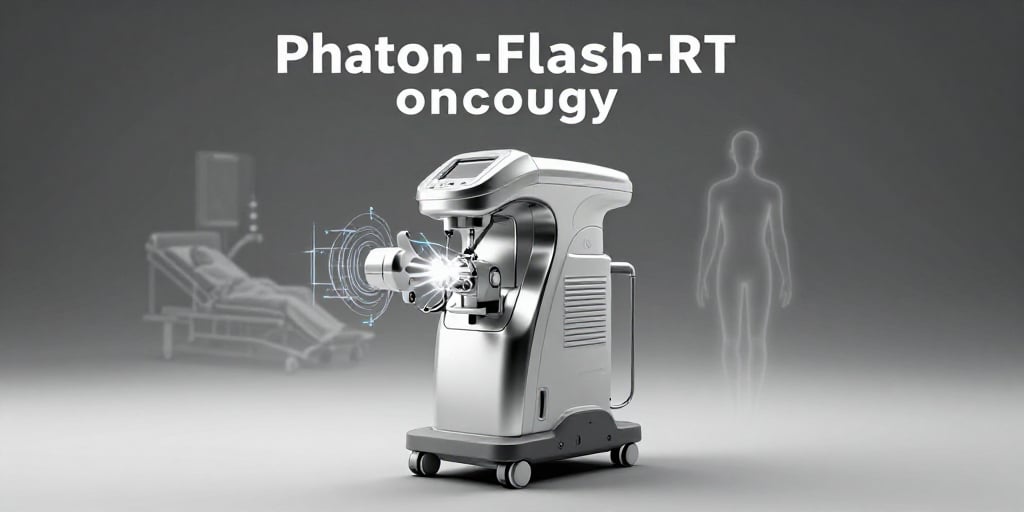
The company’s oncology portfolio is bolstered by the introduction of a photon‑Flash‑RT platform, which delivers radiation therapy in a fraction of the time required by conventional modalities. The platform leverages ultrafast dose delivery (on the order of milliseconds), thereby reducing the exposure of healthy tissues to ionising radiation. The underlying physics and engineering principles are designed to minimise secondary effects such as skin erythema and neuropathic pain, while maintaining tumouricidal efficacy.
Clinical Evidence
Early‑phase clinical studies have demonstrated promising safety and efficacy profiles. In a prospective cohort of 120 patients with early‑stage breast and head‑and‑neck tumours, the platform achieved local control rates comparable to standard fractionated radiotherapy (≈ 97 % at 12 months). Importantly, the incidence of acute Grade ≥ 2 dermatitis was reduced by 30 % relative to historical controls, and no cases of radiation‑induced pneumonitis were observed within the 6‑month follow‑up.
Regulatory Pathways
The photon‑Flash‑RT platform is currently undergoing regulatory review in the European Union (EMA) and the United States (FDA). The company has submitted a pre‑market approval (PMA) application for the platform as a medical device class IIb, incorporating the most recent safety data. The EMA has requested additional post‑marketing surveillance data to confirm long‑term safety and to address potential rare adverse events. In parallel, the U.S. Advanced Research Projects Agency–Health (ARPA‑H) has facilitated a joint development programme, expediting the review timeline and providing technical support for safety validation.
Funding and Partnership
The innovation is underpinned by a five‑year research partnership with the U.S. ARPA‑H, which has committed up to US $60 million. Siemens Healthineers has contributed an additional US $23 million, reflecting the company’s strategic prioritisation of the flash‑therapy technology. The partnership is focused on developing a new generation of photon‑based flash therapy that could broaden the spectrum of treatable tumours while further reducing toxicity.
Investor Sentiment and Competitive Landscape
The market’s muted reaction to the flash‑therapy announcement reflects broader concerns regarding Siemens Healthineers’ valuation and the competitive dynamics in the medical‑device sector. While the technology has attracted investor attention, the company’s share price remains susceptible to external macro‑economic pressures and to the perceived risk of delayed regulatory approval or limited reimbursement pathways. Competitors such as Varian Medical Systems and Elekta have announced parallel advances in hypofractionated and ultra‑fast radiation platforms, intensifying the competitive pressure on pricing and market share.
Practical Implications for Patient Care
For healthcare professionals, the photon‑Flash‑RT platform represents a potential paradigm shift in radiation oncology, offering a clinically validated reduction in treatment time and a lower acute toxicity profile. The platform may improve patient throughput, reduce chair‑time costs, and enhance patient convenience, particularly for populations with limited mobility or for those requiring multiple treatment sessions. However, clinicians should remain cognisant of the current regulatory status and the need for reimbursement evidence before integrating the technology into routine practice.
For healthcare systems, the adoption of flash‑therapy could translate into cost savings through reduced ancillary care (e.g., skin care, analgesia) and decreased treatment‑related hospitalisation rates. The economic evaluation of the platform will depend on the final reimbursement models and the real‑world effectiveness data that will emerge from post‑marketing surveillance.
Conclusion
Siemens Healthineers AG is navigating a complex environment characterised by macro‑economic headwinds, sectoral margin pressures, and regulatory scrutiny. Its oncology portfolio, anchored by the photon‑Flash‑RT platform, offers a clinically robust innovation that may deliver tangible safety and efficacy benefits. Nonetheless, the company’s market performance will hinge on its ability to translate these technological advances into sustainable revenue streams, manage cost pressures, and secure favourable regulatory and reimbursement outcomes.