Siemens Energy in the Eye of an Offshore Wind Slowdown: An Investigative Review
1. Contextualizing the German Offshore Wind Contraction
Recent data from wind:research indicate that Germany has not commissioned a single new offshore wind farm in the past two years. The study attributes this pause to a confluence of market saturation, supply‑chain bottlenecks, and an uncertain regulatory environment. At the heart of the issue is the Wind‑See‑G legislation, whose pending revisions have yet to incorporate Contract‑for‑Difference (CfD) mechanisms—an instrument that has proven effective in other European jurisdictions for stabilizing long‑term project financing.
1.1. Regulatory Vacuum and Its Implications
- CfD absence: Without CfDs, developers face higher financing costs and a greater risk premium, making projects less attractive to institutional investors.
- Policy uncertainty: The German government’s deliberations are perceived as protracted, which has led suppliers to adopt a “wait‑and‑see” stance, postponing capital expenditure.
1.2. Supply‑Chain Stagnation
- Component shortages: Turbine blades and gearbox modules have experienced a 15‑20 % increase in lead times, exacerbated by global semiconductor shortages that have ripple effects on control electronics.
- Logistics bottlenecks: Port congestion in Hamburg and Bremerhaven, coupled with reduced freight capacity, has pushed installation timelines beyond the originally projected 18‑month window.
2. Siemens Energy: Operational Resilience Amid Market Volatility
Siemens Energy’s wind division remains a dominant turbine manufacturer, boasting an installed base that accounts for roughly 30 % of the German offshore market. Despite the slowdown, the company has sustained record‑level production volumes in 2026, thanks in part to a diversified portfolio that includes both large‑scale turbines (4‑5 MW) and smaller, modular platforms designed for mid‑size farms.
2.1. Financial Discrepancies Between Stock and Fundamentals
- Share price decline: Siemens Energy’s shares have fallen 12 % since the peak of 2024, a drop that is not mirrored by a proportional decline in EBITDA or free cash flow.
- Analyst divergence: The Financial Times and Bloomberg Intelligence have highlighted a 6‑month lag between operational performance and market valuation, suggesting that investor sentiment may still be heavily influenced by the macro‑environment rather than company-specific metrics.
2.2. Workforce Implications
- Projected layoffs: The board’s statements hint at a 5‑10 % reduction in headcount across the wind division if the slowdown persists beyond 2028.
- Comparative analysis: Historically, Siemens’ solar division cut 3‑4 % of staff during the 2017‑2018 solar market downturn—an event that ultimately accelerated their shift towards energy storage solutions.
3. Uncovering Overlooked Opportunities
3.1. Market Consolidation Potential
- M&A opportunities: Smaller developers, constrained by financing, may be open to acquisition or strategic partnership. Siemens could leverage its manufacturing capacity to integrate downstream activities, from blade production to maintenance services.
3.2. Technological Innovation
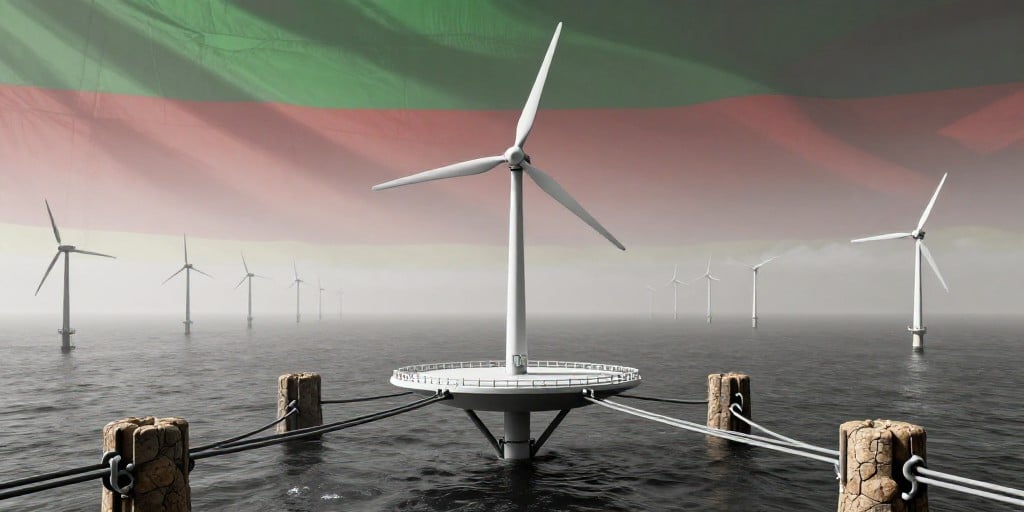
- Floating wind platforms: Germany’s near‑shore waters are ideal for floating turbines, a technology that can circumvent depth constraints. Siemens has a nascent but growing portfolio in this area, presenting a niche where they can set industry standards.
3.3. Regulatory Advocacy
- Policy influence: By forming coalitions with other OEMs and supply‑chain partners, Siemens could push for a hybrid CfD‑grants model that balances risk with incentive, potentially securing a faster path to project approvals.
4. Risks That May Be Underestimated
| Risk | Underlying Cause | Potential Impact |
|---|---|---|
| Supply‑Chain Collapse | Component shortages, port congestion | Delays, cost overruns |
| Regulatory Drift | Protracted Wind‑See‑G revisions | Investor uncertainty, financing gaps |
| Currency Volatility | Euro‑USD fluctuations | Margin compression on export orders |
| Technological Disruption | Rapid shift to storage & hybrid solutions | Obsolescence of current turbine models |
5. Conclusion
Siemens Energy’s current predicament illustrates a broader systemic challenge within the German offshore wind sector—one that is driven as much by regulatory inertia as by market dynamics. While the company’s core operations demonstrate resilience, the looming slowdown offers both hazards and strategic openings. A disciplined approach to monitoring regulatory developments, coupled with proactive engagement in supply‑chain innovation, will determine whether Siemens can transform a temporary bottleneck into a long‑term competitive advantage.