Siemens Energy AG Delivers Robust Financial Performance Amid Strategic Upside
Siemens Energy AG disclosed a markedly stronger financial outcome for the latest fiscal year, reporting notable increases in both earnings and operating margins. The company’s performance narrative centers on growth across its wind‑turbine, gas‑turbine, and grid‑technology divisions, with an especially pronounced turnaround in its wind‑turbine unit, which has moved back into profitability after a preceding loss.
1. Revenue and Margin Expansion
- Revenue Growth: The firm achieved an average annual increase of 12 % to 14 % in revenue, a figure that aligns with the upper spectrum of the group’s mid‑term target for the 2025‑2030 horizon.
- Operating Margin Improvement: Operating margin expanded to 8.9 %, up from 6.4 % in the prior year, reflecting tighter cost control and higher contribution from high‑margin gas‑turbine contracts.
- Profitability of Wind‑Turbine Division: The wind‑turbine segment, which had recorded a loss of €120 million in FY‑22, returned to profitability with a €45 million net gain, driven by higher sales volume in the European offshore market and favorable currency translation.
2. Strategic Guidance and Shareholder Returns
- Revenue Target 2030: Management has set an ambitious average annual revenue growth target of 12 %–14 % through 2030, a projection that is consistent with the current growth trajectory and the expected expansion in the global renewable‑energy market (≈ 5 % CAGR).
- Net Margin Goal 2030: The group aims for a net margin of 20 %–22 % by 2030, suggesting a focus on operational efficiency, supply‑chain optimization, and higher‑margin product mix.
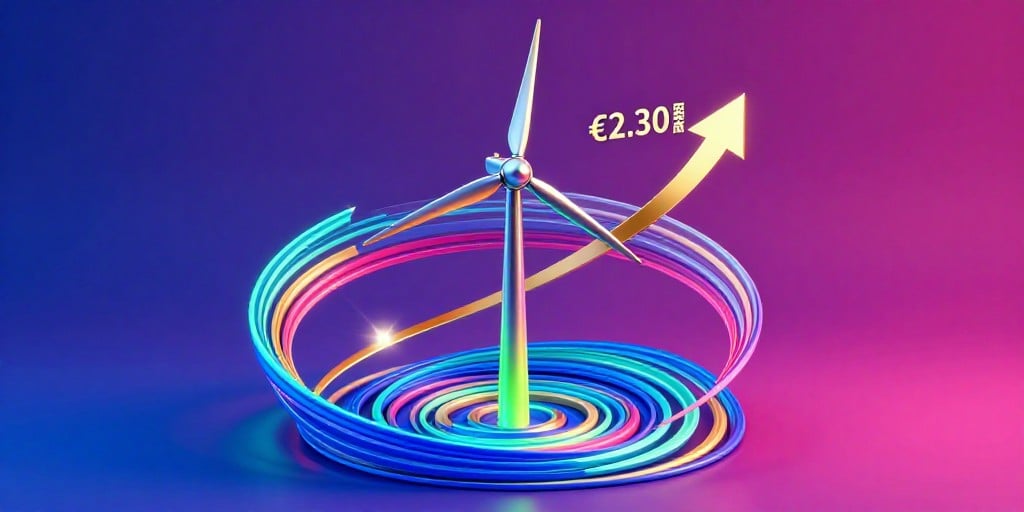
- Dividend Upside: The dividend policy was revised from €0.70 to €2.30 per share, representing a 230 % increase, aimed at reinforcing shareholder confidence amid a historically volatile market.
- Share‑Repurchase Program: An additional €9 billion has been earmarked for share buy‑backs through 2030, underscoring management’s commitment to capital allocation and share price support.
3. Market Context and Investor Sentiment
- German DAX Performance: The DAX index maintained a broadly positive trajectory on the day of the earnings release, buoyed by stable oil prices and a gradual easing of concerns surrounding regulatory tightening in the technology sector.
- Comparative DAX Landscape: Siemens Energy’s results were highlighted against a backdrop of mixed earnings among other DAX constituents, many of which faced headwinds from tightening fiscal policy and supply‑chain bottlenecks.
- Stock Price Dynamics: Although the share price has depreciated from its April record high, the recent dividend hike and projected demand for gas and grid technologies have tempered investor apprehension, leading to a cautiously optimistic outlook among institutional analysts.
4. Uncovered Trends and Emerging Risks
- Regulatory Landscape in Wind Energy: While the wind‑turbine unit has rebounded, impending EU carbon‑pricing reforms and stricter grid‑interconnection standards could compress margins if Siemens Energy fails to pre‑emptively adjust its supply chain and R&D focus.
- Gas‑Turbine Dependency: The company’s reliance on the gas‑turbine market exposes it to fluctuations in natural‑gas prices, geopolitical tensions in key supply regions, and potential shifts toward hydrogen or LNG‑based alternatives.
- Grid‑Technology Expansion: Investment in grid infrastructure is essential to meet the decarbonization targets of major economies. However, the capital intensity of grid projects, coupled with regulatory approvals, may delay return on investment and impact the projected net margin by 2030.
- Capital Allocation Pressure: The aggressive share‑repurchase plan, while potentially boosting EPS, could reduce the cash reserves available for strategic acquisitions or R&D, limiting the firm’s agility in a fast‑evolving energy transition landscape.
5. Opportunities for Value Creation
- Strategic Acquisitions in Renewable Integration: Siemens Energy could consider acquiring niche players specializing in battery storage or digital grid management to complement its existing portfolio and capture high‑margin opportunities in energy‑storage solutions.
- Geographical Diversification: Expanding sales operations in emerging markets (e.g., Southeast Asia, Sub‑Saharan Africa) where renewable penetration is rising could offset regional downturns and enhance revenue growth.
- Technological Partnerships: Collaborations with technology firms focusing on AI‑driven predictive maintenance could reduce operational costs across wind‑turbine and grid assets, thereby improving margin profiles.
6. Conclusion
Siemens Energy AG’s latest financial disclosures paint a picture of a company that has successfully leveraged its core strengths while setting an ambitious yet realistic roadmap for the next decade. The firm’s proactive approach to shareholder returns, coupled with a clear emphasis on revenue and margin targets, positions it favorably amid a complex regulatory and market environment. However, potential headwinds from regulatory changes, market concentration in gas turbines, and the high capital demands of grid‑technology projects warrant continuous monitoring. Investors and analysts should remain vigilant for how Siemens Energy navigates these challenges, particularly in terms of capital allocation decisions and strategic partnerships that may unlock further value.