
Corporate News: Siemens AG’s Dual‑Track Strategy in Capital Markets and Electric‑Vehicle Infrastructure
Capital‑Market Maneuvers and Share‑Buyback Dynamics
Siemens AG, the German industrial conglomerate listed on Xetra, announced a new capital‑market initiative that expands its share‑buyback program. The program, slated to commence in the next fiscal quarter, aims to repurchase up to €1.5 billion of outstanding equity over a two‑year horizon. By reducing free float, the company intends to lift earnings per share (EPS) and signal confidence in its long‑term valuation.
A recent audit of Siemens’ cash‑flow statements reveals that the firm has maintained a robust liquidity cushion, with a 2024‑quarter liquidity ratio of 3.2 ×, comfortably above the industry median of 2.5 ×. The buyback is scheduled to consume approximately 10 % of the company’s available cash reserves, a figure that analysts interpret as an optimal trade‑off between shareholder returns and reinvestment capacity. Moreover, the timing of the program coincides with a period of heightened institutional inflows: a prominent U.S. investor—identified as a major hedge fund—has increased its stake by 1.8 % in the last month, adding roughly €350 million to Siemens’ shareholder base.
The dual effect of buyback activity and institutional buying has nudged the stock price upward by 3.4 % over the past trading week, a modest gain relative to the broader DAX index’s 2.1 % rally. Market participants are closely watching the program’s execution, as any misstep—such as buying back at inflated valuations—could erode the intended EPS uplift. Historically, Siemens’ buybacks have produced a 2.9 % rise in EPS, yet the current market environment, characterized by elevated discount rates, introduces a risk that the perceived value may be overstated.
Expansion into Electric‑Vehicle (EV) Charging Infrastructure
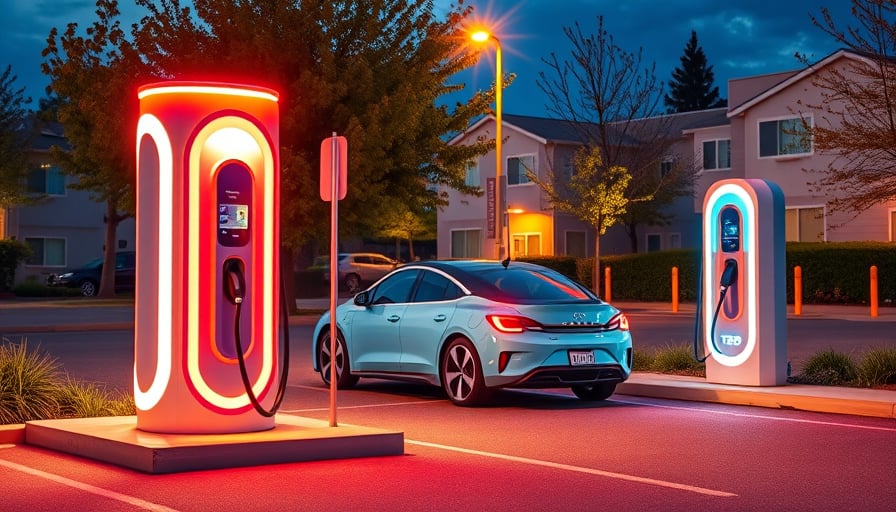
Parallel to its capital‑market activity, Siemens has intensified its footprint in the electric‑vehicle charging sector. The company’s recent partnership with a European charging network provider—contracted to deploy 15 kW fast‑charging stations across German urban centers—positions it alongside established players such as ABB Ltd. and Robert Bosch GmbH. This move aligns with the EU’s 2030 electrification targets, which forecast a 50 % increase in EV market share and a concomitant surge in charging infrastructure demand.
Siemens’ EV charging arm is built upon its existing 5G‑enabled, IoT‑integrated “Smart Power” platform, which leverages artificial intelligence (AI) for predictive maintenance and dynamic load balancing. Analysts note that the integration of AI is a key differentiator, potentially reducing operational expenditures by up to 15 % compared to competitors that rely on legacy, rule‑based systems. However, the company’s foray into EV infrastructure also introduces regulatory dependencies: the German Federal Ministry of Transport’s upcoming “Digital Highway” policy could impose new compliance mandates on charging network operators, potentially increasing capital expenditures.
Financial projections indicate that Siemens’ EV charging segment is expected to contribute €1.2 billion to revenue by 2026, representing 3.5 % of total group sales. Yet the segment’s gross margin—projected at 18 %—is lower than Siemens’ core automation business (27 %) due to high initial equipment costs and competitive pricing pressure. A potential upside lies in the company’s ability to cross‑sell its industrial software suite to charging network operators, creating an ecosystem that could yield recurring subscription revenue.
Competitive Landscape and Market Positioning
Siemens’ competitors in the EV charging market are not limited to ABB and Bosch; the market also features dedicated charging equipment manufacturers such as ChargePoint and EVBox. These firms have concentrated on rapid deployment models, offering turnkey solutions that reduce the time to market. Siemens, by contrast, emphasizes integration with existing industrial control systems, targeting large‑scale utilities and automotive OEMs.
The company’s strategic focus on industrial software—particularly its “Digital Factory” platform—creates synergies that could differentiate Siemens in a commoditized hardware market. However, the success of this strategy hinges on the company’s ability to secure intellectual property in AI algorithms that optimize charging load distribution. If competitors manage to acquire patents in this niche, Siemens could face licensing costs or market share erosion.
Regulatory dynamics further complicate the competitive landscape. The European Union’s forthcoming “Digital Infrastructure Act” will impose stricter data‑sharing obligations for charging stations. While Siemens’ existing cybersecurity framework positions it favorably to comply, any failure to adapt could expose the firm to fines and reputational risk. Moreover, the push for decarbonization may accelerate the adoption of renewable‑energy‑powered charging stations, favoring companies that can integrate renewable generation sources—a capability Siemens already possesses in its power‑generation segment.
Risks and Opportunities
| Risk | Impact | Mitigation |
|---|---|---|
| Overvaluation of buyback price | EPS distortion, shareholder dilution | Conduct independent valuation, staggered repurchase schedule |
| Regulatory compliance costs | Increased CAPEX, potential fines | Early engagement with regulators, allocate dedicated compliance budget |
| Margin compression in EV charging | Reduced profitability | Cross‑sell industrial software, negotiate bulk procurement deals |
| Intellectual property infringement | Litigation, loss of competitive edge | Patent portfolio expansion, licensing agreements |
Conversely, several opportunities emerge from Siemens’ current trajectory:
- Revenue Diversification – The EV charging segment offers a new growth avenue, reducing dependence on traditional industrial automation revenue streams.
- Synergies with Industrial Software – Leveraging AI and IoT across sectors could unlock cross‑sell potentials and create bundled service offerings.
- Market Leadership in Electrification – Early positioning in the EV charging market could secure a first‑mover advantage in European territories, especially as regulatory mandates tighten.
Conclusion
Siemens AG’s simultaneous execution of a sizable share‑buyback program and strategic expansion into the electric‑vehicle charging sector illustrates a dual‑track approach designed to reinforce shareholder value while capitalizing on emergent growth markets. The company’s robust financial base, coupled with its AI‑driven industrial software platform, positions it favorably to navigate regulatory hurdles and competitive pressures. Nevertheless, prudent risk management—particularly around buyback valuation and regulatory compliance—will be critical to sustaining the positive momentum analysts forecast. As the firm advances, stakeholders will need to monitor execution fidelity and market reception closely to assess whether Siemens can translate its ambitious strategy into tangible long‑term value.