
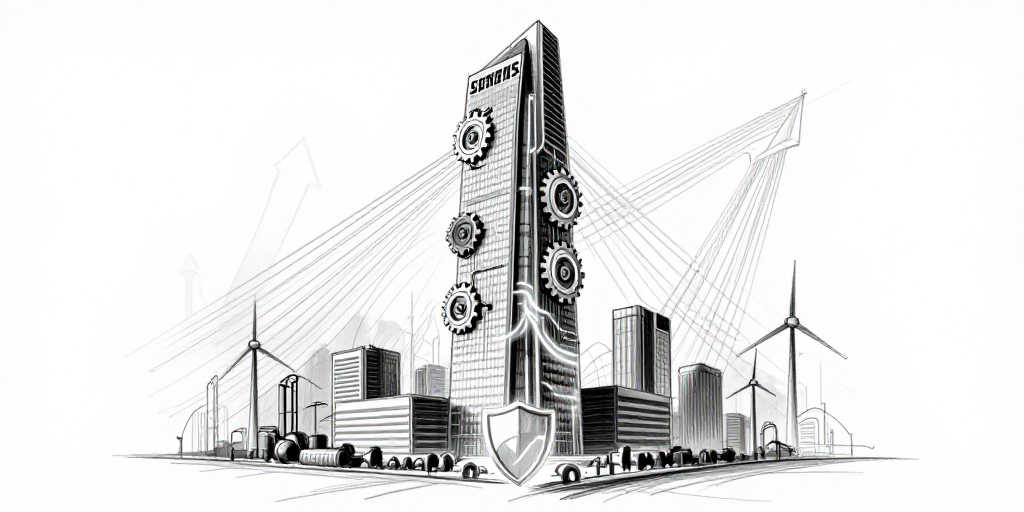
Siemens AG Announces Strategic Expansion Across Energy, AI, and Critical‑Infrastructure Sectors
Siemens AG has unveiled a series of strategic initiatives that are reshaping its market perception and financial outlook. The conglomerate’s energy subsidiary, Siemens Energy, has upgraded its 2026 revenue growth guidance, while the parent company intensifies its focus on artificial intelligence (AI) and cybersecurity services across industrial and utility domains. These moves reinforce Siemens’ positioning at the intersection of electrification, digital transformation, and regulatory compliance.
1. Siemens Energy Raises 2026 Revenue Guidance
- Updated Target: 14 %–16 % revenue growth for 2026, up from the previous range.
- Rationale: Sustained demand in electrification and automation, particularly in electric vehicle infrastructure, grid modernization, and industrial automation.
- Financial Impact: Earnings forecast for 2026 increased to approximately €4 billion, a marked uplift from earlier estimates.
- Market Reaction: The revision has been well received by analysts and investors, contributing to a rise in Siemens’ share price that is now trading above its 52‑week high.
The guidance upgrade reflects Siemens Energy’s confidence in the long‑term shift toward low‑carbon power generation and the accelerating adoption of electrified transport. The company’s focus on high‑performance wind turbines, power transmission solutions, and battery storage systems positions it favorably in the evolving energy market.
2. AI‑Driven Innovation Across Industrial and Energy Sectors
2.1. Expansion of Industrial AI Capabilities
Siemens is redirecting a substantial portion of its planned AI investment toward the United States. Chief Executive Officer Roland Busch highlighted that EU AI and Data Acts may impose restrictive treatments on industrial data, potentially limiting cross‑border data flows essential for AI development. By concentrating investment in the U.S., Siemens aims to:
- Maintain flexibility in technology development and data usage.
- Leverage the robust U.S. AI talent pool and supportive regulatory environment.
- Ensure competitiveness against other global AI leaders.
2.2. New Low‑Voltage Plant in Sibiu, Romania
The plant, slated for completion in 2028, will integrate AI‑controlled robotics and autonomous transport systems. Key features include:
- Smart Automation: Real‑time monitoring of production processes, predictive maintenance, and adaptive quality control.
- Digital Twins: Virtual replicas of the manufacturing line to optimize performance and reduce downtime.
- Sustainability: Energy‑efficient processes aligned with Siemens’ global sustainability objectives.
This facility will serve as a showcase for industrial AI integration, reinforcing Siemens’ reputation as a pioneer in digital manufacturing.
2.3. AI‑Driven Battery Research Centre in Canada
Siemens Energy’s Canadian research centre focuses on next‑generation battery technologies, exploring:
- Solid‑state chemistries for higher energy density.
- AI‑accelerated materials discovery to reduce development cycles.
- Integration with renewable energy systems for grid balancing.
Parallel expansions in Mexico target electrification capacity, leveraging local incentives and growing demand for renewable integration.
3. Strengthening Cyber‑Security for Critical Infrastructure
Siemens has introduced a Managed Detection and Response (MDR) service tailored for operators of critical infrastructure. Key aspects include:
- Pilot Program: Launched with Hertener Stadtwerke, demonstrating cost savings and rapid threat mitigation.
- Compliance Alignment: Designed to meet tightening EU Cyber‑Security Act requirements, providing utilities with a ready‑made security posture.
- Integrated Solution: Combines real‑time monitoring, incident response, and continuous improvement, complementing Siemens’ broader digital offerings.
This service reflects Siemens’ strategic shift toward holistic, value‑added solutions for utility operators, positioning the company as a trusted partner in safeguarding critical assets.
4. Broader Economic and Regulatory Context
- Electrification Momentum: Global commitments to net‑zero emissions are accelerating demand for electric infrastructure, wind turbines, and battery storage—core components of Siemens Energy’s portfolio.
- Data‑Center Expansion: The rapid growth of cloud computing and edge computing fuels demand for high‑efficiency power supplies and digital infrastructure, aligning with Siemens’ AI and digital manufacturing initiatives.
- Regulatory Evolution: Upcoming EU AI and Data Acts, as well as the EU Cyber‑Security Act, are redefining compliance landscapes. Siemens’ proactive stance—shifting AI investment geographically and launching MDR services—demonstrates its adaptability to regulatory shifts.
- Cross‑Sector Synergies: Siemens’ integrated approach—combining energy solutions, AI‑driven manufacturing, and cyber‑security—creates synergistic opportunities across traditionally siloed industries.
5. Conclusion
Siemens AG’s recent strategic moves across energy, AI, and critical‑infrastructure security underscore the company’s commitment to staying at the forefront of digital transformation and sustainable energy. By raising revenue guidance, expanding AI capabilities, investing in advanced manufacturing plants, and delivering tailored cyber‑security services, Siemens positions itself to capitalize on electrification trends, data‑center growth, and evolving regulatory frameworks. These initiatives not only strengthen the firm’s financial outlook but also reinforce its reputation as a versatile, forward‑thinking enterprise capable of navigating complex, inter‑connected markets.