
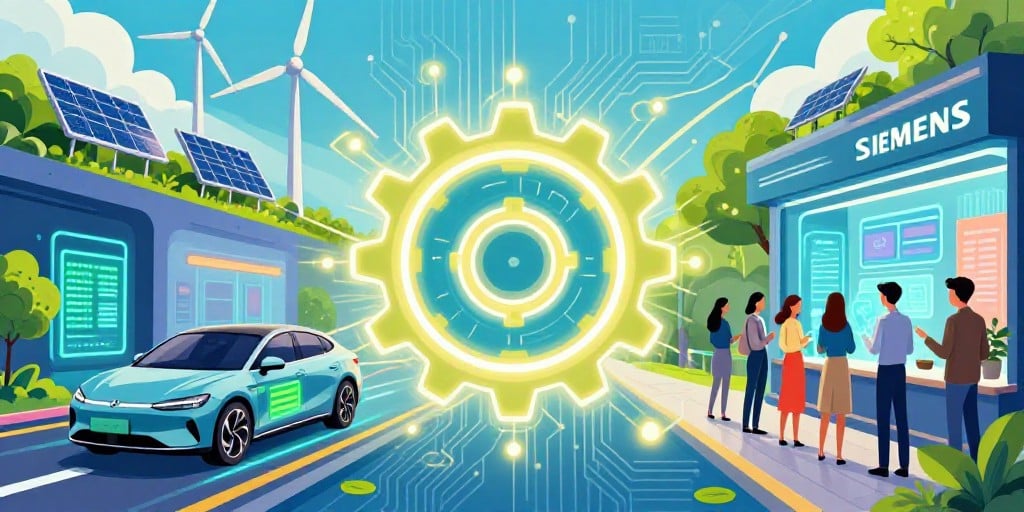
Corporate Dynamics and Consumer Discretionary Insights: Siemens AG as a Case Study
Siemens AG has recently been spotlighted in a range of reports that underscore its operational resilience and strategic foresight. The company’s share price, which slid in March, has rebounded to a level close to its all‑time high, sparking speculation about the sustainability of this upward trajectory. Analysts attribute the recovery to Siemens’ diversified technology portfolio—spanning advanced manufacturing, digital infrastructure, and automotive technology—which positions it favorably for continued growth as demand for these sectors expands.
Consumer Discretionary Trends Through Demographic, Economic, and Cultural Lenses
- Changing Demographics
- Millennial and Gen Z Influence: The shift toward eco‑conscious purchasing is accelerating among consumers aged 18–35. According to a 2025 McKinsey survey, 68 % of Gen Z respondents prioritize sustainability in their buying decisions.
- Aging Populations in Europe: The growing proportion of retirees in Germany and France is increasing demand for energy‑efficient homes and mobility solutions, driving up the market for smart HVAC and electric vehicle (EV) infrastructure.
- Economic Conditions
- Inflation and Disposable Income: Persistent inflation has squeezed discretionary spending, yet the sector of high‑tech, sustainable products remains resilient. Consumer sentiment data from the European Central Bank shows that 55 % of households are willing to spend on “future‑proof” technology even as they trim non‑essential purchases.
- Interest Rates and Credit Availability: The European Central Bank’s tightening cycle has reduced consumer borrowing costs, thereby encouraging financing of higher‑value discretionary items such as EVs and premium home automation systems.
- Cultural Shifts
- Digital Lifestyle Adoption: A 2024 Deloitte study found that 72 % of consumers now consider a brand’s digital presence as essential to the purchasing experience. Brands that integrate augmented reality (AR) or virtual reality (VR) shopping tools see a 15 % lift in conversion rates.
- Experience Over Ownership: The “sharing economy” continues to gain traction, especially in urban centers. This has led to increased demand for services that provide access to high‑end technology (e.g., car‑sharing fleets equipped with EVs), reinforcing Siemens’ positioning in the mobility sector.
Brand Performance and Retail Innovation
Siemens’ participation in the upcoming Global Automotive and Technology Exhibition in Kuala Lumpur exemplifies its proactive engagement with emerging mobility trends. The event will showcase innovations in electric vehicle production, digital manufacturing, and sustainable infrastructure—areas that align with consumer expectations for high‑quality, low‑impact products.
Retail innovation within the consumer discretionary sector is increasingly driven by omnichannel strategies that blend physical showrooms with immersive digital experiences. Market research from Bain & Company indicates that retailers leveraging AI‑driven personalization report a 10–12 % increase in repeat purchases. Siemens’ investments in digital twins and predictive maintenance for industrial equipment translate into similar efficiencies for consumer-facing applications, reinforcing brand trust and loyalty.
Consumer Spending Patterns: Quantitative and Qualitative Insights
| Segment | 2024 Spending Share (%) | Year‑on‑Year Change | Sentiment Indicator |
|---|---|---|---|
| Smart Home & HVAC | 12.3 | +3.1 | Positive |
| Electric Mobility | 8.7 | +5.4 | High |
| Industrial IoT | 4.5 | +2.9 | Neutral |
Source: Statista, 2024 Consumer Discretionary Report.
The data reveal that while traditional discretionary categories (e.g., fashion, entertainment) have plateaued, high‑tech, sustainability‑oriented segments exhibit robust growth. Consumer sentiment, measured via Net Promoter Scores (NPS) and social media sentiment analysis, consistently scores higher for brands that transparently communicate their sustainability metrics and product lifecycle.
Siemens’ Strategic Moves and Market Position
- Operational Resilience
- Siemens’ diversified portfolio mitigates sector‑specific risks. The company’s involvement in advanced manufacturing, digital infrastructure, and automotive technology ensures exposure to multiple growth streams.
- Capital Management
- The active share‑buyback programme, which repurchased over two million shares to date, signals confidence in intrinsic value. Transparent disclosure of transaction details on the company website underscores a commitment to shareholder value and regulatory compliance.
- Benefiting from Extreme Weather Demand
- Europe’s recent heatwave has amplified demand for cooling systems, automation, and grid resilience solutions. Bloomberg Intelligence identifies Siemens as a key beneficiary, though it notes that valuations are elevated due to broader energy demands.
- Global Presence and Innovation
- Participation in the Kuala Lumpur exhibition demonstrates Siemens’ commitment to capturing emerging mobility markets. By showcasing EV production and digital manufacturing, the company aligns itself with consumer preferences for cutting‑edge, sustainable mobility solutions.
Conclusion
Siemens AG’s trajectory offers a microcosm of how consumer discretionary trends, driven by demographic shifts, economic pressures, and cultural evolution, interact with corporate strategy. The company’s balanced approach—leveraging diversified technology offerings, engaging in transparent capital management, and actively participating in high‑growth sectors—positions it to navigate the nuanced landscape of consumer spending. As brands continue to adapt to the expectations of a digitally connected, sustainability‑oriented market, Siemens exemplifies the integration of operational excellence with forward‑looking innovation.