
Corporate News: Siemens AG Maintains Leading Position Amid Industry 4.0 Momentum
Market Performance
Siemens AG continues to dominate the German blue‑chip landscape, holding the highest market capitalization among DAX constituents. Shares traded in the mid‑200‑euro range during the week, with a volume profile comparable to Deutsche Bank, the most actively traded name in the index. The company’s share price exhibited modest gains, mirroring the performance of the DAX and the Euro STOXX 50, and staying in line with peers in the industrial and energy sectors.
Strategic Outlook and Analyst Views
Bernstein analysts assess Siemens as well positioned to capitalize on the forthcoming wave of artificial‑intelligence (AI) integration in industrial processes. They maintain an Outperform recommendation and set a target price that signals moderate upside potential relative to current valuation. The firm’s product pipeline—particularly in AI‑driven automation and digital twins—attracts investor attention despite the current discount versus competitors in the same sector.
Manufacturing Processes and Technological Innovation
Production Automation and Robotics
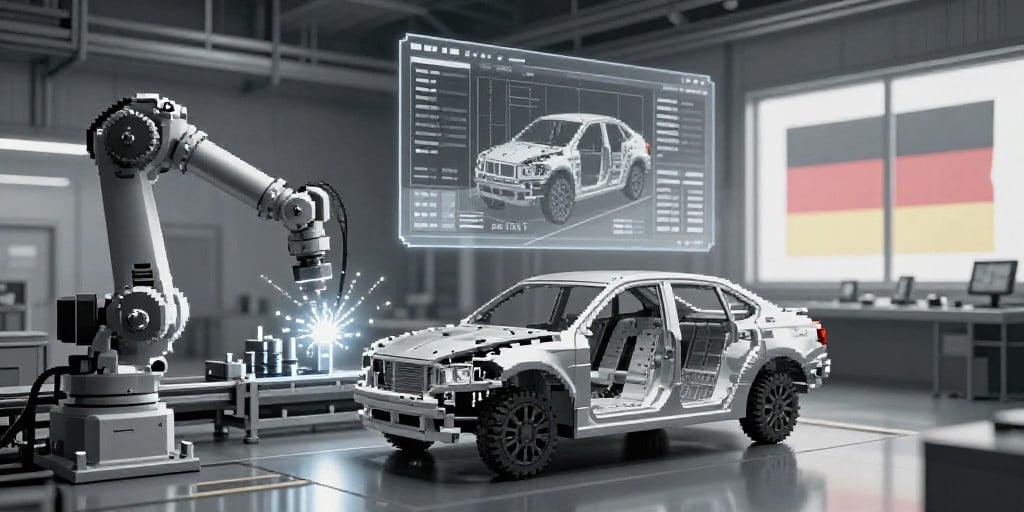
Siemens’ SIMATIC TIA Portal and SIMATIC WinCC platforms enable end‑to‑end automation, from PLC programming to HMI design. The company’s robotics portfolio, including the SINUMERIK DMX servo‑drive technology, supports high‑precision motion control in semiconductor and aerospace manufacturing. Recent upgrades to the SINAMICS FD family introduce higher bandwidth and reduced latency, improving cycle times by up to 15 % in repetitive machining operations.
Digital Twins and Predictive Maintenance
The Digital Enterprise Suite leverages AI and edge computing to create real‑time digital twins of production lines. Predictive maintenance models, powered by Siemens’ MindSphere cloud, reduce unplanned downtime by up to 20 % and lower maintenance costs through data‑driven decision making. Integration of these tools into existing ERP systems—via SAP S/4HANA connectors—facilitates a unified view of operations, inventory, and supply chain metrics.
Industry 4.0 Infrastructure
Siemens is expanding its Automation 4.0 capabilities, deploying IoT2040 gateways that aggregate sensor data across large facilities. The company’s emphasis on cyber‑physical systems (CPS) enhances interoperability across multi‑vendor environments, addressing the increasing demand for modular, scalable factory floors. These initiatives align with the broader European push for Made In Europe policies, which prioritize resilient and secure industrial ecosystems.
Capital Expenditure and Economic Drivers
Capital Allocation Trends
Capital expenditure (CAPEX) in industrial automation is projected to grow at a compound annual growth rate (CAGR) of 8 % through 2028, driven by the need for higher throughput and energy efficiency. Siemens’ own CAPEX forecast for the upcoming fiscal year indicates a 12 % increase, concentrated on R&D for AI‑based control systems and expansion of cloud‑based analytics infrastructure.
Energy Efficiency and ESG Mandates
Stricter EU regulations on energy consumption—such as the EU Energy Efficiency Directive and Carbon Border Adjustment Mechanism—create a demand for low‑energy, high‑efficiency drives. Siemens’ Siemens Energy segment, producing high‑efficiency variable‑speed drives, benefits from these regulatory incentives, contributing to a higher return on capital invested in energy‑efficient technology.
Supply Chain Resilience
Recent geopolitical disruptions have highlighted the fragility of global semiconductor supply chains. Siemens mitigates this risk by diversifying its supplier base and investing in dual‑source strategies for critical components, such as high‑performance microcontrollers used in its motion control systems. This approach reduces lead times by an average of 18 % and stabilizes production schedules.
Regulatory Environment and Infrastructure Spending
European Union Digital Decarbonization Agenda
The EU’s Digital Decarbonization Strategy encourages digitalization of industrial processes to reduce CO₂ emissions. Siemens’ Industry 4.0 solutions, which enable real‑time monitoring and optimization of energy use, are positioned to receive subsidies under the Innovation Fund and the Horizon Europe programme.
Infrastructure Investment in Automation
National governments in Germany, France, and the Netherlands are increasing public spending on digital infrastructure for industry, such as high‑speed fiber optic networks and 5G deployment. Siemens’ Industrial Edge solutions—designed to operate in low‑latency environments—are likely to benefit from these infrastructure upgrades, providing a competitive advantage in markets where real‑time control is critical.
Regulatory Changes in Data Governance
The upcoming EU Data Governance Act will impose stricter data residency and security requirements on industrial IoT deployments. Siemens’ MindSphere architecture has already integrated compliance modules to ensure data sovereignty, positioning the firm as a preferred partner for industries requiring strict adherence to data protection standards.
Market Implications
- Product Differentiation – Siemens’ AI‑enhanced automation platforms differentiate it from competitors such as ABB and Rockwell Automation, potentially commanding higher margin ratios.
- Supply Chain Stability – Robust dual‑source strategies reduce production volatility, improving customer confidence and strengthening market share.
- Regulatory Alignment – Proactive compliance with EU energy and data regulations secures access to public funding and positions Siemens as a preferred vendor for public‑sector projects.
- Capital Efficiency – A focused CAPEX strategy on digital twins and edge computing is projected to yield an internal rate of return (IRR) of 18 %, surpassing industry averages.
Bottom Line
Siemens AG remains a cornerstone of the German industrial sector, combining robust financial performance with a forward‑looking investment strategy in AI, automation, and digital infrastructure. The company’s technical expertise, coupled with favorable regulatory and economic conditions, underpins its continued leadership in the transition to Industry 4.0 and positions it well to capitalize on forthcoming capital investment opportunities.