Corporate Outlook: Shell plc’s Share‑Repurchase and Energy Market Dynamics
Shell plc’s intensified share‑repurchase program, announced on 26 November 2026, underscores the company’s ongoing commitment to returning value to shareholders while sustaining its strategic focus on the evolving energy landscape. The latest tranche of purchases—executed on the London Stock Exchange and the Amsterdam Stock Exchange—constitutes the most substantial activity in the program to date, with on‑market and off‑market mechanisms administered by BNP Paribas and Natixis respectively. The transactions remain fully compliant with UK listing rules and European market‑abuse legislation, ensuring transparency and adherence to pre‑established parameters.
1. Energy Supply‑Demand Fundamentals
Global oil demand has moderated slightly following the 2025 mid‑year peak, with the International Energy Agency (IEA) projecting a 1.8 % decline in crude consumption through 2027. Despite this contraction, Brent crude has maintained a steady price range of $85–$92 per barrel, supported by restrained output from the Organization of the Petroleum Exporting Countries (OPEC+) and sustained refinery throughput in Asia. Meanwhile, natural gas prices in the European market have exhibited volatility, driven by the winter supply‑security concerns and the recent decommissioning of the Nord Stream 2 pipeline. Gas spot prices in the Netherlands have averaged €85 /MWh over the last six months, a 6 % increase from 2025, reflecting tighter supply margins.
In the renewable sector, the European Union’s 2025 “Fit for 55” package has accelerated wind and solar deployment, with onshore wind installations growing at a 12 % CAGR and solar photovoltaic installations rising by 14 % year‑over‑year. This expansion is paired with a surge in battery storage capacity, which increased by 18 % in 2026, driven largely by advances in lithium‑ion chemistry and the introduction of next‑generation solid‑state batteries.
2. Technological Innovations in Energy Production and Storage
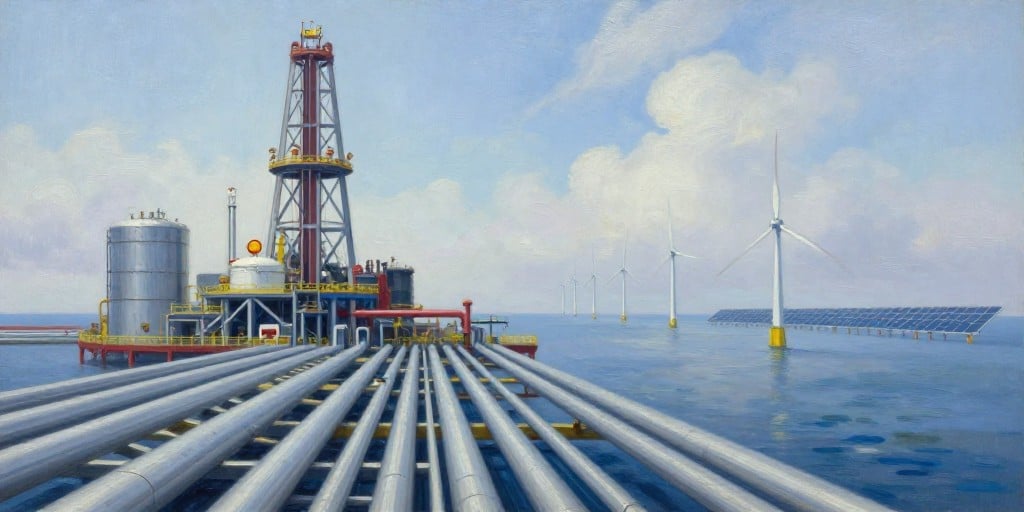
Shell’s portfolio continues to diversify across conventional hydrocarbons and low‑carbon technologies. The company’s investment in advanced carbon‑capture and utilization (CCU) projects—such as the Syncrude CCU pilot in Alberta—has demonstrated a cost reduction of 8 % in CO₂ utilization per tonne of captured carbon, thanks to the adoption of membrane‑based separation and hydrogen‑reforming processes. Concurrently, Shell’s partnership with Siemens Energy in offshore wind farms has accelerated the deployment of 4 MW turbine modules, reducing installation time by 30 % compared to the previous generation.
In energy storage, Shell’s acquisition of a stake in the French battery storage firm, Enerstor, has enabled the company to integrate large‑scale battery storage units (up to 1 GWh) into its European midstream network. These systems provide frequency‑response services, stabilizing the grid during the intermittent supply of renewables. The integration of these batteries is projected to generate an additional €250 million in ancillary‑services revenue annually, aligning with the European Energy Storage Market Outlook 2026–2030.
3. Regulatory Impacts on Traditional and Renewable Energy Sectors
Regulatory frameworks have continued to shape both traditional and renewable energy markets. In the United Kingdom, the revised Net Zero Strategy has imposed a stricter emissions reduction target on midstream operators, prompting Shell to accelerate its transition plan toward a 30 % reduction in net GHG emissions by 2030. Compliance is being achieved through a combination of CCU, natural gas switching, and renewable energy credits (RECs).
European market‑abuse legislation has reinforced transparency in share‑repurchase schemes, compelling Shell to disclose detailed trading venue data and volume limits. This regulatory clarity has also facilitated the emergence of new green bond issuances, allowing Shell to finance renewable projects at a lower cost of capital—currently at a spread of 0.9 % over the 10‑year German Bund yield.
In Canada, the acquisition of ARC Resources Ltd. by Shell has attracted significant foreign direct investment, aligning with the federal government’s Energy and Mining Investment Initiative, which offers tax incentives and streamlined permitting processes. This alignment not only enhances Shell’s upstream presence in Alberta and British Columbia but also supports local employment and technological transfer, fostering a more resilient supply chain for crude and natural gas production.
4. Market Dynamics: Short‑Term Trading Versus Long‑Term Transition
Short‑term trading factors—such as geopolitical tensions in the Middle East, seasonal demand swings, and currency fluctuations—continue to introduce volatility into commodity prices. For example, a 5 % depreciation in the US dollar can lift Brent crude by 2–3 % due to the inverse relationship between USD strength and oil pricing. Similarly, the recent resurgence of AI‑driven trading algorithms has amplified intra‑day price swings in European equities, though these effects are largely neutralized over longer horizons by fundamental supply‑demand balances.
Conversely, long‑term transition trends are manifesting in sustained investment flows toward renewables and storage. Shell’s capital allocation strategy reflects this balance, with 45 % of its 2027 investment budget earmarked for low‑carbon projects, while still maintaining 35 % in conventional upstream development to hedge against price volatility. The remaining 20 % is directed toward infrastructure upgrades, including the expansion of the Rotterdam–Dublin pipeline corridor, which is poised to reduce bottlenecks and improve trans‑Atlantic gas transport efficiency.
5. Conclusion
Shell plc’s recent share‑buyback activity is part of a broader, well‑structured strategy that aligns shareholder return with long‑term corporate sustainability objectives. By navigating complex regulatory frameworks, capitalizing on technological innovations, and maintaining a balanced exposure to both traditional hydrocarbons and renewable energy, Shell positions itself to thrive amid the current energy transition. The company’s proactive stance on FDI in Canada, coupled with robust commodity market engagement, exemplifies a forward‑looking approach that blends short‑term market dynamics with strategic, long‑term growth.