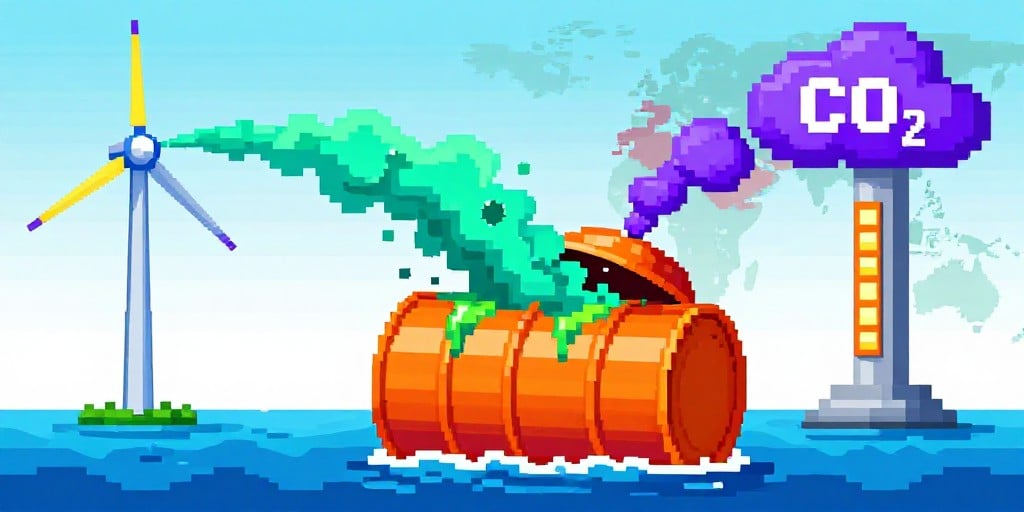
Shell plc’s Share Price Movement Amidst Energy‑Market Volatility
In the latest London session, Shell plc’s shares recorded a modest uptick in late‑afternoon trading, echoing the performance of its peer BP. The rally, however, was muted by an early‑session decline in the broader FTSE 100, which slipped as Brent crude hovered near the $100 mark. The price action reflects a broader trend across the energy sector, where heightened geopolitical tensions—particularly in regions that supply a substantial share of global crude output—have spurred an upward pressure on oil prices.
Energy‑Market Dynamics
The short‑term gains in Shell’s valuation can be traced to several interlocking factors:
| Factor | Impact | Supporting Data |
|---|---|---|
| Crude Price Rally | Positive | Brent crude near $100 per barrel |
| Geopolitical Tension | Elevated risk premium | Ongoing conflicts in the Middle East and Ukraine |
| Supply‑Demand Imbalance | Tightening of markets | Decline in global inventory levels reported by EIA |
| Renewable Capacity Add‑On | Long‑term diversification | Record installations of solar PV and offshore wind in 2026 |
While oil markets remain volatile, the long‑term trajectory is increasingly shaped by the transition to renewable generation, battery storage, and hydrogen pathways. Shell’s current portfolio—spanning conventional oil and gas to emerging renewable projects—positions the company to leverage both short‑term trading opportunities and the longer‑term energy‑transition narrative.
Technological Innovation in Production and Storage
Shell’s recent investments in advanced drilling technologies and carbon capture and storage (CCS) have helped maintain its competitive edge:
- Digital Subsurface Analytics: AI‑driven models enable earlier detection of reservoir anomalies, reducing production downtime.
- Enhanced CCS Deployment: Pilot projects in the North Sea and the Gulf of Mexico now capture up to 2 Mt CO₂ per year, supporting the company’s net‑zero commitments.
- Battery‑Integrated LNG Hubs: Hybrid storage solutions are being explored to smooth supply variability, a strategy that could reduce costs by up to 15 % over a five‑year horizon.
These innovations not only improve operational efficiency but also mitigate regulatory pressures that increasingly favor low‑carbon production pathways.
Regulatory Impacts on Traditional and Renewable Sectors
Regulatory frameworks continue to shape the competitive landscape:
| Regulator | Policy | Effect |
|---|---|---|
| UK Government | Offshore Wind Subsidies | Boosts renewable output, incentivises divestment from traditional gas projects |
| EU ETS | Emission Trading Scheme | Increases cost of high‑carbon operations, encourages investment in CCS |
| Kazakh Ministry of Justice | Environmental Violation Fines | Puts Shell’s Kashagan JV under legal scrutiny, potentially leading to asset write‑downs |
The ongoing legal actions in Kazakhstan exemplify the regulatory risk that can erode asset values. Meanwhile, the UK’s evolving tax regime—particularly changes to corporation tax rates and capital gains exemptions—may influence Shell’s decisions to divest non‑core assets, such as those in the North Sea.
Share Repurchase Program and Shareholder Returns
In a bid to support shareholder value, Shell announced a share‑repurchase activity on 8 September. The programme involves:
- On‑Market Purchases: Executed in accordance with listing rules, with real‑time price monitoring to avoid market impact.
- Off‑Market Transactions: Conducted through a financial intermediary that operates independently, ensuring compliance with market‑abuse regulations.
- Regulatory Oversight: The buy‑back is fully transparent to the London Stock Exchange and adheres to the UK’s market‑abuse framework.
This initiative is part of a broader strategy to return excess capital to shareholders while maintaining liquidity for future strategic investments.
Asset Divestment Strategy in the North Sea
Shell’s exploration of potential divestments in the North Sea—particularly through partners such as EnQuest—highlights a shift toward portfolio optimization:
- Tax Considerations: The UK’s fiscal environment increasingly favors lower‑carbon assets, making traditional gas projects less attractive.
- Regulatory Pressure: The government’s focus on reducing carbon intensity may lead to higher operating costs for high‑emission projects.
- Strategic Rebalancing: Divestments free capital for investment in low‑carbon technologies and renewable energy projects that promise higher long‑term returns.
Although definitive offers have yet to materialise, the ongoing discussions underscore Shell’s intent to streamline its portfolio in line with the evolving energy transition.
Conclusion
Shell plc’s recent share price movement is a microcosm of the broader energy market’s volatility and transformation. By balancing short‑term trading gains with long‑term transition strategies—through technological innovation, regulatory compliance, and strategic asset management—the company aims to sustain shareholder value while navigating complex geopolitical, economic, and regulatory landscapes.