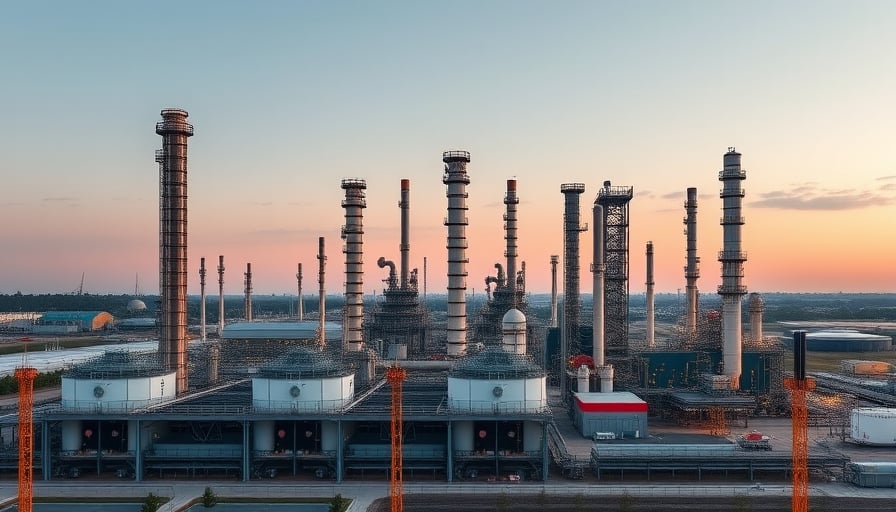
Shell plc Navigates Geopolitical Turbulence While Maintaining Shareholder Value
Shell plc’s recent disclosures reveal a company grappling with the dual forces of geopolitical risk and market‑driven profitability. While the firm’s leadership continues to emphasize the resilience of its core operations, a deeper examination of its financials, regulatory context, and competitive posture suggests both hidden vulnerabilities and latent opportunities that merit close scrutiny.
Geopolitical Exposure and Operational Resilience
CEO Wael Sawan’s candid remarks about potential fuel shortages stemming from the Strait of Hormuz blockage highlight a long‑standing vulnerability in Shell’s supply chain. The Strait is a chokepoint through which a substantial share of global oil and LNG transit flows; any disruption can ripple across downstream markets, elevating freight costs and tightening inventories.
Shell has invoked force‑majeure clauses for LNG cargoes originating from Qatar and the United Arab Emirates—two of its largest LNG suppliers. While these provisions legally absolve the company from contractual penalties, they also signal a temporary shortfall in delivery capacity that could constrain the firm’s trading margins. The company’s ability to pivot to alternative sources—such as North American LNG exporters or Chinese LNG imports—remains uncertain, given existing contractual lock‑ins and geopolitical constraints.
Regulatory frameworks in the European Union add another layer of complexity. The EU’s “Fit for 55” package aims to reduce net CO₂ emissions by 55 % by 2030, which will increase regulatory scrutiny on fossil fuel operations and potentially elevate compliance costs. Shell’s current storage capacity initiatives, positioned as a hedge against supply volatility, may also attract stricter permitting requirements, especially in densely populated regions such as the Rotterdam and Rotterdam–Delft logistics hubs.
Financial Performance Amid Rising Energy Prices
Analysts have projected a 15 % lift in Shell’s quarterly consensus earnings, driven primarily by the current surge in energy prices. The company’s reported EBITDA margin for the latest quarter expanded from 27 % to 30 %, underscoring the elasticity of its operating model in a high‑price environment. However, this margin expansion is largely attributed to commodity price appreciation rather than operational efficiency gains.
The dividend policy remains unchanged, with an annual yield of 4.7 %—comforting for income‑focused investors. Yet, the sustainability of this payout is contingent on continued price stability. Historical volatility in crude oil prices suggests that a prolonged downturn could force a dividend cut, eroding investor confidence. Moreover, the company’s capital expenditure (CapEx) allocation to green hydrogen and CCS projects, while strategically forward‑looking, has already eclipsed 7 % of total CapEx—an amount that may dilute short‑term returns if not carefully managed.
Share‑Buyback Strategy and Shareholder Value
Shell’s share‑buyback programme, launched in early February and overseen by Morgan Stanley, has seen a steady stream of daily transactions. The buyback is structured to operate within limits prescribed by the Board, yet market observers note that the programme has not yet generated significant upward pressure on the share price.
From a valuation standpoint, the firm’s current P/E ratio of 12.8 is below the historical average of 15.5, suggesting a potential undervaluation. However, the buyback’s effectiveness hinges on the company’s ability to maintain earnings momentum. Should geopolitical disruptions or regulatory tightening compress margins, the buyback could become a costly allocation of capital that fails to justify the share price support it aims to provide.
Competitive Dynamics and Market Position
In the broader energy market, Shell’s rivals—BP, TotalEnergies, and Equinor—are similarly navigating the intersection of high commodity prices and a rapidly evolving regulatory landscape. While Shell’s diversified portfolio (oil, gas, LNG, and emerging renewables) confers a competitive moat, it also dilutes focus. The company’s strategic partnerships with European governments to enhance storage capacity provide a temporary buffer, yet these agreements often come with political strings and public scrutiny over the use of taxpayer resources.
The technology sector’s decline in valuation multiples, juxtaposed with energy stocks’ resilience, underscores a shift in investor appetite toward tangible asset‑backed firms. Yet, this trend may be short‑lived if the energy transition accelerates and demand for traditional hydrocarbons contracts. Shell’s early investments in low‑carbon technologies—such as carbon capture and storage (CCS) and renewable hydrogen—could position it favorably should the transition gain regulatory momentum.
Risks and Opportunities
| Risk | Assessment |
|---|---|
| Supply chain disruption | High—Strait of Hormuz blockage could limit oil and LNG inflows, increasing freight costs. |
| Regulatory tightening | Medium—EU climate policies may raise compliance costs and constrain exploration licenses. |
| Price volatility | High—Commodity swings directly impact EBITDA and dividend sustainability. |
| Capital allocation | Medium—Aggressive buyback amidst CapEx in renewables may erode short‑term returns. |
| Competitive pressure | Medium—Rival firms are intensifying investments in low‑carbon assets. |
| Opportunity | Assessment |
|---|---|
| Storage capacity expansion | High—Provides flexibility amid supply shocks and can command premium freight rates. |
| Diversification into renewables | High—Early mover advantage in green hydrogen could capture nascent markets. |
| Strategic alliances | Medium—Government partnerships can unlock subsidies and mitigate regulatory friction. |
| Shareholder returns | Medium—Buyback and dividends can sustain investor confidence during turbulence. |
Conclusion
Shell plc’s latest updates portray a company that is simultaneously weathering geopolitical headwinds and capitalizing on a buoyant commodity backdrop. Its aggressive share‑buyback program and steady dividend payouts underscore a commitment to shareholder value, but these initiatives are predicated on the continued high price of energy—a factor increasingly exposed to geopolitical shocks and regulatory tightening. The firm’s strategic moves into storage and renewable technologies suggest a proactive stance toward long‑term resilience, yet the pace of execution and capital intensity present tangible risks.
For investors and industry analysts, the key lies in monitoring how Shell balances short‑term profitability against long‑term transformation. The company’s ability to navigate supply disruptions, regulatory evolution, and competitive dynamics will ultimately determine whether it can sustain its market position—or whether the very factors that currently bolster its earnings may become its Achilles’ heel.