Seagate Technology PLC Faces a Share‑Price Slide Amidst Intensifying Memory‑Chip Competition
The trading day saw Seagate Technology PLC’s shares tumble sharply, a movement that mirrored a broader retreat across the technology sector. The decline, while significant in its own right, unfolded against a backdrop of intensified competition from emerging memory‑chip designs, notably those developed by the Chinese supplier CXMT, and escalating cost pressures fueled by artificial‑intelligence (AI) workloads.
Market Context and Sector Performance
- Broad Indices: The S&P 500 and Nasdaq Composite recorded modest declines, reflecting a cautious investor stance amid technology volatility. In contrast, the Dow Jones Industrial Average posted a marginal gain, underscoring the unevenness of the market’s reaction.
- Technology Segment: While titans such as Apple and Microsoft exhibited slight upside, other key players within the semiconductor and storage arenas—Western Digital, SanDisk, and Micron Technology—experienced downward momentum. This disparity highlights a bifurcated outlook within the tech sector, where established leaders are contending with both price sensitivity and competitive disruption.
- Supportive Sectors: Energy and consumer staples displayed relative resilience. Rising oil prices and gains in household names provided a counterbalance to the tech sell‑off, indicating a risk‑off sentiment among investors.
Competitive Dynamics Driving the Decline
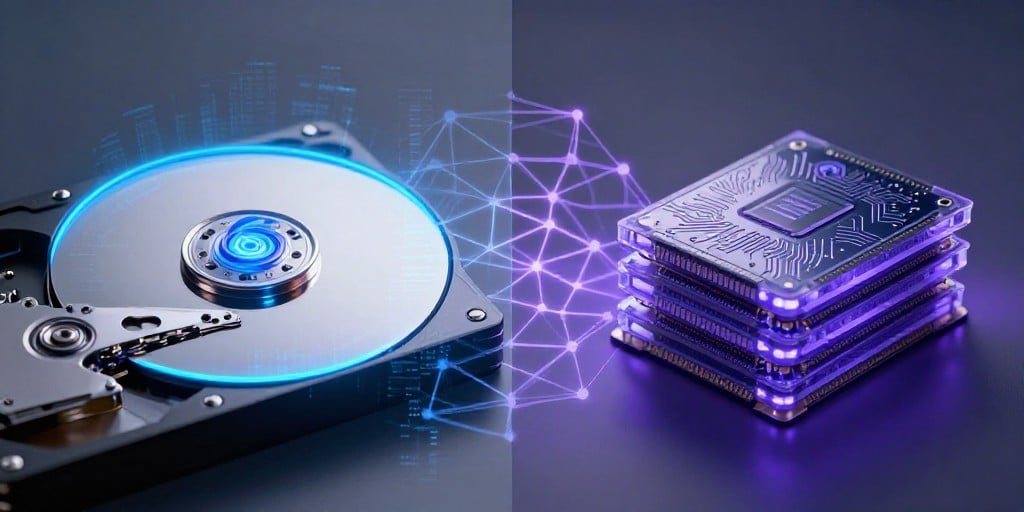
The storage‑chip market is increasingly contested by CXMT’s innovative memory‑chip designs. These new entrants have introduced architectures that promise higher density and lower power consumption—attributes highly coveted in AI and data‑center applications. The arrival of such technology exerts downward pressure on pricing, forcing incumbents to either absorb slimmer margins or innovate rapidly.
Case Study – CXMT’s “High‑Bandwidth Memory” CXMT’s recent product, announced at the International Solid State Technology Conference (ISSTC), boasts a 30 % increase in bandwidth over conventional NAND solutions. Early adopters in AI research institutions have reported measurable gains in training speed, suggesting that the new chip could erode the competitive edge of established storage manufacturers.
Cost Pressures from AI Workloads
Analysts have highlighted a sharp rise in memory‑chip prices driven by the burgeoning demand for AI workloads. The cost escalation stems from several factors:
- Demand‑Supply Imbalance: AI applications require vast volumes of high‑speed memory, outpacing production capacities.
- Materials Scarcity: Rare materials such as gallium arsenide are critical for advanced memory technologies, and their supply chains are fragile.
- Capital Expenditure: The industry’s need for state‑of‑the‑art fabrication facilities translates into higher capital costs, which are passed on to end users.
This confluence of factors has amplified pricing pressures, contributing to the market’s softened sentiment towards storage and memory companies. The implication is twofold: while the sector anticipates higher revenue potential from AI, it also faces a squeezed margin environment that could jeopardize profitability if not managed strategically.
Broader Societal, Privacy, and Security Implications
The shift towards newer memory architectures carries implications beyond financial metrics:
- Data Privacy: High‑capacity memory enables more comprehensive data collection, raising concerns about user privacy and regulatory compliance, particularly in jurisdictions with stringent data protection laws (e.g., GDPR).
- Security Vulnerabilities: Novel chip designs may introduce unforeseen side‑channel attack vectors or firmware flaws, necessitating rigorous security validation.
- Digital Divide: The rapid adoption of advanced memory technologies could exacerbate disparities between high‑income regions that can afford cutting‑edge infrastructure and lower‑income areas that remain reliant on legacy systems.
Investor Reaction and Future Outlook
The market’s cautious stance reflects a recognition that pricing pressures and competitive entry pose substantive risks to the traditional storage‑chip business model. Investors appear to be weighing the short‑term impact of margin compression against the long‑term potential of AI‑driven demand.
Strategic Responses Under Consideration:
- Diversification into AI‑optimized memory: Companies like Seagate may accelerate R&D in 3D XPoint and other emerging technologies.
- Strategic Partnerships: Collaborations with cloud providers could secure high‑volume contracts and provide a steady revenue stream.
- Cost Management: Streamlining supply chains and negotiating better terms with material suppliers may mitigate margin erosion.
Conclusion
Seagate Technology PLC’s share decline is emblematic of a broader contraction within the storage‑chip sector, precipitated by intensified competition from entrants such as CXMT and compounded by AI‑driven cost pressures. While the U.S. equity market presents a mixed picture, the technology sub‑sector remains a focal point for investors navigating the intersection of innovation, profitability, and societal impact. The coming months will be critical in determining whether incumbents can adapt their business models to survive and thrive amid this evolving landscape.