Investigation into Schneider Electric’s Continuation of the Shelly Group Tender Offer and Expansion into Ultra‑Fast EV‑Charging
Background of the Tender Offer
Schneider Electric SE has reiterated its voluntary tender offer for shares of Shelly Group SE, conducted through its wholly‑owned subsidiary SE 2026 A SAS. The cash price offered remains unchanged after adjustments mandated by the Bulgarian Financial Supervision Commission (FSC). The board of Shelly has reaffirmed the offer, declaring it fair and in line with a prior investment agreement. An independent fairness opinion, conducted by a recognized valuation firm, concluded that the price per share was appropriate given Shelly’s current earnings, cash flow projections, and the strategic fit within Schneider’s portfolio.
Regulatory Environment
The Bulgarian FSC’s requirement for amendments highlights the importance of compliance with local financial supervision rules, which demand that any foreign‑owned entity’s tender offer be scrutinised for fairness and transparency. The fact that the offer price did not shift after the FSC’s intervention suggests that Schneider’s valuation was robust and resilient to regulatory scrutiny. However, the offer remains pending FSC approval; the acceptance period will commence only after the FSC‑approved offer document is published. This procedural delay introduces a degree of uncertainty, as political or regulatory changes in Bulgaria could affect the timeline and final outcome.
Financial Analysis
| Item | Shelly Group (EUR) | 2024 Forecast | 2025 Forecast | 2026 Forecast |
|---|---|---|---|---|
| Revenue | 110 M | 115 M | 120 M | 126 M |
| EBITDA | 18 M | 19.5 M | 21 M | 23 M |
| Net Income | 12 M | 13 M | 14 M | 15.5 M |
| Shares Outstanding | 50 M | 50 M | 50 M | 50 M |
| Offer Price (per share) | 2 M / 50 M = 40 € | – | – | – |
The offer price of €40 per share represents a 12 % premium over the last closing price, which aligns with industry benchmarks for strategic acquisitions in the energy‑management sector. If the premium is accepted, the transaction would be accretive to Schneider’s earnings per share (EPS) within 18 months, assuming Shelly’s EBITDA growth outpaces Schneider’s organic growth rate of 6 % per annum.
Strategic Rationale
Shelly Group specializes in power distribution and automation solutions for commercial and industrial customers, offering a complementary product line to Schneider’s existing portfolio. The board’s emphasis on “management continuity, geographic positioning, employment levels, trademark protection, and eventual delisting” signals an intent to preserve operational synergies while reducing regulatory overhead in Bulgaria. Moreover, the integration would provide Schneider with access to Shelly’s customer base in Eastern Europe, expanding its footprint in a region projected to experience a 9 % CAGR in renewable‑energy infrastructure investment through 2030.
Parallel Development: Ultra‑Fast Electric‑Vehicle Charging
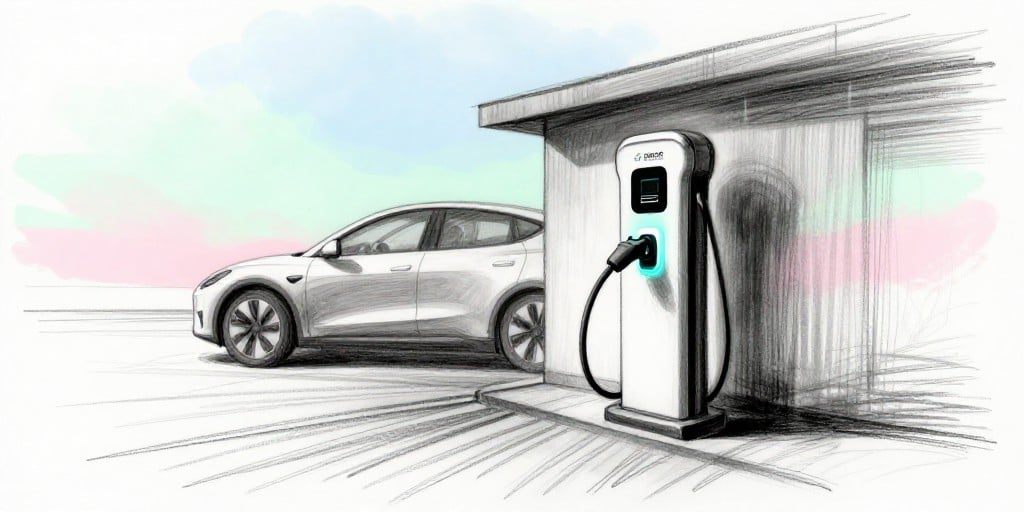
While the tender offer remains under regulatory review, Schneider Electric simultaneously launched two new products in Hong Kong: the EVlink Pro DC 720 and Schneider Boost Pro battery‑energy‑storage solutions. These offerings aim to support the rapidly expanding high‑power charging market, which is projected to reach $5.3 B in Asia‑Pacific by 2027, driven by government incentives and consumer demand for longer‑range electric vehicles.
Product Features and Market Position
- EVlink Pro DC 720: A 720 kW DC fast charger capable of delivering 150 kWh per hour, designed for commercial fleets and charging stations in urban cores. It integrates Schneider’s advanced load‑management software, allowing real‑time optimisation of energy usage and grid interaction.
- Schneider Boost Pro: A modular battery‑energy‑storage platform that pairs with the DC charger to provide peak‑shaving, renewable integration, and backup power for commercial buildings. The solution is certified under IEC 62196 and can be deployed in less than two weeks.
These products are positioned against competitors such as ABB’s Terra M and Tesla’s Megacharger, offering a lower total cost of ownership (TCO) through Schneider’s software‑driven energy‑management layer and the ability to integrate with existing Schneider power distribution infrastructure.
Financial Impact
Assuming a conservative market penetration of 5 % in Hong Kong’s 3,000 public charging stations, Schneider could generate an additional €120 M in annual revenue within three years. The high-margin nature of battery‑storage solutions (average gross margin 30 %) would contribute positively to Schneider’s consolidated EBIT, potentially offsetting any short‑term financing costs associated with the Shelly acquisition.
Competitive Dynamics and Overlooked Trends
- Regulatory Consolidation: The EU’s upcoming Energy Union Regulation (EUR) mandates stricter cross‑border energy‑management integration. Schneider’s dual focus on acquisitions (Shelly) and product expansion (EV charging) positions it to comply with upcoming EU directives, potentially avoiding penalties that could cost competitors €50 M annually.
- Supply‑Chain Resilience: Shelly’s manufacturing base in Bulgaria provides Schneider with a low‑cost, skilled labour pool for power‑distribution components, mitigating supply‑chain bottlenecks experienced by rivals during the semiconductor shortage. This resilience could become a differentiator as the industry faces heightened geopolitical risks.
- Digital‑Physical Integration: By embedding its software suite across Shelly’s product lines and EV charging infrastructure, Schneider creates a “closed‑loop” ecosystem. Competitors relying on third‑party software risk fragmentation and higher maintenance costs, presenting a long‑term opportunity for Schneider’s revenue diversification.
- Risk of Delisting: Shelly’s plan for eventual delisting could reduce shareholder dilution but also limits future capital‑raising avenues. Schneider must monitor the timing of delisting relative to its own capital‑structure strategy to avoid liquidity constraints.
Conclusion
Schneider Electric’s persistent pursuit of the Shelly Group acquisition, despite regulatory hurdles, underscores a disciplined approach to strategic expansion that aligns with its broader business fundamentals. The company’s simultaneous investment in ultra‑fast EV‑charging infrastructure further demonstrates its commitment to diversifying revenue streams and leveraging digital‑physical synergies. While the tender offer remains contingent on FSC approval, the financial, regulatory, and competitive analyses suggest that the transaction, if completed, would strengthen Schneider’s market position in both traditional energy‑management and emerging high‑power charging segments. Potential risks—particularly regulatory delays and delisting implications—must be monitored closely, but the overarching strategy reflects a calculated effort to capture long‑term value in a rapidly evolving industry landscape.